

For many british families, understanding hearing aids can seem confusing with so many features and choices on offer. One in six people in the United Kingdom experiences some degree of hearing loss, making these devices a common solution across all age groups. Navigating everything from digital innovations to essential medical standards, this guide aims to clear up the details you need to make confident decisions about hearing care and technology.
Table of Contents
- Defining Hearing Aid Features And Functions
- Types Of Hearing Aids And UK Standards
- Key Technological Features And Innovations
- Comparing Traditional And Digital Hearing Aids
- Cost, Warranty And Buying Directly Online
Key Takeaways
| Point | Details |
|---|---|
| Hearing Aids Enhance Sound Perception | These devices capture, amplify, and deliver sound directly to the ear, significantly improving the quality of life for individuals with hearing challenges. |
| Variety of Hearing Aid Types | Different models in the UK are designed to suit specific types of hearing loss, including BTE, ITE, and CIC configurations. |
| Technological Advancements | Modern hearing aids incorporate features like Bluetooth connectivity, artificial intelligence processing, and noise reduction, enhancing user experience. |
| Purchasing Options and Considerations | Consumers can opt for NHS-provided aids free of charge or explore private purchases for advanced features, weighing factors like warranty and professional fitting. |
Defining Hearing Aid Features and Functions
Hearing aids are sophisticated electronic devices designed to support individuals experiencing hearing challenges, transforming sound perception for those with auditory impairments. According to the NDCS, these devices work through three fundamental components: a microphone, an amplifier, and a speaker, which work in concert to capture, enhance, and deliver sound directly into the ear canal.
The core function of hearing aids is relatively straightforward yet technologically intricate. NHS explains that these devices pick up surrounding sounds through a sensitive microphone, process and amplify those sounds, and then transmit the enhanced audio signals into the user’s ear. This process is carefully calibrated to make quieter sounds more audible while preventing uncomfortably loud sounds from overwhelming the listener.

Modern hearing aids offer several key features that extend far beyond basic sound amplification:
- Digital Signal Processing: Advanced microchips analyse and adjust sound in real-time
- Noise Reduction Technology: Minimises background interference
- Directional Microphones: Focus on sounds directly in front of the user
- Bluetooth Connectivity: Allow direct streaming from smartphones and televisions
- Rechargeable Batteries: Provide convenient, long-lasting power without frequent replacements
The sophistication of contemporary hearing aids means they are no longer merely sound amplification devices, but intelligent, adaptive tools that can dramatically improve communication and quality of life for individuals with hearing loss.
Types of Hearing Aids and UK Standards
Hearing aids in the United Kingdom come in various configurations, each designed to address specific types of hearing loss and individual user needs. According to Government Standards, the provision of hearing aids is carefully regulated to ensure safety, efficacy, and appropriate professional assessment for individuals experiencing auditory challenges.
The primary types of hearing aids available in the UK market include:
- Behind-the-Ear (BTE): Large, powerful devices sitting behind the ear with a tube connecting to an ear mould
- In-the-Ear (ITE): Custom-fitted devices that sit entirely within the ear canal
- Receiver-in-Canal (RIC): Smaller, more discreet devices with the speaker placed directly in the ear canal
- Completely-in-Canal (CIC): Tiny devices that sit deep inside the ear canal, offering maximum invisibility
- Bone Conduction Hearing Aids: Special devices that transmit sound through bone vibrations for specific hearing loss types
The Health Professions Order 2001 governs the professional standards for hearing aid dispensers in the UK, ensuring that every device meets stringent safety and performance criteria. UK Government regulations mandate that hearing aids must be professionally fitted, calibrated to individual hearing profiles, and meet comprehensive medical standards before being prescribed or sold.
Choosing the right hearing aid involves careful consideration of multiple factors, including the specific type and degree of hearing loss, lifestyle requirements, aesthetic preferences, and budget constraints. While the NHS provides hearing aids free of charge, private providers offer additional customisation options and cutting-edge technologies that might better suit individual needs.
Key Technological Features and Innovations
Hearing aid technology has undergone remarkable transformations, evolving from simple sound amplification devices to sophisticated, intelligent communication tools. UK Government research highlights the growing integration of hearing aids with consumer electronics, signalling a new era of accessibility and user-centred design.
Key technological innovations in modern hearing aids include:
- Artificial Intelligence Processing: Advanced algorithms that adapt sound in real-time
- Machine Learning Calibration: Devices that learn and adjust to individual hearing patterns
- Smartphone Connectivity: Direct streaming from mobile devices and tablets
- Noise Cancellation Technology: Sophisticated background sound filtering
- Waterproof and Dust-Resistant Designs: Enhanced durability for active lifestyles
Recent breakthroughs are particularly exciting. ArXiv Research reveals groundbreaking developments in context-adaptive hearing technologies, which utilise large language models to provide personalised, real-time audio adjustments. These intelligent systems can analyse ambient sounds, user feedback, and individual audiograms to dynamically optimise hearing aid performance.
The future of hearing aid technology is not just about amplification, but creating a seamless, intelligent auditory experience. Emerging innovations promise devices that are more discreet, more responsive, and more integrated with users’ daily technological ecosystems, transforming how individuals with hearing challenges interact with the world around them.
Comparing Traditional and Digital Hearing Aids
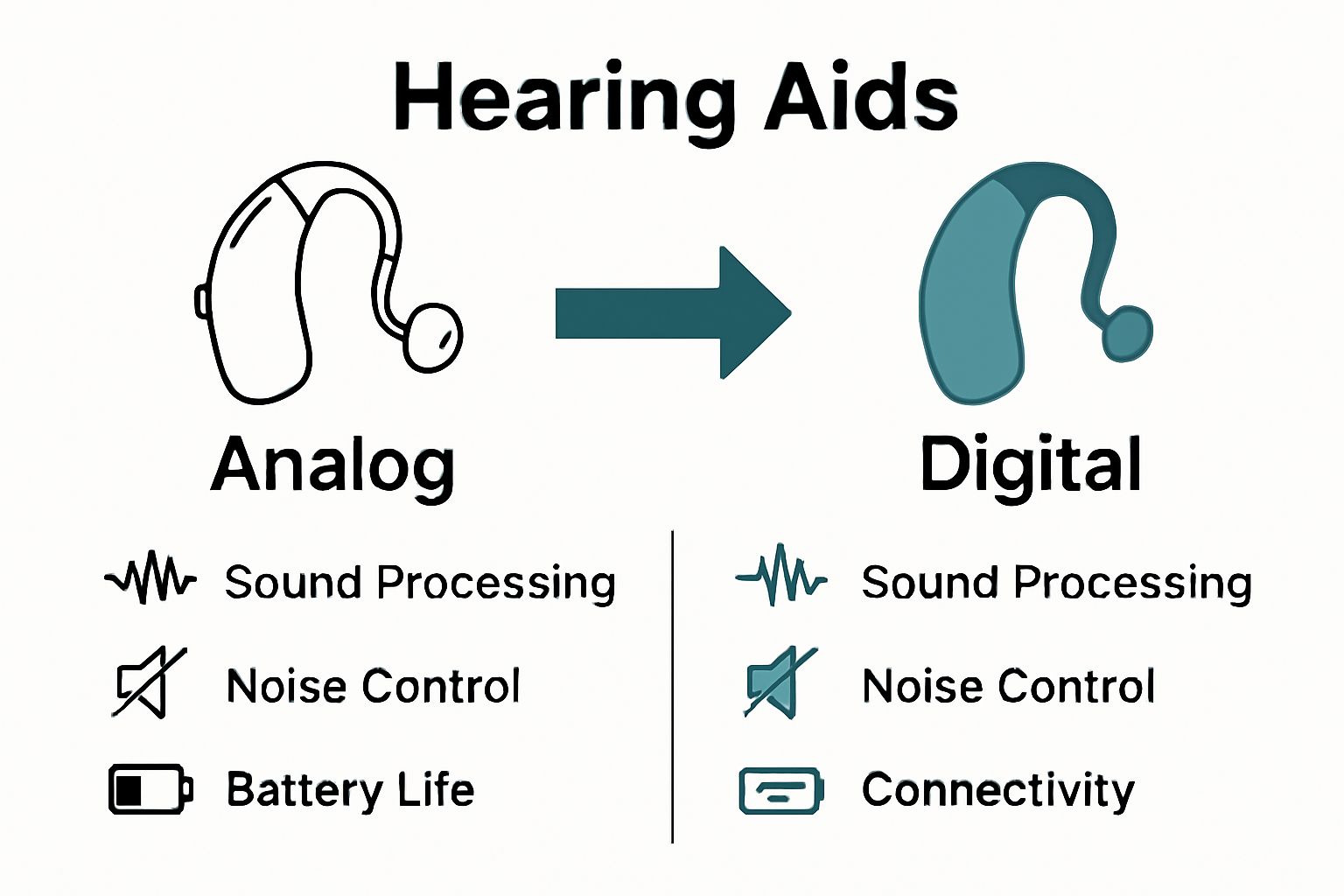
Hearing aid technology has experienced a profound transformation, moving from basic analog devices to sophisticated digital solutions that fundamentally change how individuals experience sound. NHS research highlights the significant advancements in digital hearing aids, which offer substantially improved functionality compared to traditional analog models.
Key differences between traditional and digital hearing aids include:
- Signal Processing: Analog devices amplify all sounds uniformly, while digital devices process sounds selectively
- Background Noise Management: Digital aids can filter and reduce unwanted environmental sounds
- Programmability: Digital devices can be precisely calibrated to individual hearing profiles
- Battery Life: Digital hearing aids typically offer more efficient power consumption
- Connectivity: Modern digital devices can integrate with smartphones and other electronic devices
Traditional analog hearing aids work by simply amplifying all sounds across all frequencies, which can often result in distorted or overwhelming audio experiences. In contrast, digital hearing aids use advanced microprocessors to analyse incoming sound waves, allowing for nuanced adjustments that enhance speech clarity and reduce background interference. These intelligent devices can adapt to different acoustic environments, automatically adjusting settings to provide optimal hearing performance.
Traditional vs Digital Hearing Aids: Complete Guide demonstrates that while analog devices remain more affordable, digital hearing aids represent a significant technological leap forward. They offer users greater comfort, improved sound quality, and more personalised hearing experiences that can dramatically enhance communication and quality of life.
Cost, Warranty and Buying Directly Online
UK Government research reveals multiple pathways for obtaining hearing aids in the United Kingdom, with options ranging from free NHS provision to private online purchases. Understanding the financial and warranty landscape is crucial for making an informed decision about hearing healthcare.
Key considerations for hearing aid purchasing include:
- NHS Provision: Free hearing aids with comprehensive battery and repair support
- Private Purchase: Greater device variety and advanced technological features
- Online Buying: Potential cost savings and convenience
- Warranty Coverage: Typically ranges from 1-3 years for most devices
- Professional Fitting: Optional but recommended for optimal performance
Sense UK highlights the growing trend of online hearing aid purchases, which offer significant advantages for consumers seeking more flexible and cost-effective solutions. While online purchasing provides convenience and potential financial savings, it’s essential to verify that devices meet rigorous UK regulatory standards and include comprehensive aftercare services.
The most cost-effective approach depends on individual needs. NHS services provide standard hearing aids at no direct cost, whereas private and online options offer more personalised technologies with potentially shorter wait times. Consumers should carefully evaluate warranty terms, return policies, and included support services when comparing different purchasing channels, ensuring they select a solution that balances affordability with quality and long-term performance.
Discover Advanced Hearing Aid Solutions Tailored for You
Navigating the complex world of hearing aid features and choosing the right device can be overwhelming. This guide highlights challenges like finding discreet, AI-powered digital hearing aids with flexible connectivity and rechargeable batteries, all while avoiding long NHS waits or costly clinic visits. If you want high-quality, UKCA-certified hearing aids designed to improve your hearing experience without the extra cost and hassle, Home page – Audora offers exactly that.

Take control of your hearing with innovative solutions from GetAudora.co.uk. Explore our range of digitally advanced hearing aids that combine comfort, style, and cutting-edge technology at prices that are far more affordable. Act now during our National Hearing Week promotion and enjoy immediate savings while accessing full warranty and expert support. Visit us today and experience hearing healthcare reimagined.
Frequently Asked Questions
What are the main components of a hearing aid?
Hearing aids consist of three primary components: a microphone, an amplifier, and a speaker. These components work together to capture, enhance, and deliver sound directly to the user’s ear.
How does digital signal processing improve hearing aids?
Digital signal processing uses advanced microchips to analyse and adjust sounds in real time, enabling clearer sound quality and better background noise management compared to traditional analog devices.
What types of hearing aids are available?
The main types of hearing aids include Behind-the-Ear (BTE), In-the-Ear (ITE), Receiver-in-Canal (RIC), Completely-in-Canal (CIC), and Bone Conduction hearing aids, each catering to different types and degrees of hearing loss.
How do I choose the right hearing aid for my needs?
When selecting a hearing aid, consider factors such as the type and severity of your hearing loss, your lifestyle, aesthetic preferences, and budget. Professional fitting and calibration are also crucial for optimal performance.
Recommended
- 7 Smart Picks for an Affordable Hearing Solutions List – Audora
- 7 Simple Ways to Spot Quality Hearing Aids Fast – Audora
- Hearing Aid Technology 2025: Complete Guide – Audora
- Why Use Hearing Aids: Complete Guide to Benefits – Audora
- Clarinet Accessory Selection Guide: Find Your Ideal Setup - My Clarinet Stuff
- Ear Care News & Tips | NHS Accredited Specialists | EARS Clinics