

Over 80 percent of users now report high satisfaction with modern hearing aids, yet only half of those with hearing loss in the british population have adopted them. This surprising gap highlights how rapid advances like artificial intelligence and discreet designs are transforming expectations, making hearing aid technology in 2025 a talking point across all age groups. Discover how new british innovations are reshaping daily life, offering more comfort, personalisation, and confidence than ever before.
Table of Contents
- Defining Hearing Aid Technology In 2025
- Device Types: From In-Ear To Behind-Ear
- Smart Features And AI Integration Explained
- Rechargeable Vs. Disposable Power Options
- Pricing, Purchase Channels, And UK Regulations
- Comparing New Solutions To Traditional Hearing Aids
Key Takeaways
| Point | Details |
|---|---|
| Technological Advancements | Hearing aids in 2025 feature AI integration, smartphone connectivity, and miniaturised designs, enhancing sound clarity and user comfort significantly. |
| Diverse Device Options | Users can choose from various configurations like ITE, BTE, RIC, and IIC, catering to individual hearing needs and aesthetic preferences. |
| Battery Innovations | The shift to rechargeable lithium-ion batteries offers longer usage times and lower maintenance, representing a crucial enhancement in user experience. |
| Changing Procurement Landscape | Increased consumer access through direct purchasing options and regulatory changes is transforming how individuals obtain hearing aids, encouraging greater market competition. |
Defining Hearing Aid Technology in 2025
Hearing aid technology has undergone remarkable transformation, evolving from basic sound amplification devices to sophisticated digital hearing enhancement systems. Today’s cutting-edge hearing devices represent a quantum leap in personalized auditory experiences, integrating artificial intelligence, advanced signal processing, and miniaturized electronics to deliver unprecedented sound clarity and user comfort.
According to the hearingreview EuroTrak UK 2025 survey, modern hearing instruments demonstrate impressive performance metrics. The research reveals that 82% of users report high satisfaction, with an astounding 96% experiencing improved quality of life. However, the adoption rate among individuals with self-declared hearing loss remains challenging, slightly dipping to 50.5% from 52.8% in 2022.
The landscape of hearing aid technology in 2025 is characterized by several key technological advancements:
- Artificial Intelligence Integration: Smart algorithms that adapt in real-time to different acoustic environments
- Smartphone Connectivity: Seamless pairing with mobile devices for personalized sound tuning
- Rechargeable Lithium-Ion Batteries: Extended usage times and reduced maintenance
- Miniaturized Design: Virtually invisible in-ear devices that prioritize discretion
- Advanced Noise Reduction: Sophisticated signal processing that filters background noise
These technological innovations signal a profound shift from traditional hearing assistance towards comprehensive sound intelligence systems. Why Hearing Aids Are Discreet Now represents a pivotal moment in understanding how modern engineering has transformed perceptions of hearing enhancement technology.
Device Types: From In-Ear to Behind-Ear
Hearing aid technology has diversified dramatically, offering users a range of device configurations designed to address individual hearing needs and personal preferences. From nearly invisible solutions to more traditional designs, modern hearing aids represent a sophisticated spectrum of auditory enhancement technologies.
The primary hearing aid device types in 2025 can be categorized into four primary configurations:
- In-Ear (ITE): Compact devices fitting directly within the ear canal
- Behind-the-Ear (BTE): Traditional design sitting behind the ear with a tube connecting to an ear mould
- Receiver-in-Canal (RIC): Lightweight devices with a small receiver placed inside the ear canal
- Invisible-in-Canal (IIC): Extremely discreet devices positioned deep inside the ear canal
Each device type offers unique advantages. 7 Key Benefits of Invisible Hearing Aids for Adults highlights how modern hearing aids prioritize not just acoustic performance, but also user comfort and aesthetic preferences. In-ear devices, for instance, provide exceptional discretion, while behind-the-ear models offer more powerful amplification for complex hearing challenges.
The technological evolution means users are no longer constrained by bulky, conspicuous devices. Contemporary hearing aids seamlessly blend advanced acoustic engineering with miniaturized design, transforming these medical devices into sophisticated personal sound enhancement tools. Whether someone prefers near-invisible technology or requires more robust sound processing, 2025’s hearing aid landscape offers personalized solutions for every hearing requirement.

Smart Features and AI Integration Explained
Artificial Intelligence has revolutionized hearing aid technology, transforming these devices from simple sound amplification tools to intelligent personal sound management systems. Modern hearing aids now function as sophisticated neural networks, capable of adapting and learning from users’ unique auditory environments in real-time.
According to Reuters, groundbreaking innovations like the Sonova Sphere Infinio demonstrate this technological leap. Launched in August 2024, this device utilizes an advanced DEEPSONIC chip with processing power 53 times greater than current industry standards, enabling unprecedented sound clarity and environmental adaptation.
The core capabilities of AI-integrated hearing aids include:
- Dynamic Sound Optimization: Automatic adjustments based on ambient noise levels
- Speech Enhancement: Isolating human voices from background sounds
- Personalized Learning: Remembering user sound preferences across different environments
- Automatic Noise Reduction: Filtering out unwanted acoustic interference
- Predictive Sound Mapping: Anticipating user hearing needs before manual intervention
7 Key Features of Modern Hearing Aids for Better Living further illustrates how these intelligent systems are transforming auditory experiences. As Accio reports, some advanced platforms like Miracle-Ear’s BLISS™ can make up to 80 million adjustments per hour, ensuring an almost magical listening experience that adapts instantaneously to changing acoustic environments.
Rechargeable vs. Disposable Power Options
The power source of hearing aids has undergone significant transformation, with battery technology emerging as a critical factor in user experience and device performance. Modern hearing aid users now face a pivotal choice between traditional disposable batteries and innovative rechargeable solutions that promise greater convenience and sustainability.
According to Hearsan, 2025 is set to witness substantial improvements in battery technology. Rechargeable hearing aids are expected to feature longer-lasting batteries and significantly faster charging times, directly addressing one of the most persistent concerns for hearing aid users: battery reliability and maintenance.
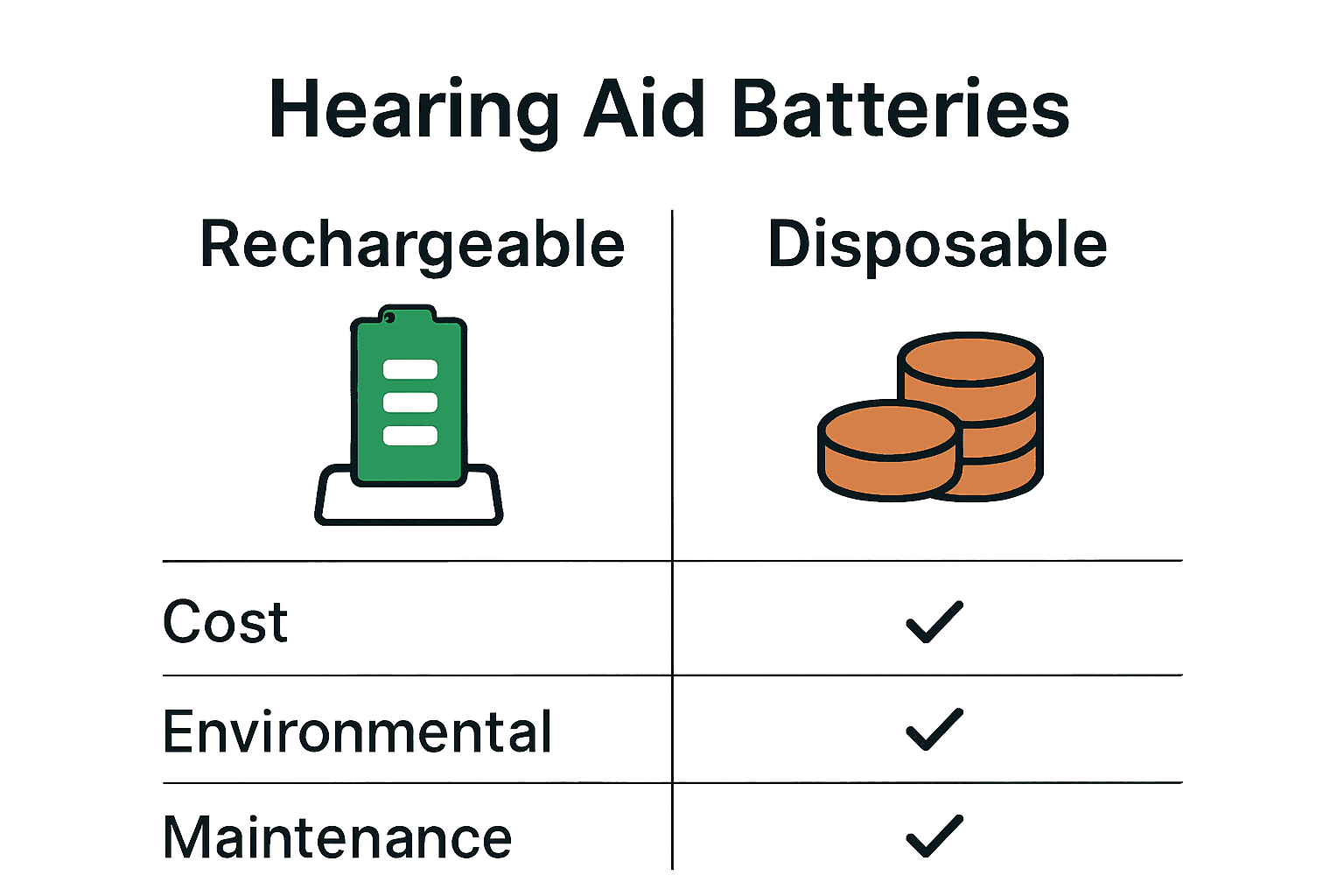
Key differences between rechargeable and disposable power options include:
-
Disposable Batteries:
- Lower upfront device cost
- Require frequent replacements
- Less environmentally friendly
- Potential for unexpected power interruptions
-
Rechargeable Batteries:
- Higher initial investment
- Consistent, predictable power supply
- Environmentally sustainable
- Reduced long-term maintenance costs
Rechargeable Hearing Aids Explained: Benefits and Choices highlights the growing preference for rechargeable solutions. Modern lithium-ion batteries can now provide full-day performance with a single charge, eliminating the inconvenience of sudden battery depletion. This technological evolution represents more than just a power upgrade it signifies a fundamental shift towards user-centric hearing aid design that prioritizes convenience, reliability, and sustainability.
Pricing, Purchase Channels, and UK Regulations
Navigating the landscape of hearing aid procurement has become increasingly complex, with multiple purchase channels and evolving regulatory frameworks reshaping how individuals access hearing enhancement technologies. The traditional pathways of NHS provision and high-street audiologist consultations are rapidly transforming to accommodate more direct, consumer-friendly approaches.
According to gov.uk, a significant regulatory shift occurred on January 16, 2025, when the UK government published new guidance allowing businesses to sell innovative hearing aids directly to consumers. This groundbreaking policy aims to accelerate patient access to cutting-edge devices and position the UK as a leading market for wearable medical technology, explicitly permitting patients to purchase hearing aids and even conduct hearing tests from home.
Purchase channels for hearing aids in 2025 can be categorized as follows:
-
NHS Provision:
- Completely free hearing instruments
- Longer waiting times
- Limited device selection
- Professional audiological assessment
-
Specialized Hearing Stores:
- Wide range of device options
- Immediate professional consultation
- Higher out-of-pocket costs
- Personalised fitting services
-
Direct Online Purchasing:
- Lowest price points
- Convenience of home delivery
- Self-guided selection process
- Emerging regulatory support
Hearing Review reports an interesting market evolution, with specialized hearing instrument stores increasing their market share from 16% in 2022 to 21% in 2025. Meanwhile, the NHS remains the primary provider, supplying 69% of hearing instruments at no cost to patients. This shift indicates a growing acceptance of diverse purchasing models and increasing consumer choice in hearing healthcare.
Comparing New Solutions to Traditional Hearing Aids
The landscape of hearing assistance technology is experiencing a revolutionary transformation, moving far beyond traditional hearing aid paradigms. Where once users were limited to bulky, conspicuous devices with basic sound amplification, modern solutions now integrate seamlessly with everyday technology, offering unprecedented personalization and discretion.
According to Reuters, groundbreaking innovations are redefining hearing support. In September 2024, the FDA authorized software that transforms Apple’s AirPods Pro into personalized hearing aids, capable of enhancing specific sounds in real-time, including speech and environmental noises. This development represents a significant leap from traditional hearing aid models, offering users more flexible and technologically integrated solutions.
Key differences between traditional and emerging hearing solutions include:
-
Traditional Hearing Aids:
- Standalone medical devices
- Limited sound processing capabilities
- Typically visible and conspicuous
- Fixed programming
- Higher cost for advanced features
-
New Technological Solutions:
- Integration with consumer electronics
- Advanced real-time sound processing
- Virtually invisible or stylishly designed
- Adaptive, AI-driven sound customization
- More affordable and accessible
Why Upgrade Hearing Technology: Complete Guide UK further illuminates this transformation. Another remarkable innovation comes from Reuters, highlighting EssilorLuxottica’s Nuance audio glasses. These smart glasses, combining hearing aids with prescription eyewear, are set to revolutionize hearing support for the 1.25 billion people globally experiencing mild to moderate hearing loss, demonstrating how technology is making hearing assistance more integrated, stylish, and user-friendly.
Discover the Future of Hearing with Audora Today
The challenge many face when exploring hearing aid technology in 2025 is finding a solution that offers cutting-edge AI features, discreet designs, and reliable rechargeable batteries without the frustration of long waits or high costs. You deserve hearing aids that adapt flawlessly to your lifestyle while staying invisible and easy to manage. This guide highlights the need for accessible, personalised hearing enhancement that moves beyond traditional models — exactly what you will find at Audora.

Explore our range of UKCA-certified digital hearing aids designed to bring the latest innovations directly to your door. With no middlemen or clinics, you benefit from transparent pricing and expert-level technology, including smartphone connectivity and smart noise reduction. Take control of your hearing health today. Visit Home page – Audora to browse premium devices or start right now at https://getaudora.co.uk and embrace a world of clear sound and confidence.
Frequently Asked Questions
What advancements in hearing aid technology can we expect in 2025?
Modern hearing aids in 2025 feature artificial intelligence integration, smartphone connectivity, rechargeable batteries, miniaturized designs, and advanced noise reduction capabilities, enhancing both sound quality and user experience.
How do smart features and AI improve the functionality of hearing aids?
AI enhances hearing aids by providing dynamic sound optimisation, speech enhancement, personal learning, automatic noise reduction, and predictive sound mapping, allowing devices to adapt in real-time to various listening environments.
What are the main types of hearing aids available?
The primary types of hearing aids in 2025 are In-Ear (ITE), Behind-the-Ear (BTE), Receiver-in-Canal (RIC), and Invisible-in-Canal (IIC), each designed to cater to different hearing needs and user preferences.
What are the differences between rechargeable and disposable batteries for hearing aids?
Rechargeable batteries offer consistent power, lower long-term maintenance costs, and eco-friendliness, while disposable batteries are lower in initial costs but require frequent replacements and can lead to unexpected power interruptions.
Recommended
- Why Upgrade Hearing Technology: Complete Guide UK – Audora
- What Is Hearing Enhancement Technology? Complete Guide – Audora
- 7 Key Features of Modern Hearing Aids for Better Living – Audora
- Why Hearing Aids Are Discreet Now: Complete Guide – Audora
- Technology for Special Education: Complete Guide - Projector Display
- 10 Best Home Gadgets 2025 for Modern Living - Projector Display