

Over six million British adults experience some degree of hearing loss, yet most people are unaware of how much digital hearing technology can improve daily life. Advances in computational processing and artificial intelligence mean modern devices offer much more than simple amplification. This article uncovers how these sophisticated tools are reshaping the way British users hear the world, bringing clarity, comfort, and functionality that traditional options could never provide.
Table of Contents
- Defining Digital Hearing Technology Today
- Types of Digital Hearing Devices Explained
- Key Features and How They Work
- Cost, Access, and Buying Direct Online
- Comparing Digital to Traditional Solutions
Key Takeaways
| Point | Details |
|---|---|
| Advances in Digital Hearing Technology | Digital hearing technology uses sophisticated processing to deliver personalised sound experiences, overcoming limitations of traditional devices. |
| Types of Digital Devices | Modern digital hearing aids come in various styles, including Behind-the-Ear, In-the-Ear, and Completely-in-Canal, tailored to different needs and preferences. |
| Cost and Accessibility | The shift to online purchasing of hearing devices reduces costs and improves accessibility, offering personalised assessments and support without lengthy processes. |
| Comparison to Traditional Aids | Unlike traditional hearing aids, digital devices utilise intelligent sound processing and noise cancellation, offering a more nuanced listening experience. |
Defining Digital Hearing Technology Today
Digital hearing technology represents a revolutionary leap forward in sound amplification and hearing assistance. Unlike traditional analogue hearing devices, these sophisticated electronic systems use advanced computational processing to transform sound waves into precise digital signals, offering users unprecedented clarity and personalisation.
Modern digital hearing aids leverage cutting-edge AI technologies to provide real-time personalised experiences that adapt automatically to individual hearing requirements. These intelligent devices can now perform remarkable functions such as:
- Mimicking natural brain sound interpretation
- Recognising familiar voices with remarkable accuracy
- Remembering user preferences across different acoustic environments
- Reducing background noise while enhancing speech clarity
The core innovation behind digital hearing technology lies in its ability to process sound digitally, converting acoustic signals into binary code that can be manipulated with incredible precision. This digital transformation allows for sophisticated sound filtering, amplification, and customisation that was impossible with older analogue technologies. Microprocessors within these devices can analyse incoming sound waves millisecond by millisecond, making real-time adjustments that closely approximate natural hearing experiences.
Understanding these technological advancements helps individuals appreciate how digital hearing devices represent more than simple sound amplification tools. They are intelligent, adaptive systems designed to restore not just volume, but the nuanced, contextual listening experience that traditional hearing aids could never achieve.
Types of Digital Hearing Devices Explained
Digital hearing devices are no longer the bulky, one-size-fits-all contraptions of the past. Modern technology has revolutionised hearing assistance, offering a diverse range of sophisticated solutions tailored to individual hearing needs and lifestyle preferences.
The primary categories of digital hearing devices include in-the-ear, behind-the-ear, and completely-in-canal designs. Each type offers unique advantages:
-
Behind-the-Ear (BTE): - Most visible design - Accommodates larger batteries - Suitable for severe hearing loss - Easy to clean and maintain
-
In-the-Ear (ITE): - Custom-fitted to ear canal - Less visible than BTE models - Good for mild to moderate hearing loss - Integrated volume control
-
Completely-in-Canal (CIC): - Nearly invisible when worn - Sits deep inside ear canal - Minimal wind interference - Best for cosmetic preferences
Moredern digital hearing devices also incorporate advanced features like wireless connectivity, smartphone app integration, and adaptive noise reduction. These technological marvels can stream audio directly from smartphones, televisions, and other electronic devices, transforming them from simple amplification tools into sophisticated communication devices.
Choosing the right digital hearing device depends on multiple factors including degree of hearing loss, lifestyle requirements, aesthetic preferences, and budget. Consulting with a hearing healthcare professional can help individuals navigate these options and find the most suitable device for their unique hearing profile.

Key Features and How They Work
Digital hearing technology represents a complex symphony of advanced electronic components working seamlessly to transform sound perception. At the heart of these devices lies sophisticated digital signal processing that goes far beyond simple sound amplification.
The most groundbreaking advancement comes from artificial intelligence approaches to selective noise cancellation, which employ deep neural networks to distinguish speech from background noise. These intelligent systems use sophisticated algorithms to:
- Analyse incoming sound waves in real-time
- Separate human speech from environmental noise
- Automatically adjust sound levels and frequencies
- Adapt to different acoustic environments
Key technological components include:
- Microphones: Capture sound waves and convert them into electrical signals
- Digital Signal Processor: Analyses and modifies sound signals
- Amplifier: Boosts processed signals to appropriate volume
- Speaker: Converts electrical signals back into audible sound
Advanced digital hearing devices now incorporate wireless connectivity, allowing direct streaming from smartphones, televisions, and other electronic devices. This integration transforms hearing aids from simple amplification tools into sophisticated communication platforms that can connect seamlessly with modern technology.
The remarkable precision of modern hearing devices means users can experience sound with unprecedented clarity. By continuously learning and adapting to individual hearing profiles, these devices provide a personalised listening experience that closely mimics natural hearing capabilities, helping users reconnect with the rich auditory world around them.
Cost, Access, and Buying Direct Online
Traditional hearing aid purchasing has long been characterised by complex, expensive processes involving multiple intermediaries and lengthy clinical appointments. The digital revolution is transforming this landscape, offering consumers more direct, accessible, and affordable pathways to obtaining advanced hearing devices.
Buying hearing aids directly online through specialised platforms presents several significant advantages:
- Cost Reduction: Eliminates multiple middlemen and clinic overhead
- Convenience: Purchase from home without multiple appointments
- Faster Access: No lengthy waiting lists or referral processes
- Customisation: Online assessments tailored to individual hearing profiles
Pricing for digital hearing devices varies considerably, typically ranging from £500 to £3,000 depending on technological sophistication. Direct online providers can offer substantially lower prices by:
- Removing clinic consultation fees
- Reducing distribution costs
- Minimising sales commission structures
- Streamlining production and delivery
Modern online platforms now offer comprehensive support packages, including remote fitting consultations, comprehensive user guides, and extended warranty options. These services ensure that purchasing hearing technology online does not compromise the quality of professional support traditionally associated with high-street clinics.
The shift towards direct online purchasing represents more than a commercial trend. It’s a fundamental reimagining of hearing healthcare – putting technological choice, affordability, and personalised support directly into the hands of individuals seeking to improve their auditory experience.
Comparing Digital to Traditional Solutions
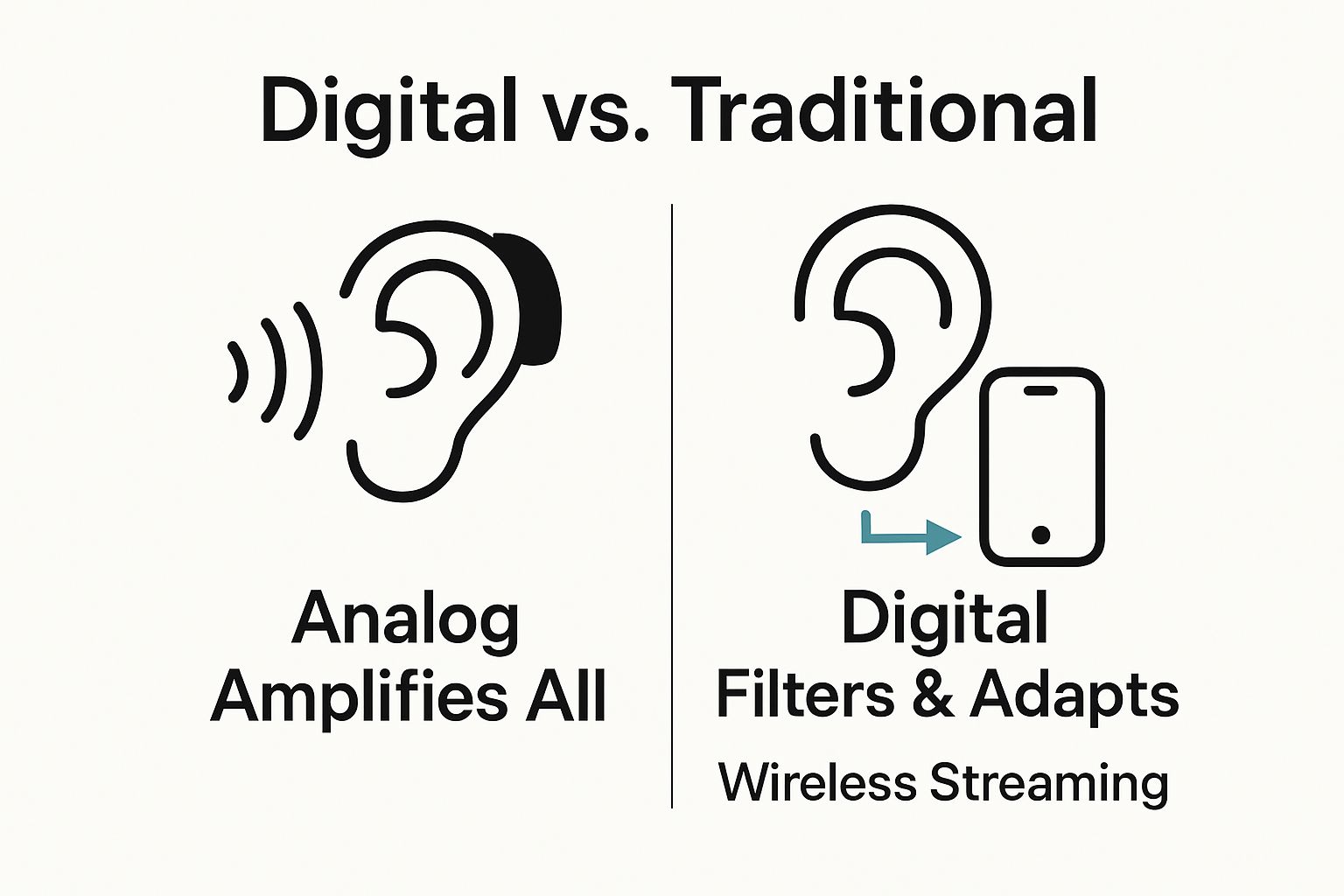
The landscape of hearing assistance has undergone a remarkable transformation, moving from basic sound amplification to sophisticated intelligent hearing technologies. Traditional hearing devices were essentially simple acoustic amplifiers, while modern digital solutions represent a quantum leap in auditory support.
Modern auditory prosthetic devices have become indispensable tools for restoring hearing, offering significant improvements over legacy technologies. The key differences include:
Traditional Solutions:
- Analog sound amplification
- Limited noise reduction
- Basic volume control
- Minimal customisation
- Bulky, visible designs
Digital Hearing Devices:
- Precise digital sound processing
- Advanced noise cancellation
- Adaptive sound environment management
- Personalised hearing profiles
- Discreet, sophisticated designs
The technological evolution means digital hearing devices do more than simply increase volume. They analyse sound environments, distinguish speech from background noise, and can even connect wirelessly to smartphones and televisions. This represents a fundamental shift from passive sound amplification to active, intelligent hearing assistance.
Perhaps most importantly, digital hearing technologies now address more than just acoustic challenges. They support improved social engagement, reduce psychological stress, and help users reconnect with their auditory world in ways previously unimaginable with traditional hearing aids.
Discover Advanced Digital Hearing Technology with Audora Today
If you are ready to move beyond traditional hearing aids and experience the personalised clarity that modern digital hearing technology offers, Audora’s collection of AI-powered hearing devices is the perfect place to start. Designed to tackle challenges like background noise and unnatural sound amplification, our discreet, rechargeable hearing aids adapt seamlessly to your lifestyle without the hassle of clinic visits or NHS waiting lists.

Take control of your hearing health now by exploring innovative devices backed by UKCA certification that deliver exceptional sound processing and smartphone integration. Visit Audora’s main site to find your ideal hearing solution and benefit immediately from transparent pricing and limited-time promotional offers. Your journey to clearer, more natural hearing begins here.
Frequently Asked Questions
What is digital hearing technology?
Digital hearing technology refers to modern hearing devices that use advanced computational processing to convert sound waves into digital signals, offering improved clarity and personalisation compared to traditional analogue hearing aids.
How do digital hearing devices work?
Digital hearing devices utilise microphones to capture sound waves, which are then processed by a digital signal processor that modifies and amplifies the sound before it is converted back into audible sound through a speaker. This allows for features like noise cancellation and personalised hearing profiles.
What are the different types of digital hearing devices available?
The main types of digital hearing devices include Behind-the-Ear (BTE), In-the-Ear (ITE), and Completely-in-Canal (CIC) designs. Each type has distinct advantages regarding visibility, functionality, and suitability for various levels of hearing loss.
Why should I choose digital hearing devices over traditional analog solutions?
Digital hearing devices offer significant advantages over traditional analog solutions, including precise sound processing, advanced noise cancellation, adaptive environmental management, and greater customisation, making them more effective in providing a natural and improved listening experience.