

Most british adults experiencing hearing loss wait several years before seeking help, even though modern hearing aids are more effective than ever. Difficulty understanding conversations and missing important sounds can disrupt daily life in profound ways. This guide breaks down the key functions and features that set contemporary hearing aids apart, helping you understand the technology and options available for british users. Discover how the latest devices deliver clarity, comfort, and smarter listening for a brighter auditory future.
Table of Contents
- Hearing Aids Explained: Essential Functions and Features
- Traditional Hearing Aid Types and Clinic Models
- Breaking Down Advanced Technology and Certification Costs
- Why UK Prices Are Inflated by Mark-Ups and Middlemen
- Affordable Digital Hearing Aid Alternatives Online
Key Takeaways
| Point | Details |
|---|---|
| Hearing Aids Functionality | Hearing aids amplify sound while enhancing speech clarity and reducing background noise through sophisticated digital processing. |
| Types and Custom Fitting | Traditional models include various designs that cater to individual hearing needs, with custom fitting ensuring improved performance. |
| Cost Influencers | Advanced technologies, professional fitting, and a complex distribution model inflate the cost of hearing aids, impacting affordability. |
| Online Alternatives | Digital platforms offer cost-effective hearing aid solutions, reducing mark-ups through direct-to-consumer pricing and remote services. |
Hearing Aids Explained: Essential Functions and Features
Hearing aids are sophisticated digital devices designed to amplify and enhance sound for individuals experiencing hearing difficulties. These remarkable devices do far more than simply make sounds louder - they intelligently process audio signals to improve speech clarity and listening experiences. Hearing aids fundamentally work by capturing external sounds through tiny microphones, converting acoustic signals into digital information, and then delivering refined audio directly into the ear canal.
The core functions of hearing aids typically encompass several key features that transform auditory perception:
- Sound Amplification: Increasing volume across different sound frequencies
- Background Noise Reduction: Filtering out unnecessary environmental sounds
- Frequency Compensation: Adjusting specific sound ranges to match individual hearing loss patterns
- Directional Microphone Technology: Focusing on speech sounds in front of the user
Modern hearing devices come in multiple designs to suit different preferences and hearing requirements. Various hearing aid models include behind-the-ear (BTE), in-the-ear (ITE), and in-the-canal (ITC) configurations, each offering unique advantages for comfort and performance. These sophisticated devices are not merely sound amplifiers but intelligent hearing enhancement tools that adapt to complex listening environments, helping users reconnect with the world of sound more effectively and naturally.

Traditional Hearing Aid Types and Clinic Models
Traditional hearing aid models have long been provided through established healthcare clinics, offering personalised solutions for individuals with varying degrees of hearing loss. Behind-the-ear (BTE) models with specialised earmoulds remain a standard option in clinical settings, designed to accommodate a wide range of auditory challenges and patient needs.
The typical clinic model for hearing aid provision involves several key components:
- Initial Comprehensive Assessment: Detailed hearing tests and audiometric evaluations
- Custom Fitting: Personalised device selection and ear mould creation
- Professional Consultation: Ongoing support and device adjustment
- Maintenance Services: Regular check-ups and technical support
Health and Social Care Trusts offer hearing aids on loan, providing free maintenance services that make these essential devices more accessible to individuals experiencing hearing impairments. These traditional clinic models typically involve multiple appointments, specialised equipment, and professional expertise, which contribute significantly to the overall cost of hearing assistance. The personalised approach ensures that each patient receives a tailored solution, but this individualised service comes with inherent expenses related to professional time, technical expertise, and custom device preparation.
Breaking Down Advanced Technology and Certification Costs
Advanced hearing technologies have dramatically transformed the landscape of auditory assistance, with sophisticated devices offering unprecedented levels of customisation and performance. Modern hearing aids are far more than simple sound amplifiers - they represent complex technological solutions that integrate cutting-edge digital signal processing, artificial intelligence, and precision engineering to deliver exceptional sound quality and user experience.
Key technological components driving the cost of advanced hearing devices include:
- Digital Signal Processing: Sophisticated microchips that analyse and modify sound in real-time
- Noise Reduction Algorithms: Advanced software that filters out background interference
- Bluetooth Connectivity: Enabling direct streaming from smartphones and other devices
- Miniaturised Components: Incredibly small, precision-engineered internal mechanisms
Custom fitting and programming are critical elements that significantly influence hearing aid pricing, requiring extensive professional expertise and specialised equipment. Each device undergoes meticulous calibration to match an individual’s unique hearing profile, involving complex audiometric assessments and precise technical adjustments. These personalised configurations demand substantial investment in professional time, sophisticated diagnostic tools, and ongoing technological research and development, ultimately contributing to the higher cost of advanced hearing assistance technologies.
Why UK Prices Are Inflated by Mark-Ups and Middlemen
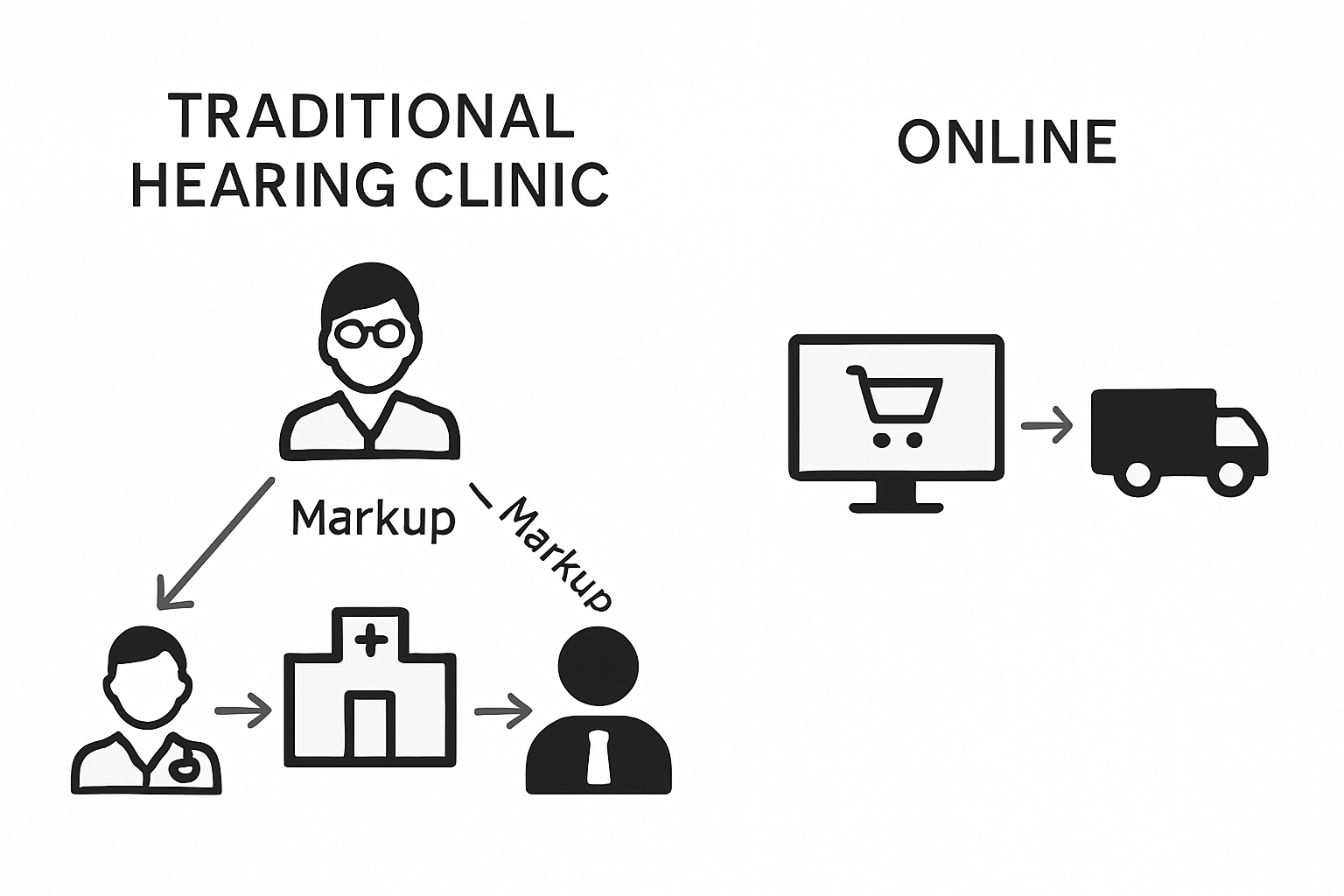
The traditional hearing aid distribution model is riddled with unnecessary expenses that significantly drive up consumer costs. Multiple intermediaries each add their own profit margins, creating a complex supply chain that ultimately burdens the end-user with inflated pricing. The NHS provides hearing aids free of charge, which highlights the potential for more affordable solutions when middlemen are eliminated from the purchasing process.
The typical markup structure in traditional hearing aid sales involves several costly layers:
- Manufacturer Markup: Initial price inflation at production stage
- Wholesale Distribution Costs: Additional percentage added by distributors
- Audiologist Professional Fees: Consultation and fitting charges
- Clinic Overhead Expenses: Operational costs passed to consumers
- Retail Profit Margins: Final layer of price escalation
Health and Social Care Trusts demonstrate an alternative model by offering hearing aids on loan with free maintenance, which effectively reduces consumer expenses. These systemic markups can transform a potentially affordable medical device into a significant financial investment, with some consumers paying several times the actual manufacturing cost. The traditional model prioritises profit generation through multiple intermediary stages, creating a complex ecosystem that keeps hearing assistance financially out of reach for many individuals who desperately need these essential devices.
Affordable Digital Hearing Aid Alternatives Online
The digital marketplace has revolutionised hearing assistance by offering more accessible and cost-effective solutions compared to traditional clinical pathways. The NHS provides hearing aids free of charge, but online platforms are increasingly presenting compelling alternatives that can significantly reduce expenses for individuals seeking hearing support.
Key advantages of online digital hearing aid alternatives include:
- Direct-to-Consumer Pricing: Eliminating multiple intermediary mark-ups
- Simplified Purchasing Process: No lengthy clinic appointments required
- Customisable Digital Features: Advanced smartphone app integration
- Remote Fitting and Adjustment: Professional support without in-person visits
- Flexible Return Policies: Risk-free trial periods for user satisfaction
Health and Social Care Trusts demonstrate that alternative distribution models can reduce consumer expenses, and online platforms are extending this principle further. Digital hearing aid alternatives leverage technological innovations to offer sophisticated devices at a fraction of traditional retail prices. By streamlining the distribution process, reducing overhead costs, and providing direct access to advanced hearing technologies, these online solutions are transforming the hearing assistance landscape, making essential auditory support more affordable and accessible for a broader range of consumers.
Discover Affordable Hearing Solutions Without Compromise
The article reveals why hearing aids often carry high price tags due to layers of mark-ups, clinic fees and advanced technology costs. This complexity can leave many people frustrated and unable to access effective hearing support quickly and affordably. If you are looking for a transparent, cost-effective alternative that puts you in control without sacrificing quality or modern features, look no further than Audora’s collection.

At GetAudora.co.uk, we eliminate unnecessary middlemen and clinical overheads so you get UKCA-certified, AI-powered hearing aids at a fraction of the usual cost. Enjoy discreet invisible designs, smartphone app control, rechargeable batteries and expert digital sound processing with none of the waiting or inflated prices. Act now and experience affordable, trusted hearing technology designed for your lifestyle. Visit our homepage to explore your options and reclaim clear sound today.
Frequently Asked Questions
Why are hearing aids so expensive?
Hearing aids are costly primarily due to advanced technology, professional fitting, and ongoing support. The costs involve sophisticated digital signal processing, noise reduction features, and Bluetooth connectivity, all of which require significant investment in research and development.
What are the key features that contribute to the cost of hearing aids?
Key features that drive the cost include digital signal processing, noise reduction algorithms, miniaturised components, and directional microphones. Each of these elements enhances the listening experience but also increases manufacturing costs.
How does the traditional distribution model affect the price of hearing aids?
The traditional distribution model involves multiple intermediaries, including manufacturers, wholesalers, and audiologists, each adding their own markup. This complex supply chain significantly inflates the final price paid by consumers.
Are there affordable alternatives to traditional hearing aids?
Yes, online digital hearing aid alternatives often offer more accessible and cost-effective solutions. These options eliminate many intermediaries, simplify the purchasing process, and provide features such as remote fitting, making them a viable choice for many users.