

Choosing a hearing aid in the british market can feel confusing when prices swing from free NHS devices to high-tech options costing up to £6,500 per pair. The variety of styles, features, and service levels means one size never fits all. Understanding what actually drives these price differences helps buyers make decisions that suit their needs and budget without sacrificing quality or support.
Table of Contents
- What Influences Hearing Aid Costs In The UK
- Comparing Hearing Aid Types And Options
- Key Features Affecting Price And Value
- NHS, Private, And Direct-To-Consumer Costs Compared
- Tips For Saving Money On Hearing Aids
Key Takeaways
| Point | Details |
|---|---|
| Cost Influencers | Hearing aid costs in the UK vary due to technological complexity, customisation, and the level of professional service provided. |
| Types of Hearing Aids | The market offers various hearing aid styles, including basic, mid-range, and premium options to accommodate different user needs and budgets. |
| Acquisition Pathways | NHS provides free basic models, while private clinics offer advanced devices at higher prices, and direct-to-consumer options provide a cost-effective alternative without professional fitting. |
| Saving Strategies | Consumers can lower costs by comparing providers, considering insurance coverage, looking for promotions, and exploring refurbished models to find suitable hearing aids at reduced prices. |
What Influences Hearing Aid Costs In The UK
Hearing aid pricing in the United Kingdom is complex, with multiple factors determining the final cost. According to NHS, while hearing aids are free through public healthcare, private providers offer significant technological variations that impact pricing significantly.
The primary cost determinants include technological complexity, research investments, and customisation features. Centre for Hearing research indicates that advanced hearing devices incorporate sophisticated elements that directly influence pricing:
- Number of sound processing channels
- Noise reduction capabilities
- Wireless connectivity options
- Smartphone integration
- Battery technology
- Size and aesthetic design
Professional services also contribute substantially to overall expenses. Comprehensive aftercare, professional fitting, ongoing adjustments, and personalised consultations can add significant value to the hearing aid’s total cost. Some providers include multi-year warranty packages and follow-up appointments, which increase initial investment but provide long-term support.
Customisation remains a critical pricing factor.
Comparing Hearing Aid Types And Options
Navigating the world of hearing aids requires understanding the diverse range of options available in the UK market. NHS highlights that hearing aid styles vary significantly, from traditional behind-the-ear (BTE) models to more advanced, discreet designs.
According to Hearing Healthcare Centre, hearing aids are categorised into three primary tiers that cater to different user needs and budgets:
- Basic Tier: Entry-level devices with fundamental sound amplification
- Mid-Range Tier: Enhanced features with improved sound processing
- Premium Tier: Advanced technology with sophisticated noise management
Each hearing aid type offers unique advantages.
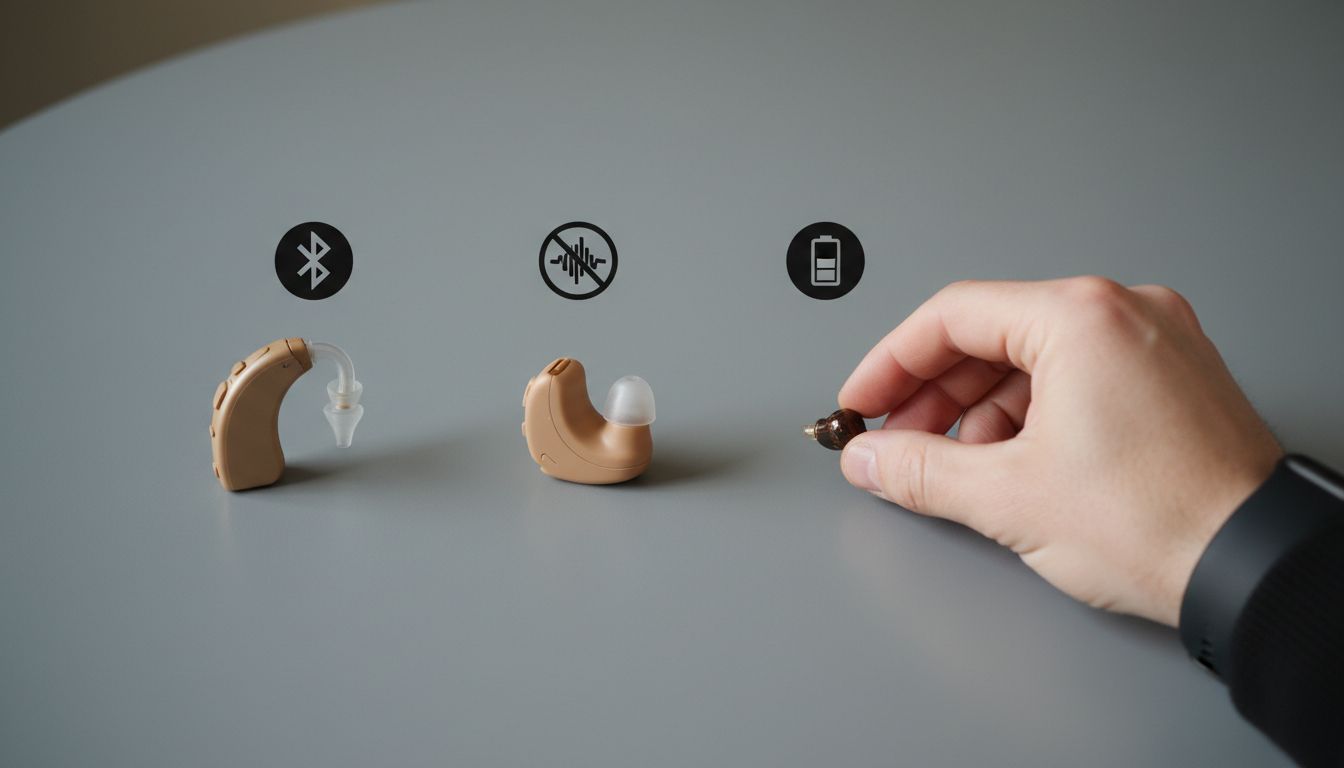 Behind-the-ear (BTE) models provide robust performance and are suitable for various hearing loss levels. In-the-ear (ITE) devices offer greater discretion, fitting directly in the ear canal. Completely-in-canal (CIC) options represent the most invisible solution, ideal for users prioritising aesthetic considerations.
Sound processing capabilities and technological sophistication significantly impact device performance. Modern hearing aids incorporate cutting-edge features like adaptive noise reduction, bluetooth connectivity, and artificial intelligence-driven sound calibration. Explore why upgrading your hearing technology can transform your auditory experience.
Key Features Affecting Price And Value
With no specific research data available for this section, we’ll explore the critical features that determine a hearing aid’s price and overall value based on industry insights and technological advancements.
The most significant price influencers include technological sophistication and customisation capabilities. Modern hearing aids offer a range of features that directly impact their cost:
- Sound Processing Channels: More channels mean more precise sound customisation
- Noise Reduction Technology: Advanced algorithms for clearer sound perception
- Wireless Connectivity: Bluetooth and smartphone app integration
- Battery Performance: Rechargeable options versus traditional battery models
- Size and Aesthetics: Smaller, more discreet designs typically cost more
Intelligent hearing devices now incorporate artificial intelligence to adapt to different listening environments. These smart technologies can automatically adjust volume, reduce background noise, and even learn user preferences over time. Such advanced capabilities significantly increase the device’s value proposition.
The level of professional support also plays a crucial role in determining overall value. Comprehensive packages that include professional fitting, ongoing adjustments, extended warranties, and follow-up consultations can substantially enhance the hearing aid’s long-term performance and user satisfaction. Discover more about upgrading your hearing technology and its potential benefits.
NHS, Private, And Direct-To-Consumer Costs Compared
Hearing aid acquisition pathways in the UK offer distinctly different experiences and financial implications. NHS provides hearing aids free of charge, offering basic behind-the-ear models with complimentary batteries and repairs, making them an attractive option for those with limited financial resources.
According to Hearing Healthcare Centre, private audiology clinics represent a comprehensive but more expensive approach. Their pricing typically ranges between £3,500 and £6,500 per pair, with key advantages including:
- Personalised comprehensive assessments
- Custom device fitting
- Advanced technological options
- Immediate appointment availability
- Comprehensive aftercare support
Direct-to-consumer hearing aids emerge as a middle-ground solution, offering more affordable pricing and greater convenience. These models typically provide lower-cost alternatives without compromising significantly on technological quality. They eliminate professional fitting fees but may require more self-management from users.
Each approach carries unique trade-offs between cost, convenience, and professional support.
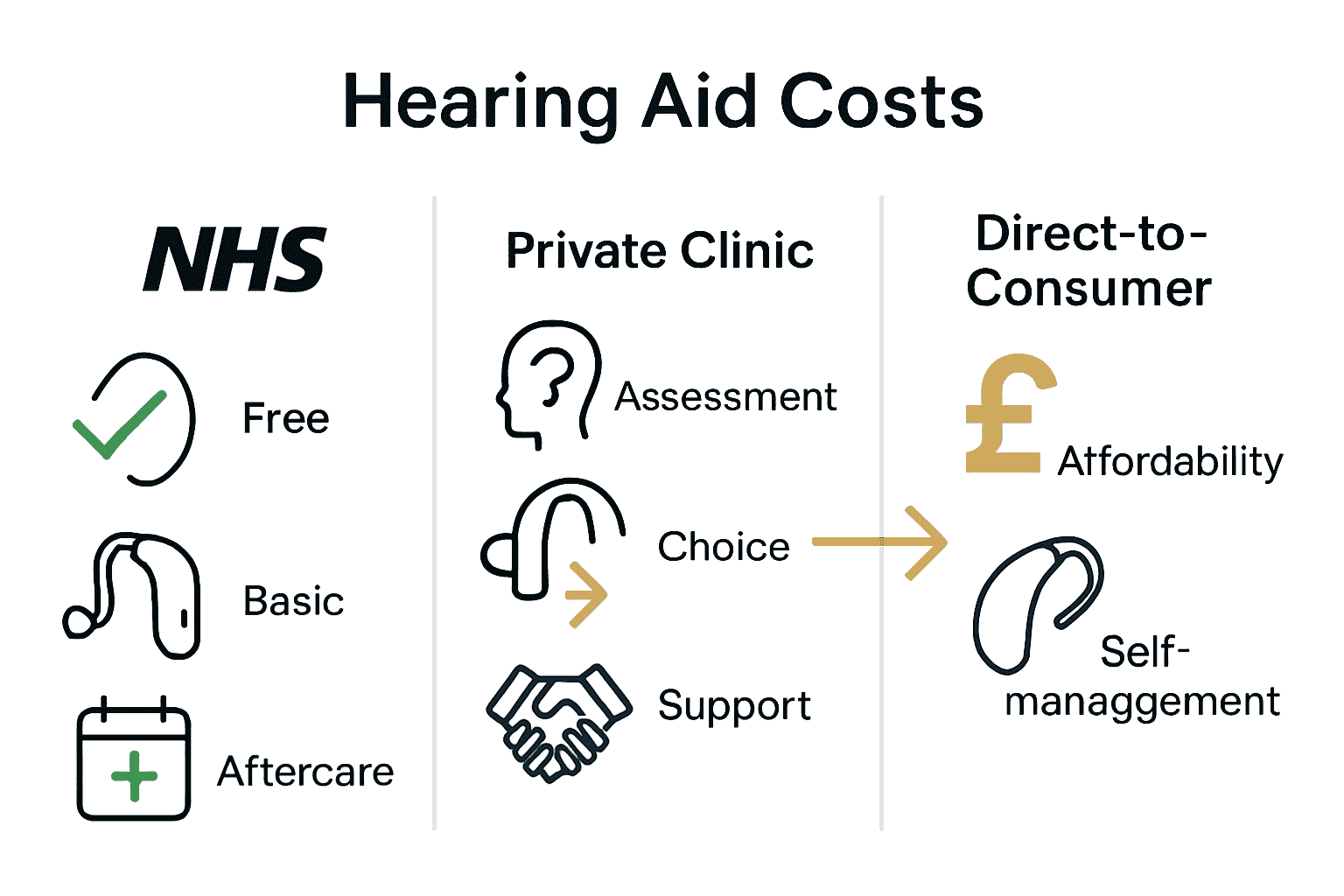 While NHS options provide essential hearing assistance at no direct cost, private and direct-to-consumer models offer increased customisation and technological sophistication. Learn more about hearing aid cost factors in our comprehensive guide.
Tips For Saving Money On Hearing Aids
NHS provides the most cost-effective solution for those seeking hearing assistance, offering free hearing aids that can significantly reduce personal expenditure. Understanding the various strategies to minimise hearing aid expenses can help individuals make financially smart decisions.
Smart saving strategies include:
- Compare Multiple Providers: Research and obtain quotes from different audiology clinics
- Consider Direct-to-Consumer Options: Often more affordable than traditional clinic routes
- Check Insurance Coverage: Some private health insurance plans offer partial reimbursement
- Look for Seasonal Promotions: Many providers offer discounts during specific periods
- Explore Refurbished or Previous Generation Models: Functional devices at reduced prices
Additional cost-saving approaches involve understanding long-term value. Investing in rechargeable hearing aids can reduce ongoing battery expenses, while devices with longer warranties provide better financial protection. Some individuals might qualify for charitable programmes or workplace health schemes that subsidise hearing technology.
Technology advances have made hearing aids more accessible. Budget-conscious consumers can now access high-quality devices without astronomical costs by being strategic about their purchasing approach. Discover simple ways to identify quality hearing aids that offer excellent value.
Discover Affordable, Advanced Hearing Solutions with Audora
Understanding hearing aid costs in the UK can feel overwhelming. Many face challenges like confusing pricing, lengthy NHS waiting lists, and expensive clinic fees for advanced technology. If you want discreet, AI-powered hearing aids that combine exceptional sound processing, rechargeable batteries, and smartphone control without breaking the bank, there is a better way. Audora offers transparent pricing by cutting out the middlemen and sales commissions, helping you save money while enjoying premium features designed for your unique hearing needs.
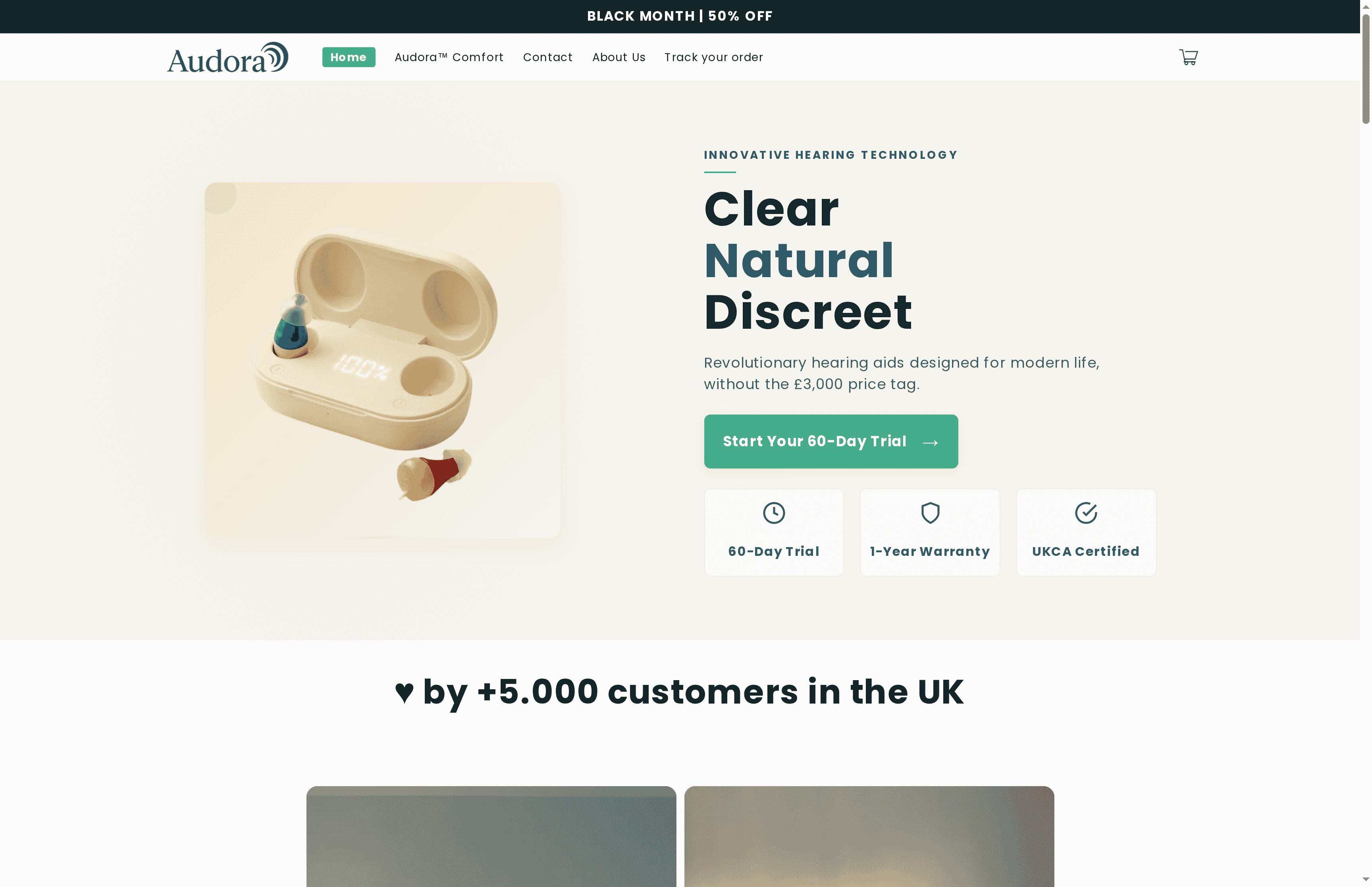
Explore our carefully curated range of UKCA-certified digital hearing aids on the Home page 013 Audora and see how modern, invisible in-ear designs can fit your lifestyle at a fraction of traditional costs. Act now during National Hearing Week to take advantage of limited-time discounts and step into a future of clear, comfortable hearing without the wait. Visit GetAudora.co.uk today to browse our selection and find the perfect solution tailored just for you.
Frequently Asked Questions
What factors influence the cost of hearing aids?
Hearing aid costs are influenced by factors such as technological complexity, research investments, customisation features, and professional services. Advanced devices with more sound processing channels, noise reduction capabilities, wireless options, and comprehensive aftercare typically cost more.
How do different hearing aid types compare in terms of price?
Hearing aids are typically categorised into three tiers: basic, mid-range, and premium. Basic models offer fundamental sound amplification at a lower cost, whereas premium models with advanced features like artificial intelligence can range from £3,500 to £6,500 per pair.
Are there effective ways to save money on hearing aids?
Yes, you can save money by comparing quotes from multiple providers, considering direct-to-consumer options, checking insurance coverage, looking for seasonal promotions, and exploring refurbished models. Additionally, investing in rechargeable options can reduce long-term battery costs.
What are the benefits of choosing NHS hearing aids compared to private options?
NHS hearing aids are provided free of charge, offering essential sound amplification without direct costs. However, private options provide personalised assessments, advanced technology, and comprehensive support but at a significantly higher price point.