

Most british consumers are surprised to learn that hearing aids can range from entirely free to several thousand pounds, depending on where and how they are sourced. With such a wide gap in pricing, understanding what drives hearing aid costs becomes essential when making the right choice for hearing health. This breakdown explores the real factors that shape pricing, from technology levels to aftercare, giving clarity for anyone trying to balance budget and quality.
Table of Contents
- How Cost Is Defined And Structured
- Technology Levels And Feature Influence
- Device Styles And Customization Costs
- Brand, Manufacturer And Distribution Impact
- Service, Aftercare And Warranty Factors
- Ongoing Maintenance And Accessory Expenses
Key Takeaways
| Point | Details |
|---|---|
| Hearing Aid Pricing Structure | Hearing aids can cost from free NHS options to up to £3,000 for premium private devices, depending on technology and services offered. |
| Technology Impact on Cost | The complexity and features of hearing aids significantly influence their pricing, with advanced options providing greater performance for higher costs. |
| Device Styles and Customisation | Different styles of hearing aids cater to various preferences, with costs rising significantly for custom-fitted solutions. |
| Ongoing Maintenance Expenses | Consumers should budget for continued costs including batteries, cleaning supplies, and maintenance, which can amount to 10-15% of the device cost annually. |
How Cost Is Defined And Structured
Hearing aid costs are complex and influenced by multiple interconnected factors that determine their final price. Pricing structures in the hearing assistance market typically range from free NHS provisions to private sector options costing several thousand pounds, reflecting significant variation in technology and service levels.
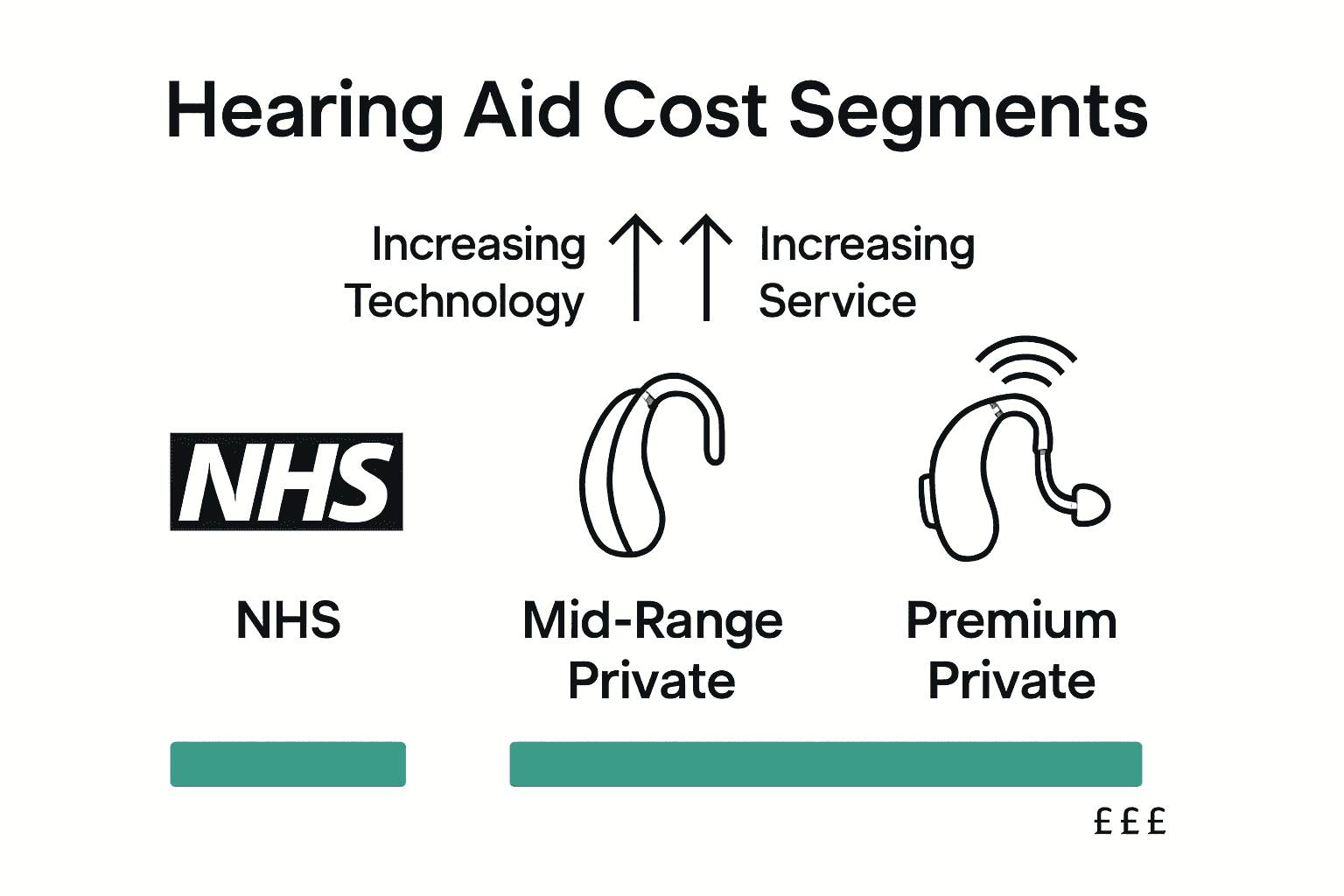
According to NHS UK, hearing aid pricing can be categorised into three primary segments:
- NHS Provided: Completely free hearing aids on long-term loan
- Mid-Range Private: Devices ranging from £500-£1,500
- Premium Private: Advanced technological solutions between £1,500-£3,000
The core components determining hearing aid costs include technological complexity, feature sophistication, and associated professional services. Publications Parliament highlights that digital hearing aids have been available privately for years, with prices fluctuating based on intricate technological capabilities.
Key cost-defining elements involve:
- Sound processing technology
- Wireless connectivity features
- Battery type and longevity
- Customisation and fitting complexity
- Ongoing maintenance and support services
Understanding these nuanced pricing structures empowers consumers to make informed decisions about their hearing health investment, balancing budget constraints with technological requirements.
Technology Levels And Feature Influence
Modern hearing aid technology ranges from basic amplification devices to sophisticated, AI-powered solutions that dynamically adapt to complex listening environments. These technological variations significantly impact both performance and pricing, creating a diverse spectrum of hearing assistance options for consumers.
Hearing aid technology can be categorised into three primary levels:
- Basic Technology Level
- Simple sound amplification
- Limited noise reduction
- Manual volume control
- Most affordable option
- Mid-Range Technology Level
- Digital signal processing
- Adaptive noise cancellation
- Multiple listening programme settings
- Basic wireless connectivity
- Advanced Technology Level
- Machine learning sound adaptation
- Artificial intelligence noise management
- Bluetooth smartphone integration
- Rechargeable battery systems
- Directional microphone technology
Feature complexity directly influences hearing aid pricing and performance. Advanced technologies like artificial intelligence and machine learning enable devices to distinguish between speech and background noise, automatically adjust sound profiles, and provide near-natural hearing experiences. These sophisticated features require complex computational capabilities, precision engineering, and advanced microprocessors.
Critical technological features that impact hearing aid functionality include:
- Sound clarity enhancement
- Background noise reduction
- Speech recognition algorithms
- Feedback suppression mechanisms
- Wireless streaming capabilities
Understanding these technological nuances helps consumers select hearing devices that best match their specific hearing requirements, lifestyle needs, and budgetary constraints.
Device Styles And Customization Costs
Hearing aid device styles represent a critical factor in both personal comfort and overall cost, with multiple design options catering to diverse hearing needs and aesthetic preferences. NHS UK highlights that different hearing aid styles significantly impact user experience and pricing structures.
Hearing Aid Device Styles include:
- Behind-the-Ear (BTE)
- Most traditional style
- Suitable for various hearing loss levels
- Typically most affordable
- Easy to maintain and adjust
- Receiver-in-the-Ear (RITE)
- Smaller and more discreet
- Enhanced sound quality
- Moderate price point
- Good for mild to moderate hearing loss
- In-the-Ear (ITE)
- Custom-fitted to ear canal
- Virtually invisible
- Higher customization costs
- Best for specific ear shape requirements
- Completely-in-Canal (CIC)
- Smallest and most concealed option
- Maximum aesthetic discretion
- Premium pricing
- Limited for complex hearing needs
Customization significantly influences hearing aid pricing. Factors affecting personalization costs include:
- Precise ear canal measurements
- Advanced digital sound processing
- Individual hearing profile programming
- Material selection and comfort design
- Wireless connectivity integration
Professional fitting and calibration can add substantial expense to the base device cost, with custom solutions potentially increasing overall investment by 20-40%. Consumers must balance aesthetic preferences, technological requirements, and budgetary constraints when selecting their ideal hearing assistance device.
Brand, Manufacturer And Distribution Impact
Hearing aid pricing is profoundly influenced by brand reputation, manufacturing complexity, and distribution channels. Health Centre confirms that private hearing aid costs can range dramatically from £500 to £2,000, with brand and distribution methods playing crucial roles in determining final pricing.
Distribution Channels significantly impact hearing aid costs:
- Direct-to-Consumer
- Lowest overhead costs
- Minimal intermediary markups
- Potentially most affordable option
- Limited personalised fitting services
- Audiology Clinics
- Comprehensive professional assessment
- Personalised fitting and calibration
- Higher service-related costs
- Extended support and follow-up
- NHS Commissioned
- Free device provision
- Limited style and technology options
- Standard fitting procedures
- Longer waiting periods
Manufacturer pricing strategies create substantial cost variations. Key factors influencing brand pricing include:
- Research and development investment
- Manufacturing technology sophistication
- Brand market positioning
- Intellectual property and patent technologies
- Global supply chain complexity
Top-tier manufacturers invest significantly in technological innovation, which directly translates into higher device costs. Consumers must carefully evaluate the balance between brand reputation, technological advancement, and personal budget constraints when selecting hearing assistance solutions.
Service, Aftercare And Warranty Factors
Hearing aid service and aftercare represent crucial considerations that significantly impact long-term device value and user experience. NHS UK highlights that comprehensive aftercare services can substantially influence overall hearing aid ownership costs and satisfaction levels.
Warranty Coverage Categories:
- Basic Warranty
- Typically 1-2 years duration
- Covers manufacturing defects
- Limited repair options
- Minimal replacement provisions
- Extended Warranty
- 3-5 years protection
- Comprehensive device replacement
- Annual maintenance checks
- Broader technical support
- Premium Warranty
- Unlimited repairs
- Regular professional calibration
- Immediate device replacement
- Comprehensive technical support
Aftercare services typically encompass several critical components:
- Annual hearing assessments
- Device cleaning and maintenance
- Battery replacement support
- Technical recalibration
- Software updates
Consumers should carefully evaluate warranty terms, considering factors like:
- Repair turnaround times
- Replacement device provisions
- Geographic service coverage
- Technical support accessibility
- Cost of extended protection plans
Understanding these nuanced service factors helps individuals make informed decisions, ensuring long-term hearing health management and device performance reliability.
Ongoing Maintenance And Accessory Expenses
Ongoing maintenance represents a significant yet often overlooked aspect of hearing aid ownership, with potential expenses extending well beyond the initial device purchase. NHS UK highlights that while NHS-provided devices include free repairs, private hearing aid users must carefully budget for continuous accessory and maintenance costs.
Primary Ongoing Expenses:
- Battery Costs
- Disposable battery replacement
- Average monthly expense: £5-£10
- Frequency depends on device usage
- Technology impacts battery consumption
- Cleaning Accessories
- Specialised cleaning tools
- Moisture removal kits
- Protective carrying cases
- Annual cost: £30-£80
- Maintenance Supplies
- Wax guards
- Drying equipment
- Professional cleaning solutions
- Replacement tubing
- Estimated yearly investment: £50-£150
Accessory expenses can be strategically managed through:
- Bulk purchasing strategies
- Manufacturer maintenance packages
- Regular self-maintenance routines
- Preventative cleaning techniques
- Warranty-included service options
Critical factors influencing long-term maintenance costs include device complexity, wearing environment, personal hygiene practices, and technological sophistication. Consumers should anticipate approximately 10-15% of the original device cost as annual maintenance expenditure, ensuring optimal performance and extended device lifespan.
Take Control of Your Hearing Aid Costs Today
Understanding the complexities behind hearing aid pricing can feel overwhelming. From technology levels to ongoing maintenance and aftercare, the costs add up quickly. If you are seeking an affordable, transparent solution that balances advanced features like digital signal processing and rechargeable batteries with budget concerns, there is a better way. Audora offers a direct-to-consumer approach that eliminates middlemen and clinic markups, making it easier than ever to invest in high-quality, AI-powered hearing aids without compromising on comfort or performance.
Explore our selection at the Home page – Audora and discover discreet devices designed for your lifestyle. With our fully UKCA-certified hearing aids, you can enjoy smartphone app control and invisible in-ear designs while benefiting from competitive pricing and comprehensive warranty options. Start your journey to clearer hearing now by visiting https://getaudora.co.uk. Your hearing health deserves innovative care without the wait or excessive costs.
Frequently Asked Questions
What factors influence the cost of hearing aids?
Hearing aid costs are influenced by multiple factors including technological complexity, feature sophistication, customization and fitting requirements, warranty services, and ongoing maintenance needs. Prices can range from free NHS provisions to several thousand pounds in the private sector.
What types of technology levels are available in hearing aids?
Hearing aids range from basic technology, which offers simple sound amplification, to advanced technology, featuring machine learning, Bluetooth connectivity, and rechargeable battery systems. Mid-range devices typically provide digital processing and noise cancellation features.
How does device style affect the price of hearing aids?
Different hearing aid styles, such as Behind-the-Ear (BTE), Receiver-in-the-Ear (RITE), In-the-Ear (ITE), and Completely-in-Canal (CIC), have varying costs. Custom styles generally involve higher customization expenses, affecting overall pricing.
What ongoing maintenance costs should I anticipate when using hearing aids?
Ongoing maintenance costs can include disposable batteries, cleaning accessories, and professional maintenance supplies. On average, you should expect to spend around 10-15% of your hearing aid’s original cost annually for maintenance and accessories.