

Nearly half of British adults with hearing loss delay getting help due to inconvenience, but technology is rapidly changing that reality. Remote hearing aid adjustment now gives people personalised care without the need for multiple clinic visits. This breakthrough approach offers on-demand, real-time support, making hearing healthcare more accessible and adaptable than ever for British users.
Table of Contents
- Remote Hearing Aid Adjustment Defined
- How Remote Adjustments Work for Users
- Major Benefits Over Traditional Fittings
- Safety, Privacy, and UK Regulations
- Cost Implications and Common Limitations
Key Takeaways
| Point | Details |
|---|---|
| Innovative Adjustment Method | Remote hearing aid adjustment allows personalised configuration without in-person visits, enhancing flexibility and user convenience. |
| Technological Integration | Utilising smartphone apps and cloud-based tools, audiologists can offer real-time adjustments tailored to individual hearing profiles. |
| Benefits Over Traditional Methods | Users save time and travel costs, receiving continuous, adaptable support that responds to their changing hearing needs. |
| Safety and Compliance | Remote adjustments must adhere to UK regulations ensuring data protection and patient safety during digital healthcare interactions. |
Remote Hearing Aid Adjustment Defined
Remote hearing aid adjustment represents a transformative approach in audiology that enables personalised hearing device configuration without traditional in-person clinic visits. The British Society of Audiology defines this process as a method where clinicians or users can modify hearing aid settings using digital technology, providing unprecedented flexibility for individuals managing hearing challenges.
This innovative technique involves using specialised software and connectivity platforms that allow precise audiological adjustments from the comfort of one’s home. Audiologists can remotely access hearing aid settings, analyse performance data, and make nuanced modifications tailored to an individual’s specific hearing profile. Unlike traditional methods requiring multiple clinic appointments, remote adjustment technology streamlines the entire hearing care experience, reducing time, travel costs, and logistical complexities.
Key components of remote hearing aid adjustment typically include smartphone applications, cloud-based diagnostic tools, and advanced digital interfaces that enable real-time communication between users and hearing healthcare professionals. These technologies facilitate comprehensive assessments, including sound environment analysis, feedback calibration, and personalised sound profile refinement. By leveraging artificial intelligence and sophisticated algorithms, remote adjustments can provide more responsive and dynamic hearing support compared to static, one-time clinic configurations.
Pro Tip: Ensure your hearing aid is compatible with remote adjustment technologies before investing, and confirm the technical support infrastructure offered by your chosen provider to maximise the potential of these cutting-edge digital hearing solutions.
How Remote Adjustments Work for Users
Remote hearing aid adjustments leverage advanced digital technologies to transform traditional hearing care delivery. Modern hearing aids now come equipped with sophisticated Remote Care capabilities that enable users to receive personalised audiological support without leaving their home. This innovative approach allows direct communication between users and hearing healthcare professionals through specialised smartphone applications and digital platforms.
The process typically involves several key technological interactions. Users can connect their hearing devices to dedicated smartphone applications, which serve as comprehensive diagnostic and adjustment interfaces. These apps enable real-time data transmission, allowing audiologists to analyse hearing performance metrics, assess sound environment interactions, and make precise calibration recommendations. Advanced algorithms and artificial intelligence help translate complex audiological data into user-friendly adjustment protocols, ensuring personalised and responsive hearing support.
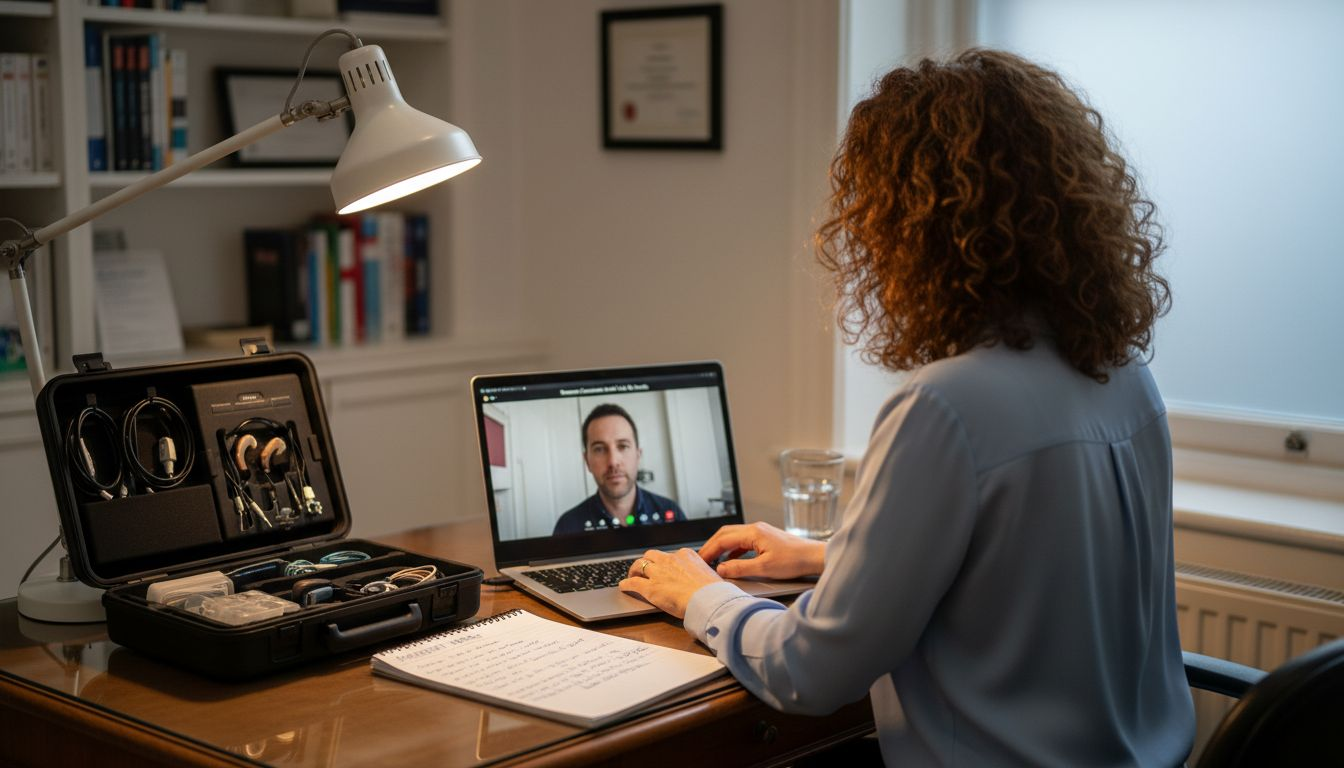
Communication channels in remote hearing aid adjustment are designed to be seamless and secure. Users can submit detailed feedback about their hearing experiences, upload sound environment recordings, and receive customised device configurations directly through encrypted digital platforms. This approach eliminates traditional barriers like geographical distance, mobility challenges, and time constraints associated with in-person clinic visits. Audiologists can review performance data, generate nuanced sound profile modifications, and push updated settings directly to the user’s hearing devices within minutes.
Pro Tip: Always ensure a stable internet connection and updated smartphone application when performing remote hearing aid adjustments, as seamless digital communication is crucial for accurate device configuration and optimal hearing support.
Major Benefits Over Traditional Fittings
Remote hearing aid adjustments represent a significant leap forward in hearing healthcare, offering substantial advantages over traditional in-clinic fitting methods. Why Hearing Aids Need Adjustment highlights the critical importance of personalised device configuration, which remote technologies now deliver with unprecedented convenience and precision.
The most compelling benefits include dramatically reduced time and logistical constraints. Traditional hearing aid fittings typically require multiple lengthy clinic appointments, involving significant travel, waiting times, and scheduling complexities. Remote adjustments eliminate these barriers, allowing users to receive expert audiological support from the comfort of their home. Individuals with mobility challenges, busy professionals, rural residents, and those with caregiving responsibilities can now access high-quality hearing healthcare without disrupting their daily routines.
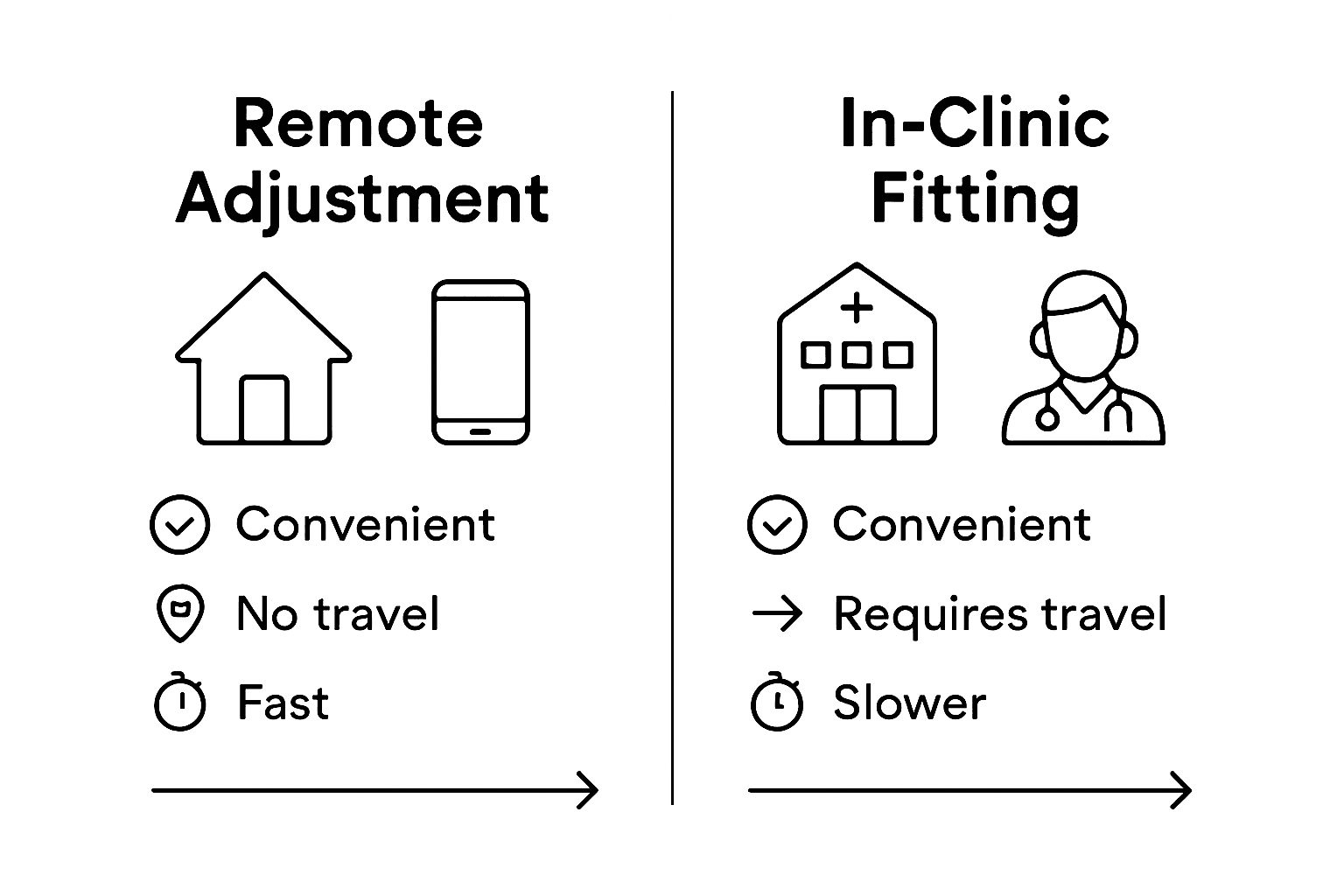
Technological advancements in remote hearing aid adjustment provide more comprehensive and dynamic support compared to static, one-time clinic configurations. Digital platforms enable continuous monitoring and real-time performance tracking, allowing audiologists to make nuanced modifications based on actual user experiences. Advanced algorithms analyse sound environment data, user feedback, and hearing performance metrics to generate increasingly precise device calibrations. This ongoing, adaptive approach ensures hearing aids remain optimally configured as users’ hearing needs and environmental interactions evolve over time.
Pro Tip: Request a comprehensive remote adjustment tutorial from your hearing healthcare provider to fully understand the digital tools and communication protocols required for seamless remote hearing aid support.
Here is a comparison of remote hearing aid adjustments versus traditional in-clinic fittings:
| Aspect | Remote Adjustment | In-Clinic Fitting |
|---|---|---|
| Convenience | Accessible from home | Requires clinic visits |
| Time Investment | Minutes per session | Multiple lengthy appointments |
| Travel Needs | No travel required | Travel often necessary |
| Environmental Adaptability | Real-time, dynamic updates | Fixed, static settings |
| Frequency of Support | Ongoing, as needed | Scheduled, less frequent |
| User Suitability | Ideal for digital users | Best for those needing hands-on care |
Safety, Privacy, and UK Regulations
Remote hearing aid adjustments must adhere to stringent safety and privacy standards established by UK healthcare regulations. The UK Department of Health and Social Care provides comprehensive policy guidelines governing the sale and configuration of medical hearing devices, ensuring patient protection through robust legislative frameworks that prioritise user safety and professional accountability.
Privacy considerations are paramount in remote hearing healthcare interactions. The British Society of Hearing Aid Audiologists emphasises the critical importance of maintaining confidentiality during remote appointments. This involves conducting consultations over encrypted, secure digital platforms and ensuring that users can discuss their hearing health in environments that guarantee personal information remains completely protected. Advanced encryption technologies, secure video conferencing protocols, and strict data protection measures are now standard requirements for any professional providing remote hearing aid adjustment services.
Regulatory compliance extends beyond digital security to encompass comprehensive medical device standards. UK regulations mandate that all hearing aid technologies undergo rigorous testing and certification processes, ensuring they meet exacting performance and safety criteria. This includes verifying electronic component reliability, assessing potential electromagnetic interference, and confirming that devices comply with medical device directives. Remote adjustment platforms must additionally demonstrate robust authentication mechanisms, protecting user identities and preventing unauthorized access to sensitive healthcare information.
Pro Tip: Always verify your hearing healthcare provider’s data protection credentials and ask about their specific protocols for securing remote consultation information before participating in any digital hearing assessment.
Cost Implications and Common Limitations
Remote hearing aid assistance presents both opportunities and challenges in modern audiological healthcare. While these technologies can potentially reduce overall treatment costs by minimising clinic visits and streamlining adjustments, users must carefully evaluate the initial investment and ongoing technological requirements. The financial landscape involves considering device compatibility, digital infrastructure, and potential additional software or subscription fees associated with remote hearing care platforms.
Technological proficiency represents a significant limitation in remote hearing aid adjustments. Not all users possess the same level of digital literacy, which can create barriers to effective implementation. Guidance from professional audiology associations highlights potential diagnostic constraints when conducting comprehensive hearing assessments exclusively through digital platforms. Certain precise measurements and nuanced frequency response calibrations may still require in-person professional evaluation, potentially limiting the complete transition to remote healthcare models.
Cost considerations extend beyond immediate financial investments to include long-term value and potential savings. Remote hearing aid adjustment technologies can reduce transportation expenses, minimise time away from work, and provide more frequent, flexible healthcare interactions. However, users must weigh these advantages against potential limitations in diagnostic depth, technological complexity, and the need for occasional in-person professional assessments. The most effective approach often involves a hybrid model that combines remote and traditional hearing healthcare strategies.
Pro Tip: Conduct a comprehensive cost-benefit analysis by requesting detailed pricing information from your hearing healthcare provider, including potential subscription fees, technology compatibility costs, and a clear breakdown of remote versus in-person service expenses.
The following table summarises key challenges and considerations regarding remote hearing aid adjustments:
| Challenge | Description | Mitigation Strategy |
|---|---|---|
| Technological Literacy | Users may lack digital skills | Provide clear tutorials and ongoing support |
| Diagnostic Limitations | Some assessments need in-person testing | Employ hybrid care models for accuracy |
| Costs & Subscriptions | Potential device and app fees | Clarify pricing and compatibility upfront |
| Data Security | Risks of digital breaches | Use encrypted, regulated platforms exclusively |
Discover Seamless Hearing Care with Remote Adjustment Technologies
Managing hearing loss should never be complicated or time-consuming. The challenges of traditional hearing aid fittings, including repeated clinic visits and limited flexibility, can be frustrating. Remote hearing aid adjustments offer a practical solution by letting you customise your device settings from home, ensuring your hearing aids adapt to your lifestyle and environment in real time.
At Audora, we understand these concerns and provide innovative AI-powered hearing aids that work seamlessly with remote adjustment technology. Our UKCA-certified devices feature smartphone app control and rechargeable batteries, enabling effortless personalisation without the need for frequent appointments. Enjoy clear, dynamic sound with discreet designs that deliver comfort and confidence.

Experience the future of hearing care by exploring our range at https://getaudora.co.uk. Take control of your hearing health today with solutions designed for convenience, affordability, and cutting-edge technology. Don’t wait for the clinic schedule — start your hearing journey now with Audora’s remote-friendly devices and full support.
Frequently Asked Questions
What is remote hearing aid adjustment?
Remote hearing aid adjustment is a method that allows audiologists to modify hearing aid settings digitally, providing personalised configurations without the need for in-person clinic visits.
How do remote hearing aid adjustments work for users?
Users connect their hearing devices to smartphone applications that facilitate real-time communication with audiologists, allowing for precise adjustments based on individual feedback and performance data.
What are the benefits of remote hearing aid adjustments compared to traditional fittings?
Remote adjustments offer increased convenience, reduced travel and time commitments, and the ability to make ongoing, dynamic updates to hearing aids based on actual user experience, unlike static traditional fittings.
Are there any safety and privacy concerns with remote hearing aid adjustments?
Yes, remote hearing aid adjustments must adhere to strict safety and privacy standards, including secure communication platforms and compliance with regulations to protect user data and maintain confidentiality.
Recommended
- Why Hearing Aids Need Adjustment – Ensuring Optimal Benefit – Audora
- Fitting Hearing Aids at Home: A Simple Step-by-Step Guide – Audora
- Hearing Aid Troubleshooting Guide for Clearer Sound – Audora
- Hearing Aid Fitting Explained: Complete UK Guide – Audora
- Best Reading Glasses for Mature Men – Expert Comparison 2025 – ministry of sight