

Finding the right solution for mild hearing loss has become much easier for british adults. Traditional audiologist appointments can cost thousands of pounds and involve long waiting periods. Now, over-the-counter hearing aids make high-quality hearing support accessible and affordable, saving users as much as 80 percent compared to traditional routes. Whether you want to learn about the latest features, understand safety requirements, or compare types, this guide takes a close look at what matters for anyone navigating the british hearing aid market.
Table of Contents
- Defining Over-the-Counter Hearing Aids
- Types And Key Features Explained
- How OTC Hearing Aids Work For Users
- UK Rules: Safety And Legal Requirements
- Comparing OTC And Traditional Hearing Aids
- Costs, Savings, And Common Pitfalls
Key Takeaways
| Point | Details |
|---|---|
| Accessibility and Affordability | Over-the-counter hearing aids provide a cost-effective alternative for individuals with mild to moderate hearing loss, eliminating the need for expensive professional consultations. |
| Technology Integration | These devices incorporate advanced features such as Bluetooth connectivity and customisable sound profiles, enabling users to personalise their hearing experience effectively. |
| User Empowerment | OTC hearing aids allow users to conduct personal hearing assessments and make adjustments independently, fostering greater control over their auditory health. |
| Regulatory Compliance | It’s essential to verify that any OTC hearing aid meets UK safety and performance standards before purchase to ensure reliability and effectiveness. |
Defining Over-the-Counter Hearing Aids
Over-the-counter (OTC) hearing aids represent a revolutionary approach to hearing healthcare in the United Kingdom. These innovative devices allow individuals experiencing mild to moderate hearing loss to access hearing enhancement technology without the traditional requirement of a professional audiologist assessment. According to the UK government’s policy statement, OTC hearing aids are designed to balance patient safety with improved technological access.
Unlike traditional prescription hearing aids, over-the-counter hearing devices can be purchased directly by consumers without professional intervention. These self-fitting devices typically feature adjustable sound settings, digital signal processing, and smartphone connectivity, enabling users to personalise their hearing experience. The primary advantage lies in their accessibility and affordability, removing barriers such as lengthy clinic appointments and expensive professional consultations.
The key characteristics of OTC hearing aids include their user-friendly design, compact size, and advanced technology. Most models offer features like rechargeable batteries, noise reduction capabilities, and custom sound profile settings. They are particularly suitable for adults experiencing mild hearing challenges who want a convenient, cost-effective solution. By eliminating intermediary healthcare professionals, these devices democratise hearing technology and provide individuals greater control over their auditory health.
Pro Tip: Research and Compare: Always read multiple product reviews and compare technical specifications before purchasing an OTC hearing aid to ensure you select a device that matches your specific hearing requirements.
Types and Key Features Explained
Over-the-counter hearing aids come in diverse formats, offering users unprecedented flexibility in addressing their hearing needs. The UK government’s policy guidelines highlight the variety of self-fitting devices that incorporate wireless technologies, enabling personalised hearing experiences through advanced software and digital controls.
The primary types of OTC hearing aids include in-ear, behind-the-ear, and smartphone-integrated models. Some devices resemble traditional hearing aids, while others look like modern wireless earbuds. Research from the Royal National Institute for Deaf People suggests these devices can range from standalone hardware to software applications that transform existing audio devices into hearing assistance tools.

Here’s how the main OTC hearing aid types differ:
| Device Type | Appearance | Best Suited For | Key Benefit |
|---|---|---|---|
| In-ear | Discreet, fits within ear canal | Subtle daily use | Nearly invisible |
| Behind-the-ear | Hooks behind ear, visible | Extended wearers | Longer battery life |
| Smartphone-integrated | Resembles wireless earbuds | Tech-savvy individuals | App-based adjustments |
Key technological features that distinguish modern OTC hearing aids include:
- Digital Sound Processing: Advanced algorithms that filter background noise
- Bluetooth Connectivity: Seamless integration with smartphones and audio devices
- Rechargeable Batteries: Eliminating the need for constant battery replacements
- Customisable Sound Profiles: User-adjustable settings for different listening environments
- Smartphone App Controls: Intuitive interfaces for fine-tuning hearing experiences
Pro Tip: Hearing Compatibility Check: Before purchasing, verify the OTC hearing aid’s compatibility with your existing smartphone or audio devices to ensure smooth technological integration.
How OTC Hearing Aids Work for Users
The UK government’s policy guidelines emphasise that over-the-counter hearing aids are designed specifically for adults experiencing mild to moderate hearing loss. These innovative devices empower users with direct control over their hearing enhancement, allowing personalised adjustments through intuitive digital interfaces and smartphone applications.
The core functionality of OTC hearing aids revolves around advanced sound processing technologies. Users can typically perform self-administered hearing assessments through integrated smartphone apps, which help calibrate the device’s settings to match individual hearing profiles. Hearing aid research suggests these devices can significantly improve communication confidence by providing real-time sound amplification and noise reduction.
The user experience with OTC hearing aids typically involves several key interaction stages:
- Initial Setup: Conducting a personal hearing assessment
- Device Pairing: Connecting to smartphones or other digital devices
- Sound Customisation: Adjusting volume, treble, and bass settings
- Environment Adaptation: Switching between different sound profiles
- Maintenance: Tracking battery life and performing software updates
Pro Tip: Hearing Profile Precision: Perform your initial hearing assessment in a quiet environment and repeat the test periodically to ensure your OTC hearing aid remains accurately calibrated to your current hearing needs.
UK Rules: Safety and Legal Requirements
The UK government’s policy statement demonstrates a careful approach to regulating over-the-counter hearing aids, balancing innovation with consumer protection. The regulatory framework is designed to ensure that these devices meet stringent safety standards while providing individuals with greater accessibility to hearing enhancement technologies.
The British Academy of Audiology’s guidance emphasises strict adherence to existing medical device regulations, including the Health Professions Order 2001. This regulatory oversight ensures that OTC hearing aids undergo rigorous testing and meet specific performance criteria before reaching consumers. Key legal requirements include:
- Medical Device Classification: Must be registered and approved under UK medical device regulations
- Safety Standards: Compliance with electromagnetic compatibility and electrical safety guidelines
- Performance Specifications: Demonstrable effectiveness for mild to moderate hearing loss
- Manufacturer Accountability: Clear documentation of device capabilities and limitations
- Consumer Protection: Mandatory warranty and return policy provisions
Pro Tip: Regulatory Verification: Always request and review the device’s UKCA (UK Conformity Assessed) certification before purchasing, ensuring the hearing aid meets official safety and performance standards.
Comparing OTC and Traditional Hearing Aids
Hearing aid research reveals significant differences between over-the-counter (OTC) and traditional hearing aids that can dramatically impact user experience and accessibility. The fundamental distinction lies in the procurement process, with traditional hearing aids requiring professional audiological assessment and prescription, while OTC devices offer a more direct purchasing route for individuals with mild to moderate hearing loss.
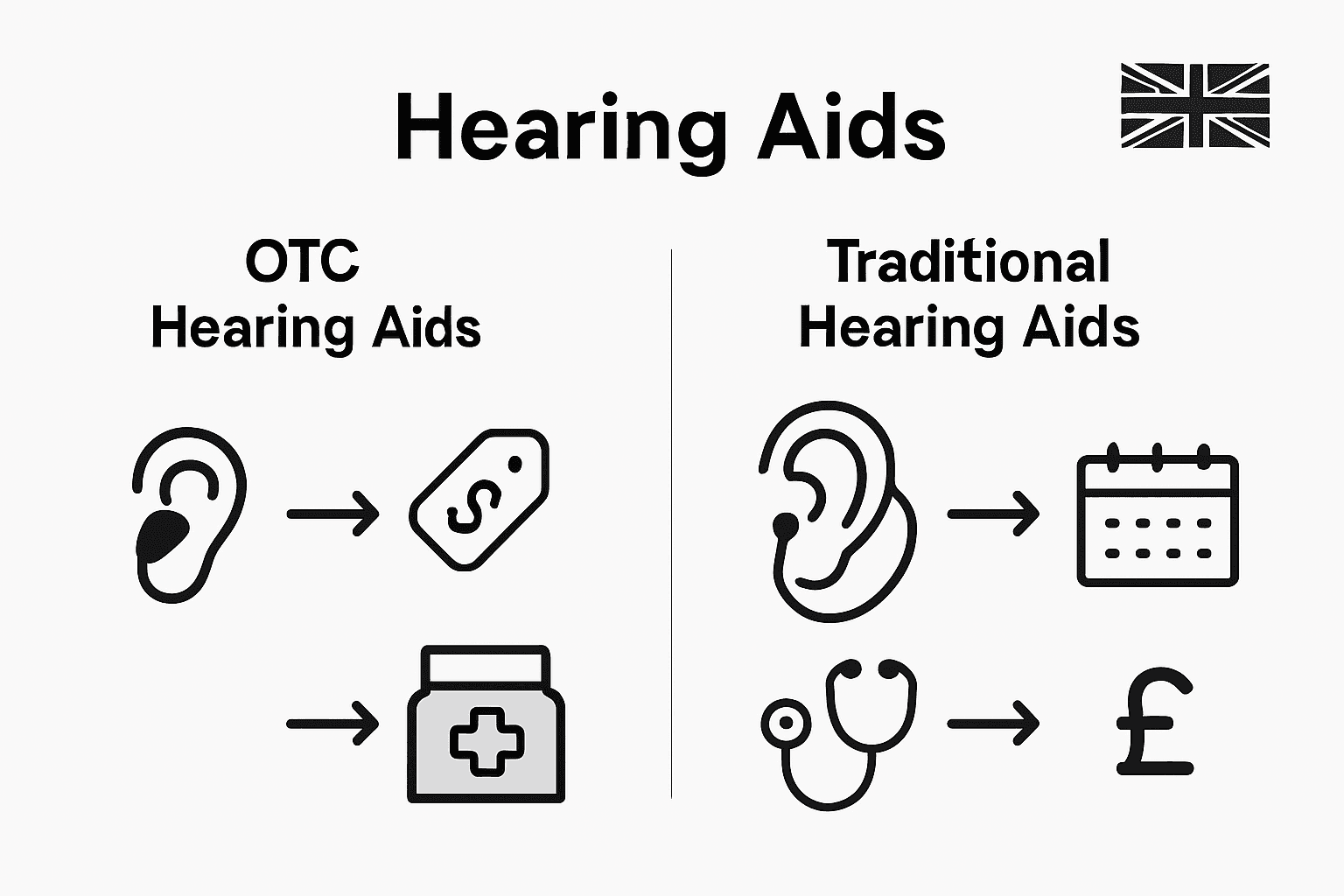
The key comparative aspects between OTC and traditional hearing aids encompass several critical dimensions. Traditional hearing aids typically involve comprehensive hearing tests, custom ear moulds, professional fitting, and ongoing clinical support. In contrast, OTC hearing aids prioritise user autonomy, offering self-fitting technologies, smartphone app integration, and more affordable pricing structures that eliminate professional consultation fees.
Comparative features include:
- Accessibility: OTC devices require no professional appointment
- Cost: OTC hearing aids are significantly more affordable
- Customisation: Traditional aids offer more precise professional calibration
- Technology: OTC devices leverage smartphone app controls
- Suitability: Traditional aids better serve complex hearing challenges
Pro Tip: Hearing Assessment Strategy: Consider starting with an OTC hearing aid for mild hearing loss, but schedule a professional audiological assessment if you experience persistent hearing difficulties or unexpected device performance issues.
Costs, Savings, and Common Pitfalls
UK government policy highlights the transformative potential of over-the-counter hearing aids in reducing financial barriers for individuals with hearing loss. Traditional hearing aid pathways often involve substantial expenses, including multiple professional consultations, custom fittings, and ongoing maintenance, which can easily exceed £3,000 to £4,000 for a comprehensive hearing solution.
Over-the-counter hearing aids dramatically reduce these expenses by eliminating intermediary costs associated with clinical assessments and personalised fittings. Most OTC devices range between £300 to £800, representing a significant saving of approximately 70-80% compared to traditional hearing aid procurement routes. However, potential users must carefully evaluate their specific hearing requirements to ensure the selected device provides appropriate sound enhancement and functionality.
See the financial differences between hearing aid options:
| Cost Aspect | OTC Hearing Aids | Traditional Hearing Aids |
|---|---|---|
| Typical Price Range | £300 – £800 | £3,000 – £4,000+ |
| Professional Fees | Not required | Included, often expensive |
| Ongoing Support | Limited online help | Full in-person support |
| Overall Savings | Around 70–80% lower | High initial and ongoing |
Common pitfalls when purchasing OTC hearing aids include:
- Inadequate Hearing Assessment: Overlooking professional hearing evaluations
- Incorrect Device Matching: Selecting devices inappropriate for specific hearing loss levels
- Unrealistic Expectations: Assuming OTC devices perform identically to prescription hearing aids
- Limited Technical Understanding: Struggling with device calibration and maintenance
- Warranty and Support Limitations: Reduced professional support compared to traditional routes
Pro Tip: Financial Planning: Always allocate additional budget for potential device replacements or professional consultations, and thoroughly research warranty terms and return policies before purchasing an OTC hearing aid.
Discover Affordable and Trusted Over-the-Counter Hearing Solutions Today
Navigating the complexities of over-the-counter hearing aids in the United Kingdom can be confusing, especially when looking for safe, effective, and affordable options. If you are dealing with mild to moderate hearing loss and want a solution that allows full control without lengthy appointments or high costs, Audora is here to help. Our range of UKCA-certified digital hearing aids offers advanced features including rechargeable batteries and smartphone app controls designed for ease and comfort.

Experience the freedom of self-fitting technology combined with expert-level quality. Visit GetAudora.co.uk now to explore discreet, AI-powered hearing aids that empower you to personalise your hearing experience immediately. Take advantage of our comprehensive product guides and limited-time offers to enhance your hearing health today. Don’t wait for clinic delays or costly consultations when a trusted, affordable alternative is just a click away.
Frequently Asked Questions
What are over-the-counter hearing aids?
Over-the-counter hearing aids are devices designed for individuals with mild to moderate hearing loss, allowing them to enhance their hearing without needing a professional audiologist assessment. They can be purchased directly by consumers and often feature adjustable settings and smartphone connectivity.
How do I customize the settings on my OTC hearing aid?
Most OTC hearing aids come with user-friendly features like smartphone app controls that allow you to adjust volume, treble and bass settings. You can perform a personal hearing assessment through the app to ensure the device is calibrated to your hearing needs.
What is the difference between OTC hearing aids and traditional hearing aids?
The primary difference is that traditional hearing aids require a professional audiological assessment and fitting, while OTC hearing aids can be purchased directly by users. OTC devices are generally more affordable but may lack the customisation and support provided by professionals.
What are the key features of OTC hearing aids?
Key features of OTC hearing aids include digital sound processing, Bluetooth connectivity, rechargeable batteries, customisable sound profiles, and intuitive smartphone app controls. These features enhance user experience and provide greater control over hearing adjustments.