

Over 11 million british adults live with some degree of hearing loss, yet few realise how invisible hearing aids are quietly transforming daily life for those who want discreet support. For anyone worried about traditional devices drawing attention, these compact options offer a way to maintain confidence and independence. This guide will highlight how invisible hearing aids work, their standout features, and what british users should consider when searching for the right solution.
Table of Contents
- What Invisible Hearing Aids Are
- Differences Between IIC And CIC Styles
- How Invisible Hearing Aids Function
- UK Safety Standards And Requirements
- Advantages And Limitations For Users
Key Takeaways
| Point | Details |
|---|---|
| Invisible Hearing Aids | These devices are custom-designed to fit deeply within the ear canal, providing discrete hearing enhancement for mild to moderate hearing loss. |
| Differences Between IIC and CIC | IIC devices offer maximum discretion with a deeper placement, while CIC devices are slightly more visible and suitable for moderate to severe hearing loss. |
| Functionality | Invisible hearing aids use advanced digital processing to capture and amplify sound, ensuring clear and natural sound perception. |
| Safety Standards | In the UK, hearing aids must meet rigorous safety and performance standards, ensuring user safety and device reliability. |
What Invisible Hearing Aids Are
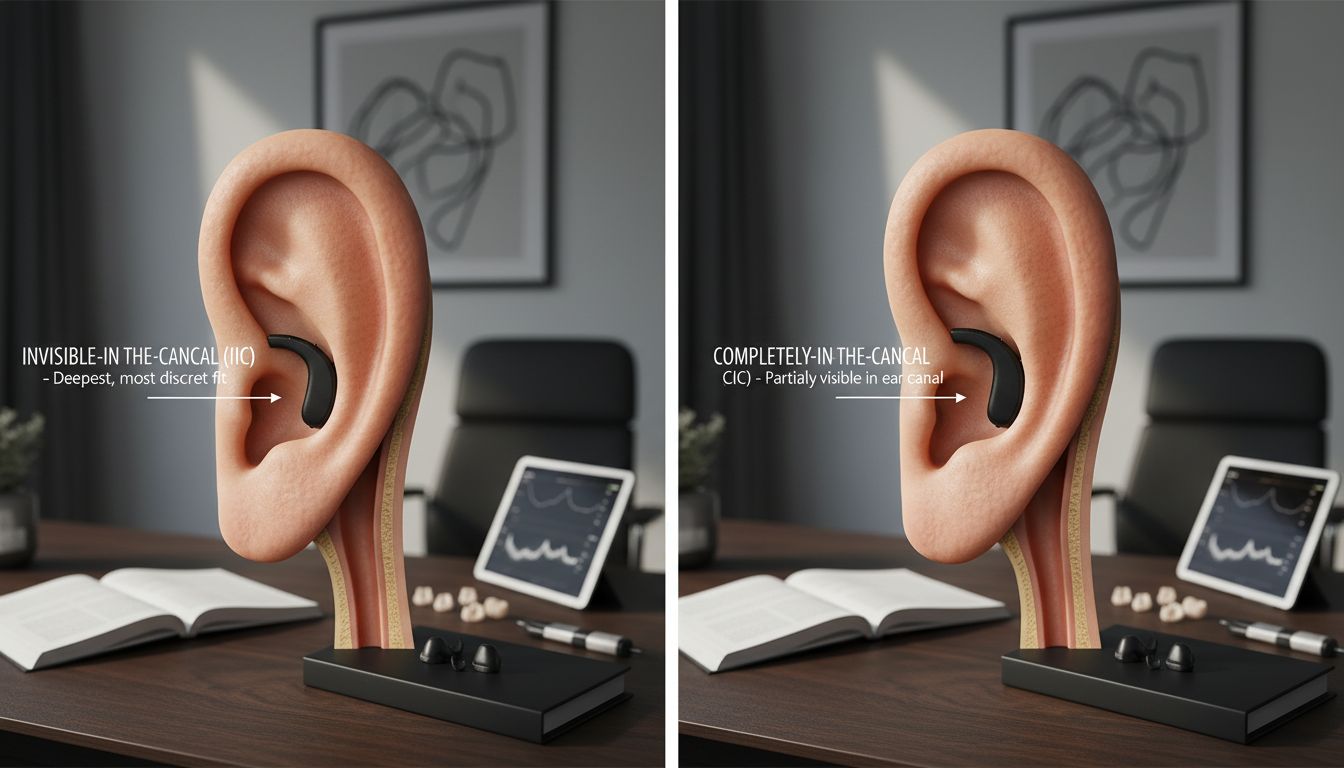
Invisible hearing aids represent a groundbreaking solution for individuals experiencing mild to moderate hearing loss, offering unprecedented discretion and advanced technological capabilities. According to RNID, these Invisible-in-the-canal (IIC) devices are meticulously custom-designed to fit deeply within the ear canal, rendering them virtually undetectable to others.
The defining characteristic of these innovative devices is their remarkable size and placement. Unlike traditional hearing aids that sit behind or inside the outer ear, invisible hearing aids nestle completely within the ear canal, creating an almost imperceptible hearing enhancement solution. This design ensures users can restore their hearing without drawing unwanted attention or feeling self-conscious about wearing assistive technology.
Key features of invisible hearing aids typically include:
- Extremely compact size that fits entirely inside the ear canal
- Custom-moulded to match individual ear anatomy
- Suitable for mild to moderate hearing loss ranges
- Advanced digital sound processing technology
- Minimal visibility to external observers
Why hearing aids are becoming more discreet highlights how technological advancements have transformed these devices from bulky, noticeable equipment to sleek, sophisticated hearing enhancement tools. Modern invisible hearing aids leverage cutting-edge miniaturisation techniques, allowing manufacturers to pack sophisticated sound processing capabilities into incredibly small form factors.
While invisible hearing aids offer tremendous benefits, they are not universally suitable for every type of hearing loss. Individuals with more severe hearing impairments or specific ear canal anatomies might require alternative hearing aid designs. Consulting with a professional audiologist can help determine whether an invisible hearing aid represents the most appropriate solution for your specific hearing needs.
Differences Between IIC and CIC Styles
When exploring hearing aid options, understanding the nuanced differences between Invisible-in-the-Canal (IIC) and Completely-in-the-Canal (CIC) styles becomes crucial for making an informed decision. According to Sussex Audiology Centre, these two hearing aid styles might appear similar but offer distinct characteristics that cater to different hearing needs and ear anatomies.
The primary distinction lies in their positioning and size. IIC hearing aids are designed to sit deeper within the ear canal, offering maximum discretion and an almost completely hidden appearance. In contrast, CIC hearing aids are slightly larger and positioned just inside the ear canal, providing slightly more visibility but potentially accommodating more advanced technological features.
Key comparative features include:
-
Placement Depth
- IIC: Deepest placement, virtually invisible
- CIC: Positioned just inside the ear canal
-
Hearing Loss Suitability
- IIC: Ideal for mild to moderate hearing loss
- CIC: Suitable for moderate to severe hearing loss
-
Technological Capabilities
- IIC: Limited by size, fewer advanced features
- CIC: Can support wireless and remote control functionalities
Potential Limitations are equally important to consider. IIC devices may not be suitable for individuals with narrow ear canals or those prone to frequent ear infections. CIC models, while slightly more visible, offer greater flexibility in feature integration and can better accommodate varying levels of hearing impairment.
7 Key Benefits of Invisible Hearing Aids for Adults provides additional context on how these technologies can transform hearing experiences. Ultimately, selecting between IIC and CIC styles depends on individual hearing requirements, ear anatomy, lifestyle needs, and personal preferences. A professional audiological consultation remains the most reliable method for determining the most appropriate hearing aid style.
How Invisible Hearing Aids Function
Invisible hearing aids represent sophisticated technological solutions that transform sound perception through advanced digital processing. According to RNID, these Invisible-in-the-canal (IIC) devices are custom-fitted deeply within the ear canal, ensuring a personalised and highly discreet hearing enhancement experience.
The fundamental functioning of invisible hearing aids involves three critical stages: sound collection, digital signal processing, and sound amplification. Tiny microphones strategically positioned within the device capture surrounding sounds, which are then converted into digital signals by advanced processing chips. These digital signals are instantaneously analysed, filtered, and adjusted to match the user’s specific hearing profile, effectively compensating for individual hearing loss patterns.
Key operational components include:
- Microphones: Capture environmental sounds
- Digital Signal Processor: Analyses and modifies sound signals
- Amplifier: Increases modified sound signal strength
- Speaker (Receiver): Delivers enhanced sound directly into the ear canal
- Battery: Provides power for continuous operation
Interestingly, Key Features of Modern Hearing Aids for Better Living highlights the remarkable technological evolution in these devices. Modern invisible hearing aids incorporate sophisticated noise reduction algorithms, feedback cancellation systems, and adaptive sound processing that can distinguish between speech and background noise with remarkable precision.
As detailed by RNID, some invisible hearing aid models are designed to remain in the ear for extended periods, requiring professional maintenance by audiologists. Others offer user-removable designs, providing flexibility in management and cleaning. The choice between these options depends on individual preferences, hearing requirements, and lifestyle considerations. Ultimately, the primary goal remains consistent: delivering clear, natural sound while maintaining maximum discretion and comfort.
UK Safety Standards and Requirements
Navigating the safety landscape for hearing aids in the United Kingdom involves understanding a comprehensive regulatory framework designed to protect consumers and ensure technological excellence. According to UK Government, recent policy shifts are supporting innovative hearing aid technologies while maintaining rigorous safety standards, reflecting the nation’s commitment to advancing healthcare technologies.
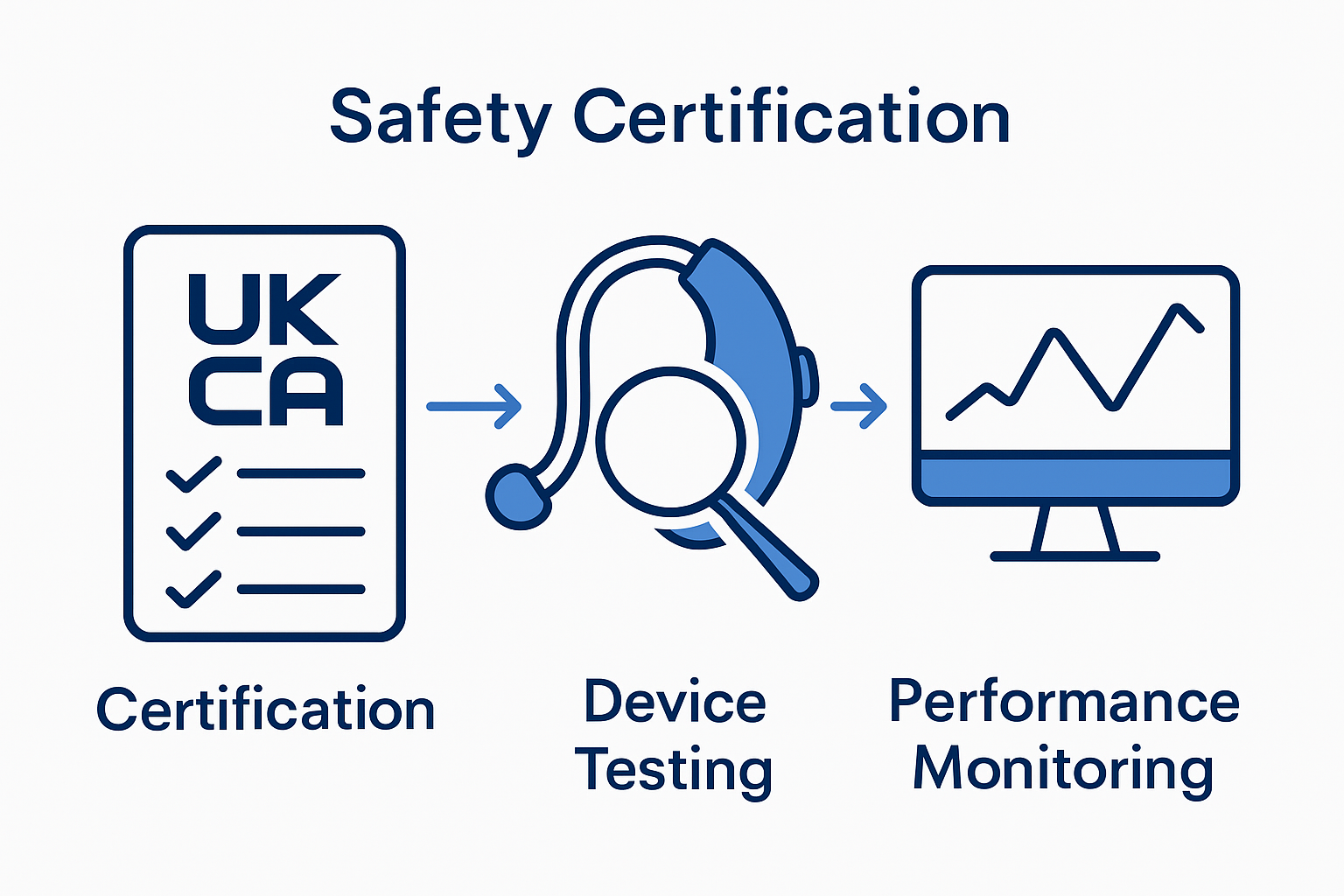
The safety certification process for hearing aids in the UK involves multiple layers of regulatory oversight. Devices must obtain UKCA (UK Conformity Assessed) marking, which demonstrates compliance with essential safety and performance requirements. This certification ensures that hearing aids meet stringent criteria related to:
- Electrical safety standards
- Electromagnetic compatibility
- Performance reliability
- Quality control mechanisms
- Materials biocompatibility
- Sound output limitations
As highlighted by RNID, the Royal National Institute for Deaf People plays a crucial role in providing comprehensive guidance on hearing aid safety. Their recommendations encompass not just technical standards, but also user-specific considerations such as individual hearing profiles, potential interactions with medical conditions, and ongoing maintenance requirements.
Additionally, the UK regulatory environment mandates continuous monitoring and reporting of device performance. Manufacturers must establish robust post-market surveillance systems, ensuring any potential safety issues are rapidly identified and addressed. This proactive approach means that hearing aid technologies undergo constant evaluation, with patient safety remaining the paramount concern. The government’s strategy of supporting technological innovation while maintaining strict safety protocols ensures that consumers can confidently access cutting-edge hearing solutions without compromising their health and well-being.
Advantages and Limitations for Users
Invisible hearing aids represent a nuanced technological solution with distinct benefits and potential drawbacks for users. According to RNID, these devices offer remarkable discretion while simultaneously presenting specific challenges that potential users must carefully consider.
Advantages of invisible hearing aids are compelling and multifaceted:
- Aesthetic Appeal: Completely hidden within the ear canal
- Psychological Comfort: Reduces self-consciousness about wearing hearing assistance
- Custom Fitting: Precisely moulded to individual ear anatomy
- Natural Sound Perception: Minimal interference with natural sound collection
- Minimal External Visibility: Eliminates concerns about social stigma
However, the limitations are equally significant. As research indicates, these devices may not be suitable for everyone. Users with severe hearing loss, narrow ear canals, or frequent ear infections might find invisible hearing aids problematic. Their compact size restricts the inclusion of advanced features like comprehensive hearing loop settings or larger battery capacities.
7 Key Benefits of Invisible Hearing Aids for Adults further emphasises that individual hearing requirements play a crucial role in determining suitability. The trade-off between discretion and functionality means users must carefully evaluate their specific hearing needs, lifestyle demands, and personal preferences. Professional audiological consultation remains the most reliable method for determining whether invisible hearing aids represent the optimal solution for an individual’s unique hearing challenges.
Discover Discreet Hearing Solutions Designed for You
If you are seeking effective yet invisible hearing aids tailored to your unique needs this article has highlighted how Invisible-in-the-Canal (IIC) devices offer natural sound enhancement combined with maximum discretion. At Audora we understand the challenges of finding hearing aids that blend seamlessly into your lifestyle without compromising quality or safety. Our UKCA-certified invisible hearing aids feature advanced AI-powered technology alongside custom-like comfort all delivered directly to you without the long waits or high costs of traditional clinics.

Explore the full range of discreet and rechargeable hearing devices available at GetAudora.co.uk. Take control of your hearing today with affordable, cutting-edge solutions backed by transparent pricing and full support. Don’t let waiting or worry hold you back when clear natural hearing is just a click away. Visit our Home page – Audora now to experience freedom in sound and confidence in invisibility.
Frequently Asked Questions
What are invisible hearing aids?
Invisible hearing aids are small, custom-designed devices that fit deeply within the ear canal, providing discreet hearing enhancement for individuals with mild to moderate hearing loss.
How do invisible hearing aids work?
Invisible hearing aids function through advanced digital processing. They capture surrounding sounds with tiny microphones, convert them into digital signals, and then amplify those signals to compensate for the user’s specific hearing loss.
What is the difference between IIC and CIC hearing aids?
The main difference is their position in the ear canal: IIC (Invisible-in-the-Canal) hearing aids sit deeper and are virtually invisible, while CIC (Completely-in-the-Canal) models are slightly larger and positioned just inside the ear canal, making them a bit more visible but potentially offering more advanced features.
Are there any limitations to using invisible hearing aids?
Yes, invisible hearing aids may not be suitable for individuals with severe hearing loss, narrow ear canals, or those susceptible to ear infections. Their compact size may also limit the inclusion of advanced features like large batteries or comprehensive hearing settings.
Recommended
- 7 Key Benefits of Invisible Hearing Aids for Adults – Audora
- Why Hearing Aids Are Discreet Now: Complete Guide – Audora
- What Is Hearing Enhancement Technology? Complete Guide – Audora
- 7 Simple Ways to Spot Quality Hearing Aids Fast – Audora
- Top 5 Winter Ear Health Issues and How to Protect Your Hearing