

Struggling to keep up with voices at family gatherings can leave you feeling left out and unheard. For many adults across the United Kingdom, hearing health means more than just turning up the volume; it touches every aspect of daily life from conversation to confidence. By confronting outdated myths and understanding how modern hearing solutions fit today’s needs, you can take control of your hearing journey and discover accessible options that make life clearer and more connected.
Table of Contents
- Defining Hearing Health and Common Myths
- Types of Hearing Loss and Main Causes
- Impact on Brain Function and Wellbeing
- Social, Emotional, and Safety Consequences
- Barriers to Care and Modern Treatment Solutions
Key Takeaways
| Point | Details |
|---|---|
| Understanding Hearing Health | Hearing health affects overall wellness and is often misunderstood; addressing myths can encourage timely intervention. |
| Types of Hearing Loss | Hearing loss varies in type and severity; awareness of these differences aids in seeking appropriate treatment. |
| Cognitive and Emotional Impact | Untreated hearing loss can lead to cognitive decline and increased isolation; early intervention is crucial for maintaining overall well-being. |
| Barriers to Hearing Care | Significant obstacles, including stigma and costs, hinder access to effective hearing healthcare; modern digital solutions are emerging to alleviate these challenges. |
Defining Hearing Health and Common Myths
Hearing health represents a critical aspect of overall wellness, particularly as we age. It involves maintaining the intricate auditory systems that enable us to perceive sound, communicate effectively, and engage with our environment. Hearing loss is not simply about volume reduction, but encompasses complex changes in sound perception and neural processing.
Most adults misunderstand hearing health, often believing myths that prevent them from seeking timely support. Common hearing aid misconceptions persist across the UK, creating unnecessary barriers to treatment. These myths include:
- Hearing aids are only for elderly people
- Hearing loss is unavoidable with aging
- Hearing devices are bulky and unattractive
- Hearing challenges aren’t serious medical concerns
Understanding these misconceptions is crucial. Hearing health involves more than audiometric measurements; it connects directly to cognitive function, social interaction, and emotional well-being. Research indicates that untreated hearing loss can accelerate cognitive decline and increase isolation risks.
Modern hearing technologies have transformed dramatically, becoming sophisticated digital devices that adapt to individual hearing profiles. Today’s solutions are discreet, intelligent, and designed to integrate seamlessly into daily life.
Pro tip: Schedule a baseline hearing assessment before age 50 to establish a comprehensive hearing health benchmark.
Types of Hearing Loss and Main Causes
Hearing loss is a complex condition with multiple variations that impact individuals differently. Types of hearing loss range from mild to profound, each presenting unique challenges and requiring specialised understanding.
The primary categories of hearing loss include:
- Sensorineural Hearing Loss: Caused by damage to inner ear structures or hearing nerve
- Conductive Hearing Loss: Results from problems in outer or middle ear
- Mixed Hearing Loss: Combination of sensorineural and conductive issues
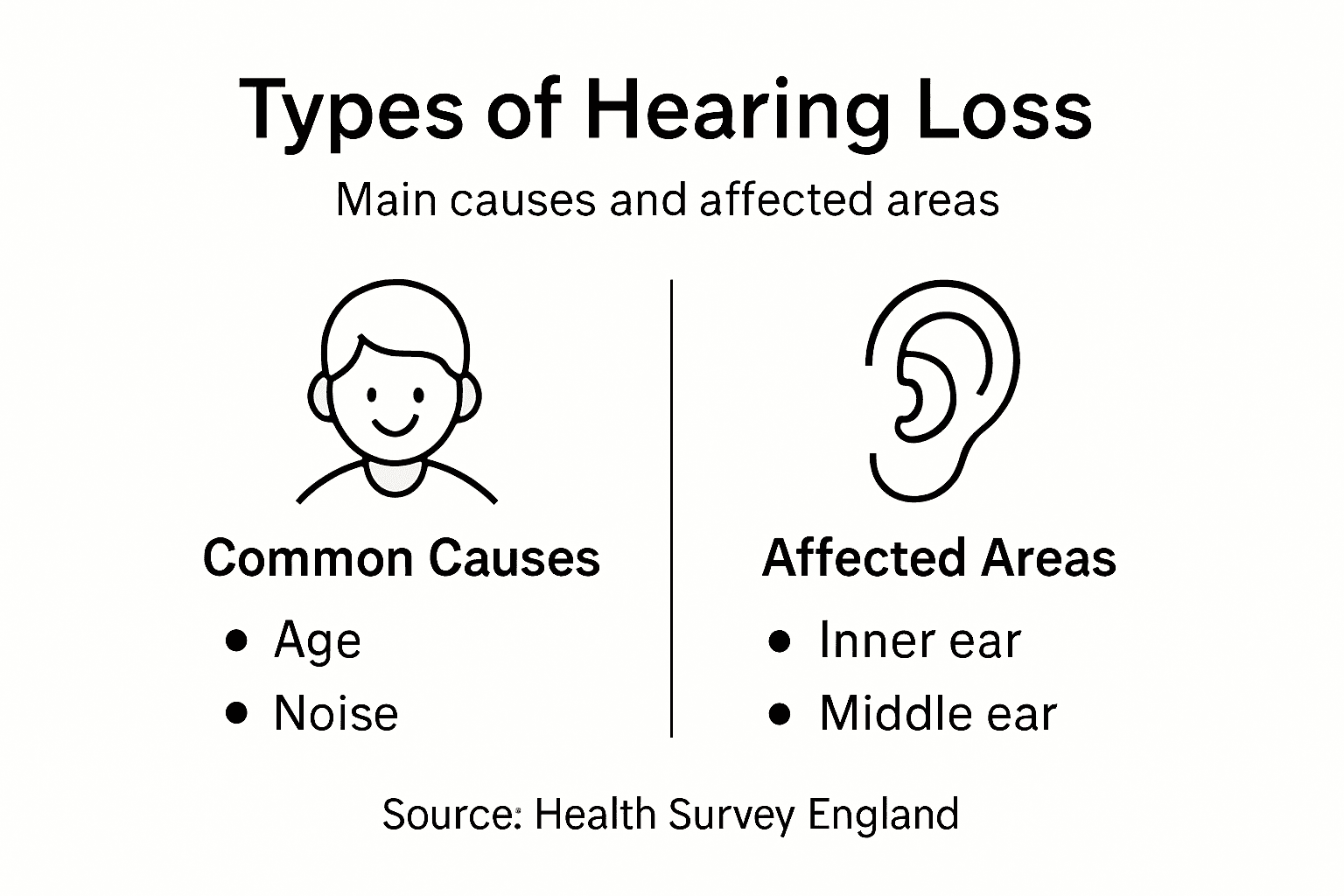
Age-related hearing challenges are particularly prevalent among British adults. Presbycusis, or age-related hearing decline, represents the most common form of sensorineural hearing loss. External factors like prolonged noise exposure, genetic predispositions, and medical conditions can accelerate this natural deterioration.

To help clarify the differences between hearing loss types, here is a summary table highlighting their main features and typical causes:
| Hearing Loss Type | Main Area Affected | Common Causes | Typical Treatments |
|---|---|---|---|
| Sensorineural | Inner ear/auditory nerve | Aging, genetics, noise | Hearing aids |
| Conductive | Outer/middle ear | Ear infections, blockages | Surgery, medication |
| Mixed | Combination | Dual factors, chronic issues | Combination therapies |
The primary causes of hearing loss vary widely, encompassing both environmental and physiological factors. Noise-induced hearing damage remains a significant concern, especially for individuals working in loud industrial settings or frequently exposed to high-decibel environments. Medical conditions such as cardiovascular diseases, diabetes, and certain medications can also contribute to hearing deterioration.
Pro tip: Protect your hearing by using ear protection in noisy environments and scheduling regular audiometric assessments.
Impact on Brain Function and Wellbeing
Hearing loss extends far beyond auditory challenges, profoundly impacting cognitive function and overall mental well-being. Neurological consequences of hearing impairment reveal a complex relationship between hearing and brain health that demands serious attention.
Key cognitive impacts of untreated hearing loss include:
- Accelerated cognitive decline
- Increased risk of dementia
- Reduced neuroplasticity
- Heightened social isolation
- Potential memory function deterioration
Neurological reorganization occurs as the brain adapts to reduced auditory input, potentially leading to significant cognitive restructuring. This neural adaptation can strain cognitive resources, diverting mental energy towards interpreting sound, which ultimately reduces capacity for other complex thinking processes.
Research from the Health Survey for England highlights the broader implications of hearing challenges. Mental wellbeing consequences demonstrate that hearing loss correlates directly with decreased social interaction, increased feelings of loneliness, and potential mental health challenges. Early intervention through hearing support can mitigate these risks, potentially preserving cognitive function and maintaining social engagement.
Pro tip: Consider regular hearing assessments and cognitive screenings to proactively manage potential neurological impacts of hearing changes.
Social, Emotional, and Safety Consequences
Hearing loss dramatically transforms an individual’s social landscape, extending far beyond simple communication challenges. Profound psychological interactions emerge between hearing impairment and personal emotional experiences, creating complex psychological dynamics.
Key emotional and social impacts include:
- Increased feelings of social isolation
- Higher risk of depression and anxiety
- Reduced confidence in social interactions
- Potential relationship strain with family and friends
- Diminished quality of personal and professional communication
Social withdrawal often becomes a significant coping mechanism for individuals experiencing hearing challenges. When communication becomes challenging, many people unconsciously begin limiting social interactions, preferring silence to potential misunderstandings or embarrassment. This gradual retreat can lead to profound emotional consequences, including loneliness and reduced social support networks.
Safety represents another critical dimension of hearing loss. Reduced auditory awareness can compromise personal safety, making it difficult to detect warning signals, approaching vehicles, or potential domestic hazards. The emotional toll of feeling vulnerable in previously familiar environments can be substantial, potentially leading to increased stress and reduced independence.
Pro tip: Develop communication strategies with loved ones and invest in assistive technologies to maintain social connections and personal confidence.
Barriers to Care and Modern Treatment Solutions
Hearing healthcare in the UK faces significant challenges that prevent many individuals from accessing timely and effective support. Key barriers impede hearing care interventions across multiple dimensions of patient experience.
Primary obstacles to hearing care include:
- Extended NHS waiting lists
- Social stigma surrounding hearing aids
- High perceived costs of treatment
- Limited public awareness about hearing health
- Psychological barriers like embarrassment
Technological innovations are rapidly transforming traditional hearing healthcare models. Modern digital solutions offer more accessible, discreet, and personalised approaches to managing hearing challenges, reducing many historical barriers that previously discouraged treatment.
Innovative healthcare approaches now emphasise proactive management, leveraging digital technologies to provide faster diagnostics, remote consultations, and more personalised intervention strategies. These advancements aim to make hearing care more convenient, affordable, and less intimidating for individuals experiencing hearing changes.
Here is a comparison of traditional versus modern hearing care approaches for UK patients:
| Aspect | Traditional Care | Modern Digital Solutions |
|---|---|---|
| Accessibility | NHS clinics, long waits | Remote consultations, rapid access |
| Device Appearance | Larger, noticeable aids | Discreet, custom designs |
| Personalisation | Basic fitting options | Tailored digital programming |
| Cost | NHS-funded, limited | Flexible packages, private options |
Pro tip: Research alternative hearing care options that offer flexible, technology-driven solutions beyond traditional clinical pathways.
Protect Your Hearing Health with Modern Solutions Today
Maintaining good hearing health is vital for preserving your cognitive function, social connections, and overall wellbeing as you age. The challenges discussed in the article highlight common barriers like lengthy NHS waiting lists, stigma, and difficulty accessing effective treatment. At Audora, we understand these pain points and offer a simple, affordable alternative to traditional hearing care — enabling you to take control of your hearing health immediately with discreet, AI-powered digital hearing aids designed for everyday life.

Explore our full range of innovative devices on the Home page – Audora and enhance your experience with essential Accessories – Audora. Don’t let hearing loss affect your quality of life any longer. Visit https://getaudora.co.uk now to discover easy-to-use, UKCA-certified hearing aids that combine cutting-edge technology with convenience. Take the step today to safeguard your hearing and enjoy clearer conversations for years to come.
Frequently Asked Questions
What are the key benefits of maintaining hearing health as we age?
Maintaining hearing health is crucial for effective communication, social interaction, and cognitive function. It can help reduce the risk of cognitive decline, increase social engagement, and enhance overall emotional well-being.
How can untreated hearing loss affect mental health in later life?
Untreated hearing loss can lead to accelerated cognitive decline, increased feelings of isolation, and a heightened risk of depression and anxiety, negatively impacting mental health and quality of life.
What are the different types of hearing loss, and how do they impact individuals?
The primary types of hearing loss are sensorineural, conductive, and mixed. Each affects different parts of the auditory system and presents unique challenges, requiring tailored approaches for treatment and management.
How can individuals proactively manage their hearing health?
Proactive management includes regular hearing assessments, protecting ears from loud noises, using assistive devices such as hearing aids, and staying informed about advancements in hearing technology to ensure timely intervention.
Recommended
- Why Hearing Health Matters for Older Adults – Audora
- 7 Top Hearing Support Resources for UK Adults Over 50 – Audora
- Why Use Hearing Aids: Complete Guide to Benefits – Audora
- Hearing Aid Lifespans: What Affects Durability and Value – Audora
- Why Protect Your Voice: Health, Career, Longevity - TMRG Solutions