

Struggling to keep up with conversations or the television in your British home can leave you feeling isolated, especially if NHS wait times are causing delays in getting the support you need. For adults across the United Kingdom, preparing and maintaining hearing aids at home offers an immediate way to regain control and convenience. Discover simple steps and practical tips for assembling accessories, cleaning devices, fitting aids securely, and accessing vital support, making daily hearing care smoother and more reliable.
Table of Contents
- Step 1: Prepare Hearing Aids And Gather Essential Accessories
- Step 2: Clean Devices And Inspect For Visible Damage
- Step 3: Fit Devices Securely And Adjust Settings Appropriately
- Step 4: Test Audio Quality And Verify Functional Safety Features
- Step 5: Review Support Resources And Confirm Warranty Cover
Quick Summary
| Key Message | Explanation |
|---|---|
| 1. Gather essential accessories | Collect spare batteries, cleaning tools, and a drying container to ensure your hearing aids are maintained and operational daily. |
| 2. Conduct regular device inspections | Inspect your hearing aids for damage and clean them regularly to prevent malfunctions and extend their lifespan. |
| 3. Fit devices properly for comfort | Ensure your hearing aids fit well and adjust the settings gradually to enhance personal comfort and sound quality. |
| 4. Test audio quality diligently | Regularly check the sound quality, feedback suppression, and battery performance to confirm your hearing aids are functioning correctly. |
| 5. Know your support resources | Familiarise yourself with warranty details and contact information for support to facilitate maintenance and repairs as needed. |
Step 1: Prepare hearing aids and gather essential accessories
Preparing your hearing aids for daily use requires careful organisation and understanding of the necessary accessories. This step ensures your devices remain functional, comfortable, and ready to support your hearing needs.
Start by gathering the essential accessories that will help you maintain and use your hearing aids effectively. Here are the key items you’ll need:
- Spare batteries or rechargeable battery pack
- Cleaning tools like soft brushes and wax removal picks
- Drying container or dehumidifier to remove moisture
- Storage case for protecting devices when not in use
- Soft microfibre cloth for gentle cleaning
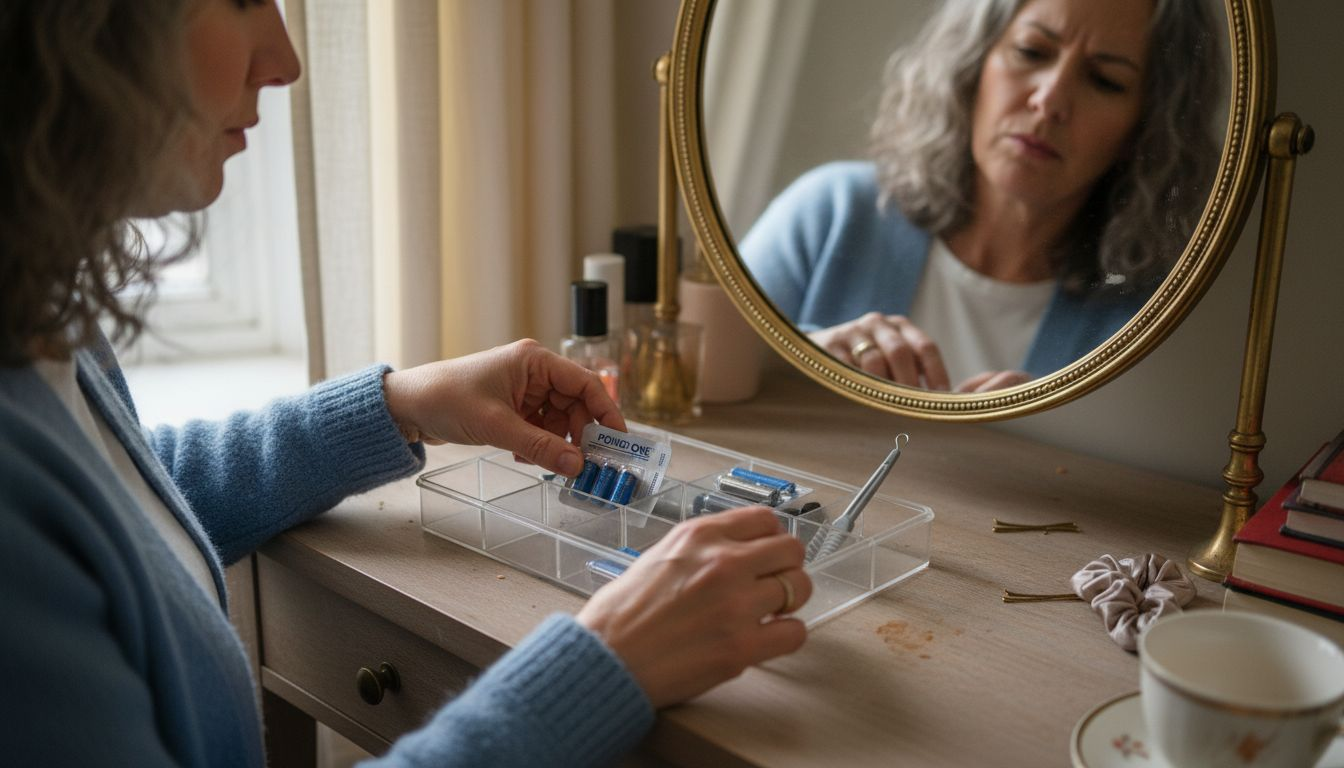
Before inserting your hearing aids, check battery functionality and device settings to ensure optimal performance. Carefully inspect each device for any signs of damage or wear, and gently clean the exterior with a soft cloth to remove dust or debris.
Here’s a quick summary of common hearing aid accessories and their practical benefits:
| Accessory | Main Purpose | Added Value for Users |
|---|---|---|
| Spare batteries | Power back-up | Reduces risk of device downtime |
| Cleaning tools | Remove debris and wax | Maintains sound clarity |
| Drying container | Protects from moisture | Extends device lifespan |
| Storage case | Safe device storage | Prevents loss and damage |
| Microfibre cloth | Gentle surface cleaning | Improves hygiene, comfort |
If you’re using rechargeable hearing aids, connect them to their charging station and confirm they reach full power before use. For battery-operated devices, insert fresh batteries, checking the polarity matches the device’s markings.
Proper preparation prevents unexpected hearing aid failures during your daily activities.
Expert Tip: Keep your hearing aid accessories in a dedicated, easily accessible drawer or compact organiser to streamline your morning routine and ensure you never misplace critical items.
Step 2: Clean devices and inspect for visible damage
Caring for your hearing aids involves careful cleaning and regular inspection to maintain their performance and longevity. This step helps prevent potential malfunctions and ensures your devices remain in optimal working condition.
Begin by inspecting hearing aid components thoroughly for any signs of wear, damage, or blockages. Use these systematic cleaning steps:
- Examine the device for cracks or visible damage
- Check earmoulds and tubing for wax accumulation
- Inspect battery compartment for corrosion or residue
- Clean soft surfaces with a gentle microfibre cloth
- Remove and clean detachable parts carefully
When cleaning, avoid using water directly on electronic components. For earmoulds, you can detach and wash them gently with lukewarm soapy water, ensuring they are completely dry before reattaching. Use specialised cleaning tools like soft brushes to remove stubborn debris from small crevices.
Consistent, gentle cleaning prevents costly repairs and extends your hearing aid’s operational life.
Expert Tip: Perform a quick visual and functional check every morning before inserting your hearing aids to catch potential issues early.
Step 3: Fit devices securely and adjust settings appropriately
Properly fitting your hearing aids is crucial for comfort, sound quality, and preventing potential feedback or discomfort. Getting the positioning just right ensures you receive maximum benefit from your hearing devices.
Fitting hearing aids requires careful positioning to guarantee optimal performance and personal comfort. Follow these key steps for secure placement:
- Position the hearing aid behind your ear
- Gently insert the earmould into your ear canal
- Ensure the device sits comfortably without pressing or causing pain
- Check the tubing is not twisted or kinked
- Verify sound quality by listening in different environments
Adjust volume and programme settings gradually, starting at a lower level and incrementing as you become more comfortable. Most modern hearing aids offer multiple programme settings for different listening environments, so experiment to find what works best for you.
Proper positioning transforms hearing aids from mere devices into personalised sound enhancement tools.
Expert Tip: Practice inserting and removing your hearing aids in front of a mirror until the movement becomes smooth and automatic.
Step 4: Test audio quality and verify functional safety features
Ensuring your hearing aids perform optimally requires systematic testing and careful verification of their core functionality. This critical step helps you confirm that your devices deliver clear sound and maintain essential safety features.
Functional testing involves multiple audio assessments to guarantee reliable performance. Follow these comprehensive verification steps:
- Test volume control in different environments
- Check feedback suppression by cupping your hand near the device
- Verify programme switching between settings
- Listen for clear sound quality without distortion
- Confirm battery performance through consistent power output
Pay particular attention to how your hearing aids respond in varying acoustic environments, such as quiet rooms, noisy spaces, and outdoor settings. This comprehensive approach helps identify any potential performance issues before they become problematic.
Safety and sound quality are not optional – they are essential for effective hearing assistance.
Expert Tip: Keep a daily log of your hearing aid performance to track any subtle changes or inconsistencies that might require professional attention.
Step 5: Review support resources and confirm warranty cover
Understanding your hearing aid support network and warranty details is crucial for long-term device maintenance and peace of mind. This step helps you navigate the available resources and protect your investment.
Support resources offer essential maintenance guidance for hearing aid users. Gather the following key information:
- Manufacturer warranty details
- Contact information for local audiology services
- Repair and replacement policy specifics
- Battery replacement procedures
- Troubleshooting support contact points
Carefully review your warranty documentation, paying special attention to coverage duration, what is included, and any conditions that might void the warranty. Check if your device is registered with the manufacturer and keep all original purchase documentation in a safe place.
Consider this overview of support resources available to hearing aid users:
| Resource Type | Example Information Provided | Benefit to Owner |
|---|---|---|
| Manufacturer warranty | Coverage length, exclusions | Peace of mind, free repairs |
| Audiology service | Troubleshooting, regular check-ups | Professional advice, adjustments |
| Repair policy | Procedures, eligibility | Quicker device replacement |
| Battery support | Swap instructions, replacements | Consistent device operation |
| Troubleshooting contact | Phone, email details | Immediate access to solutions |
Proactive maintenance and understanding your support resources can save you time and money in the long run.
Expert Tip: Create a dedicated folder with all hearing aid documentation, including warranty cards, receipts, and support contact information, to ensure quick access when needed.
Protect Your Hearing Aid Investment with Essential Accessories and Expert Support
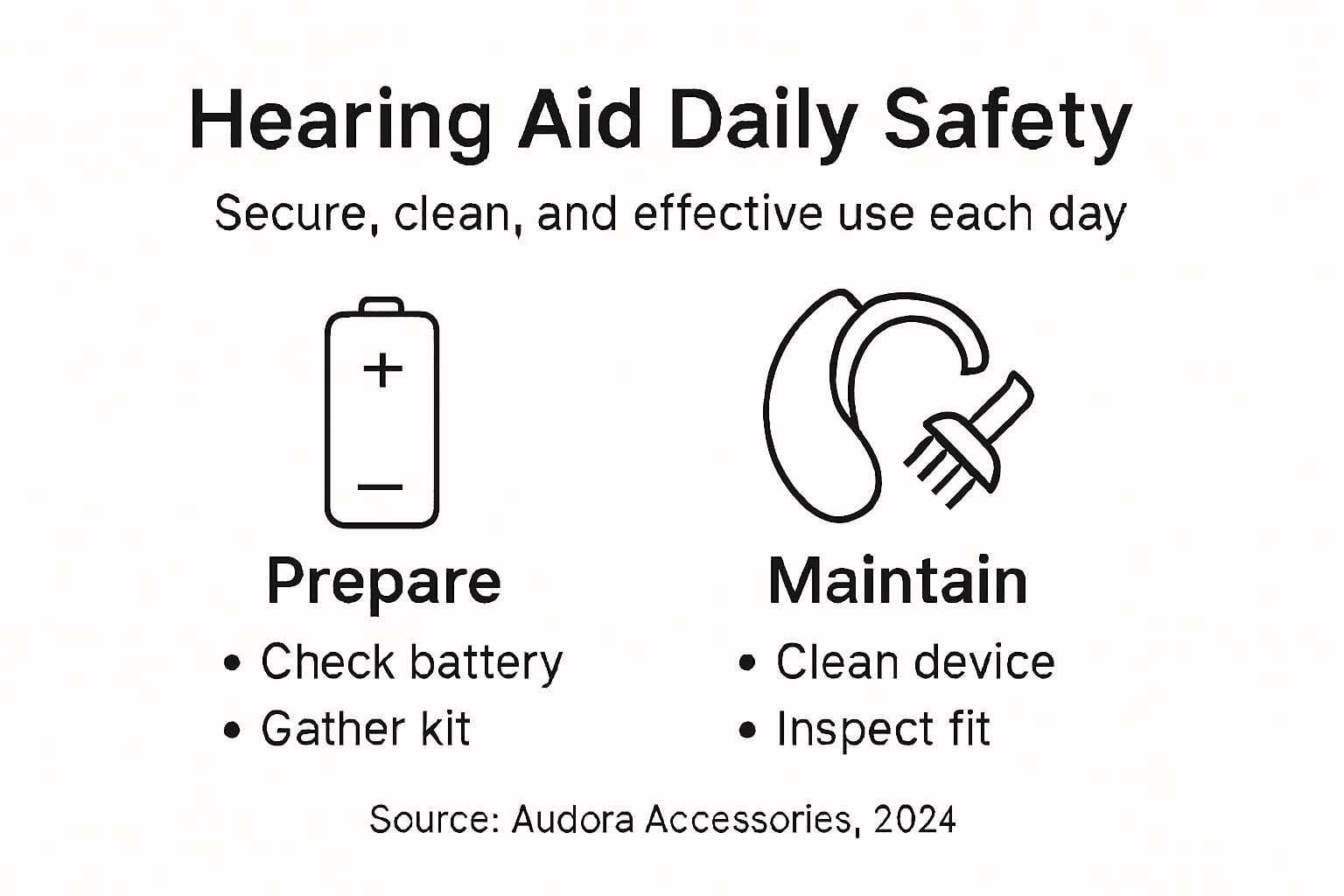
The “Hearing Aid Safety Checklist for Secure Daily Use” highlights how crucial it is to prepare, clean, fit and test your devices properly to avoid downtime and costly repairs. If you are concerned about maintaining your hearing aid’s performance and comfort, having the right accessories and understanding your support options is key. With challenges like battery management, moisture protection and reliable fitting, many users seek trustworthy solutions to streamline daily care and enhance device longevity.
At Audora Accessories, we offer a wide selection of carefully designed products like rechargeable batteries, cleaning kits and storage cases that align perfectly with this checklist’s best practices. 
Experience the peace of mind that comes with using high-quality, UKCA-certified hearing aids and accessories from GetAudora.co.uk. Explore our discreet, AI-powered hearing devices and support resources that make safe daily use effortless. Take control of your hearing health today by visiting our Home page – Audora and discover how easy and affordable hearing care can be.
Frequently Asked Questions
How should I prepare my hearing aids for daily use?
To prepare your hearing aids, gather essential accessories such as spare batteries, cleaning tools, and a storage case. Organise them in a dedicated spot, ensuring you have everything ready each morning for a seamless experience.
What cleaning steps should I follow for my hearing aids?
Regularly clean your hearing aids by inspecting them for damage and using a soft microfibre cloth to wipe away dust. Use specialised cleaning tools to remove wax and debris, ensuring all detachable parts are clean and dry before reassembly.
How can I ensure my hearing aids fit securely and comfortably?
To fit your hearing aids, position them correctly behind your ear and gently insert the earmould into your ear canal. Make adjustments as needed to ensure that they feel comfortable and don’t cause any pain or discomfort.
What audio quality tests should I perform on my hearing aids?
Test your hearing aids by adjusting the volume in different environments and checking for clear sound without distortion. Verify feedback suppression by cupping your hand over the device, and ensure programme settings are functioning properly by switching between them as needed.
What resources should I review for support regarding my hearing aids?
Review your hearing aid’s warranty details, including coverage and repair policies, as well as contact information for local audiology services. Keep records of all support resources in a dedicated folder for easy access as needed.
How often should I perform maintenance checks on my hearing aids?
Perform maintenance checks daily by inspecting your hearing aids for damage and cleaning them to maintain their functionality. Establish a routine to perform these checks consistently, ideally every morning, to ensure optimal performance throughout the day.