

Finding trustworthy support as a british hearing aid user can feel confusing when so many options skip the personal touch. For adults over 50, more than 40 percent quietly manage mild or moderate hearing loss but struggle to get advice without clinic queues or high prices. This guide breaks down what real support looks like, showing how a blend of professional guidance, peer connections, and online help can make life clearer and much more confident.
Table of Contents
- What Support Means for Hearing Aid Users
- Types of Support: Professional, Peer, Remote
- Key Features of Effective Assistance
- Barriers to Successful Hearing Aid Use
- Legal Standards and Safety in the UK
- Comparing Supported vs. Unsupported Users
Key Takeaways
| Point | Details |
|---|---|
| Comprehensive Support is Essential | Effective hearing aid assistance transcends device provision; it includes emotional and practical support for users. |
| Diverse Support Channels Available | Professional, peer, and remote support options are critical for users to navigate their hearing journey effectively. |
| Psychological Barriers Impact Usage | Awareness of psychological factors is crucial; social stigma and misconceptions about hearing loss can hinder adoption and consistent use. |
| Structured Support Improves Outcomes | Supported users experience better device adaptation, increased confidence, and enhanced quality of life compared to unsupported users. |
What Support Means for Hearing Aid Users
Support for hearing aid users extends far beyond simply providing a device. It encompasses a comprehensive approach that addresses physical, emotional, and practical needs. Hearing aid support services are designed to empower individuals, helping them navigate communication challenges and enhance their overall quality of life.
Effective support involves multiple dimensions. Practically, this means access to expert audiology guidance, personalised adjustment services, and ongoing maintenance. Emotionally, support requires understanding the profound impact hearing loss can have on an individual’s confidence and social interactions. Professionals recognise that adapting to hearing aids is not just a technical process, but a deeply personal journey that requires patience, empathy, and tailored communication strategies.
Communication adaptation forms a critical component of hearing aid support. This includes techniques like reducing background noise, facing the person while speaking, and checking understanding. Family members and caregivers play a significant role by creating inclusive environments that help hearing aid users feel comfortable and confident. These support mechanisms go beyond simple accommodation, representing a holistic approach to helping individuals maintain their independence and social connections.
Pro tip: Practice active communication techniques like speaking clearly, maintaining eye contact, and confirming understanding to create a supportive environment for hearing aid users.
Types of Support: Professional, Peer, Remote
Support for hearing aid users comes in diverse forms, each addressing unique aspects of an individual’s journey. Professional support represents the most structured approach, typically involving audiologists, hearing specialists, and healthcare professionals who provide expert guidance. Customer service in hearing aids plays a crucial role in ensuring users receive comprehensive assistance throughout their hearing health experience.
Peer support offers an equally valuable dimension of assistance. This informal network connects individuals experiencing similar hearing challenges, creating a supportive community where personal experiences and coping strategies are shared. Peer groups can be local meetups, online forums, or structured support networks that provide emotional understanding and practical advice that professional channels might not capture. These communities help reduce feelings of isolation and provide real-world insights into living with hearing aids.
Remote support has emerged as a critical resource, especially with technological advancements. Digital platforms now offer virtual consultations, online adjustment guides, smartphone app support, and telecommunication services that bridge geographical limitations. These remote options provide flexible, accessible support for individuals who might struggle with traditional in-person appointments, ensuring continuous guidance and troubleshooting for hearing aid users.
Pro tip: Explore multiple support channels and combine professional guidance with peer experiences to create a comprehensive support network for your hearing health journey.
Here is a comparison of the main types of support for hearing aid users:
| Support Type | Key Providers | Primary Benefits | Ideal For |
|---|---|---|---|
| Professional | Audiologists, NHS, clinics | Accurate fitting, tailored advice | Users needing medical expertise |
| Peer | Community groups, forums | Shared experiences, emotional support | Users seeking real-life insights |
| Remote | Apps, online consultations | Convenience, quick troubleshooting | Users in remote/rural locations |
Key Features of Effective Assistance
Technical expertise forms the foundation of effective hearing aid support, encompassing more than just device functionality. Hearing aid features that enhance user experience include advanced technologies like wireless connectivity, sophisticated noise reduction, directional microphones, and feedback cancellation. These sophisticated features are carefully selected to match an individual’s specific hearing profile and lifestyle requirements.

Personalised support goes beyond technical specifications. It involves a comprehensive approach that addresses psychological and practical challenges associated with hearing loss. This means providing not just technological solutions, but also emotional guidance, communication strategy training, and ongoing motivation. Effective assistance recognises that adapting to hearing aids is a holistic journey involving technical understanding, personal confidence, and social integration.
Comprehensive support involves multiple interconnected elements. These include initial device assessment, personalised fitting, follow-up consultations, troubleshooting guidance, and continuous learning opportunities. The goal is to empower users with knowledge and skills that enable them to maximise their hearing aid’s potential, overcome communication barriers, and maintain their quality of life. This approach transforms hearing aid support from a transactional service to a supportive, long-term partnership focused on individual needs.
Pro tip: Request a comprehensive initial assessment that considers your unique lifestyle, communication environments, and hearing challenges to ensure the most effective support strategy.
Barriers to Successful Hearing Aid Use
Psychological barriers represent the most significant challenge in hearing aid adoption and consistent use. Comprehensive research on hearing aid use barriers reveals complex emotional factors that extend far beyond simple device functionality. Social stigma, embarrassment, and the fear of appearing older or vulnerable can dramatically reduce an individual’s willingness to seek help or use hearing aids consistently.
Social and environmental obstacles further complicate hearing aid usage. These include limited awareness about hearing loss consequences, prolonged waiting times for professional assessments, and insufficient understanding of how hearing aids can improve quality of life. Many individuals underestimate the progressive nature of hearing loss, mistakenly believing that their current hearing challenges are temporary or manageable without intervention. This misconception leads to delayed treatment and potential long-term communication difficulties.
Technical and practical barriers also impact successful hearing aid use. Device discomfort, complex adjustment processes, high costs, and limited motivation can discourage consistent usage. Some users find initial fitting challenging, while others struggle with ongoing maintenance and technological adaptation. The complexity of modern hearing aids can overwhelm individuals, particularly those less comfortable with technology, creating additional psychological resistance to effective use.
Pro tip: Seek professional guidance early, discuss your specific concerns openly, and approach hearing aid use as a gradual learning process rather than an immediate perfect solution.
Legal Standards and Safety in the UK
Medical device regulation in the United Kingdom establishes rigorous safety protocols for hearing aids. Regulatory standards for medical devices classify hearing aids as Class IIa medical devices, indicating a medium-risk category that requires comprehensive safety assessments. The Medicines and Healthcare products Regulatory Agency (MHRA) oversees these standards, ensuring that every hearing aid meets stringent effectiveness and safety requirements before reaching consumers.
The legal framework surrounding hearing aids involves multiple layers of protection for users. This includes mandatory quality control checks, performance standards, and ongoing monitoring of device safety. Manufacturers must demonstrate that their hearing aids meet precise technical specifications, undergo rigorous testing, and comply with UK and European medical device regulations. These requirements protect consumers by ensuring that only high-quality, safe devices enter the market.
Practical safety considerations extend beyond initial device approval. The NHS provides clear guidelines about device maintenance, replacement policies, and user responsibilities. Different policies apply depending on individual circumstances, such as age, income, and disability status. Users have specific rights and obligations, including proper device care, regular maintenance, and understanding potential replacement costs. These regulations aim to balance consumer protection with practical healthcare management.
Pro tip: Always verify your hearing aid’s regulatory compliance and keep detailed documentation of its medical device certification to ensure your safety and access to potential support services.
Comparing Supported vs. Unsupported Users
Hearing aid experience varies dramatically between supported and unsupported users. Comprehensive research comparing NHS hearing aid services reveals significant disparities in technology access, follow-up care, and overall user satisfaction. Supported users typically receive structured guidance, advanced technological features like Bluetooth connectivity, and ongoing professional monitoring, which dramatically improves their hearing aid adaptation and usage experience.
The impact of support becomes evident through multiple quality-of-life metrics. Unsupported users often struggle with device understanding, technical complexities, and consistent usage. They may experience higher levels of frustration, reduced device effectiveness, and lower confidence in managing their hearing technology. In contrast, supported users benefit from personalised interventions, regular check-ups, and tailored advice that helps them maximise their hearing aid’s potential.
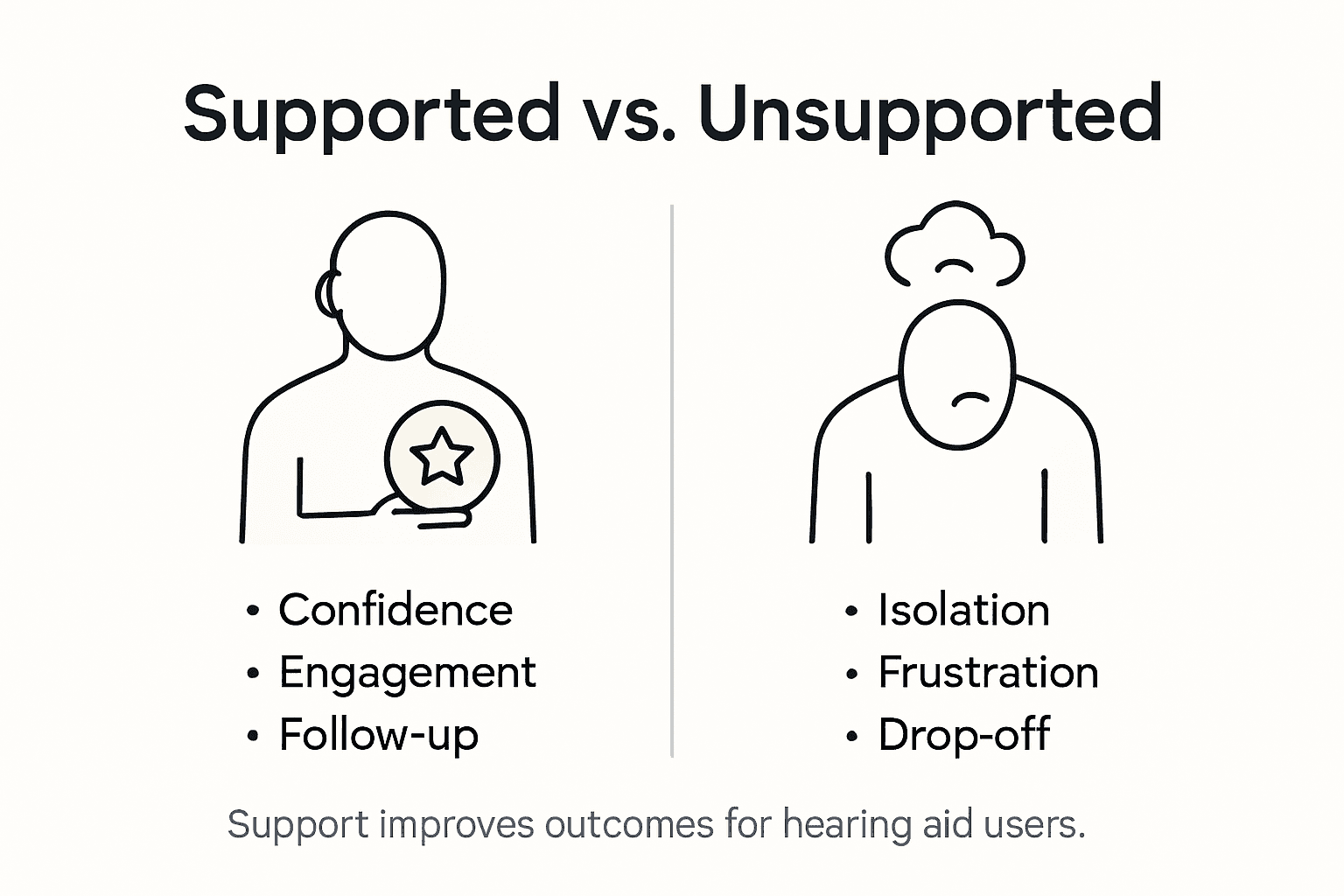
Cluster randomised controlled trials demonstrate the profound difference professional support makes. Structured follow-up and monitoring significantly enhance user outcomes, improving not just hearing aid performance but overall quality of life. The key differences encompass more than technical support – they involve emotional guidance, communication strategy training, and ongoing motivation. Supported users develop better coping mechanisms, feel more confident in social interactions, and experience a more positive hearing health journey.
The following table highlights the impact of support on hearing aid user experience:
| Aspect | Supported Users | Unsupported Users |
|---|---|---|
| Device Adaptation | Smooth, guided, and personalised | Frustrating, harder to manage |
| User Confidence | Higher self-esteem, social engagement | Lower due to uncertainty |
| Problem Resolution | Rapid through follow-up care | Delayed or unresolved issues |
| Quality of Life | Noticeably improved | Often stagnant or diminished |
Pro tip: Request comprehensive follow-up services and ongoing support when selecting your hearing aid to ensure the best possible adaptation and long-term success.
Discover Lasting Success with Expert Support and Innovative Hearing Aids
The article highlights that effective hearing aid use depends on more than just the device itself. Psychological barriers, lack of personalised support and complex technical features can make adapting to hearing aids overwhelming. At the heart of overcoming these challenges lies comprehensive support that combines professional guidance with easy-to-use technology. At GetAudora, we understand that a smooth, confident hearing experience requires hearing aids designed for your lifestyle backed by clear, accessible assistance.

Take control of your hearing journey today by exploring our range of UKCA-certified, AI-powered hearing aids at Home page 6 Audora that eliminate the need for long NHS waiting lists or costly clinic visits. Benefit from discreet, rechargeable devices with smartphone app control designed to fit seamlessly into your daily life. Act now to enjoy special offers during National Hearing Week and secure full support with every purchase. Visit GetAudora.co.uk to start experiencing hearing aid success with confidence and convenience.
Frequently Asked Questions
What types of support are available for hearing aid users?
Support for hearing aid users includes professional support from audiologists and healthcare providers, peer support from community groups, and remote support through digital platforms and online consultations.
How can I effectively communicate with someone using hearing aids?
Effective communication involves techniques such as speaking clearly, facing the person while talking, reducing background noise, and regularly checking for understanding to ensure a supportive environment.
What are some common barriers to using hearing aids successfully?
Common barriers include psychological factors like social stigma, practical issues such as device comfort and complexity, and environmental obstacles like lack of awareness about hearing loss and long wait times for assessments.
Why is professional guidance important for hearing aid users?
Professional guidance ensures accurate fitting, tailored advice, ongoing maintenance, and troubleshooting which significantly enhances the user’s ability to adapt to their hearing aid and improve their overall quality of life.