

Managing mild to moderate hearing loss often means waiting for appointments or navigating crowded clinics, but technology now offers another path. For adults in the United Kingdom seeking affordable, app-controlled hearing aids, smartphone apps are changing how users control and personalise their hearing experience. With features like volume control, real-time adjustments, and remote consultations, these modern devices provide accessible hearing support without the delays of traditional NHS routes. Explore how personalised hearing care through mobile health technology opens new options for independence and convenience.
Table of Contents
- Defining App-Controlled Hearing Aids Today
- Types of App-Controlled Devices Compared
- How Smartphone Connectivity Enhances Use
- Key Features: Sound Personalisation and AI
- Cost Savings Versus Traditional Options
- User Safety, Data Privacy, and NHS Bypassing
Key Takeaways
| Point | Details |
|---|---|
| App-Controlled Hearing Aids | These devices enable users to personalise their hearing experience through smartphone apps, allowing real-time adjustments and health tracking. |
| Diverse Device Options | Users can choose from various styles such as Behind-the-Ear, In-the-Ear, and Receiver-in-Canal, each catering to different levels of hearing loss. |
| Smartphone Integration | Enhanced Bluetooth connectivity allows for seamless audio streaming and remote professional consultations directly from users’ smartphones. |
| Cost Considerations | While initially more expensive, app-controlled hearing aids offer potential long-term savings through features like rechargeable batteries and reduced maintenance costs. |
Defining App-Controlled Hearing Aids Today
App-controlled hearing aids represent a significant technological leap in hearing assistance, transforming how individuals manage their auditory health. These sophisticated devices leverage smartphone technology to provide users with unprecedented control and personalisation of their hearing experience. Unlike traditional hearing aids, modern app-enabled devices allow wearers to adjust settings, fine-tune sound profiles, and monitor device performance directly from their mobile phones.
The core functionality of app-controlled hearing aids centres on creating a seamless, intuitive user experience. These devices connect wirelessly to smartphones, enabling real-time adjustments such as volume control, microphone directionality, and sound environment modifications. Mobile health technology supports personalised hearing care, offering users unprecedented flexibility in managing their hearing needs. Critically, these apps go beyond basic controls, integrating features like hearing health tracking, battery monitoring, and even remote professional consultations.
With the rising demand for personalised healthcare solutions, app-controlled hearing aids have become increasingly sophisticated. Remote hearing-aid delivery has expanded significantly, particularly in the wake of the COVID-19 pandemic, demonstrating the technology’s adaptability and convenience. Key features typically include:
- Customisable sound profiles
- Real-time audio streaming
- Noise reduction capabilities
- Geolocation-based sound environment adaptation
- Direct communication with hearing healthcare professionals
Pro tip: When selecting an app-controlled hearing aid, prioritise devices with user-friendly interfaces and comprehensive smartphone compatibility to ensure the smoothest possible hearing assistance experience.
Types of App-Controlled Devices Compared
App-controlled hearing aids have evolved into a diverse ecosystem of sophisticated devices, each offering unique technological approaches to hearing assistance. These devices range from compact in-ear models to more advanced smartphone-integrated systems, catering to different user needs, preferences, and levels of hearing loss. Understanding the nuanced differences between these devices is crucial for making an informed selection.
Smart hearing aids demonstrate diverse technological designs, presenting users with multiple options across various technological spectrums. The primary categories of app-controlled hearing devices include:
- Behind-the-Ear (BTE) Smart Models
- Bluetooth connectivity
- Larger battery capacity
- Advanced noise reduction
- Suitable for moderate to severe hearing loss
- In-the-Ear (ITE) Compact Devices
- Discreet design
- Smaller form factor
- Personalised sound processing
- Ideal for mild hearing loss
- Receiver-in-Canal (RIC) Hybrid Devices
- Balanced sound quality
- Smartphone app integration
- Rechargeable options
- Flexible sound environment adaptation
These device categories differ significantly in their technological capabilities, with some offering AI-driven sound processing, advanced Bluetooth connectivity, and custom-fit designs. The market continues to evolve, introducing increasingly sophisticated hearing assistance technologies that prioritise user experience and personalisation.
Below is a summary comparing the main categories of app-controlled hearing aids and their primary user advantages:
| Device Type | Typical Use Cases | Notable Strengths |
|---|---|---|
| Behind-the-Ear (BTE) | Moderate to severe hearing loss | Powerful, long battery life |
| In-the-Ear (ITE) | Mild hearing loss, discretion | Compact, custom comfort |
| Receiver-in-Canal (RIC) | Mixed environments, active users | Versatile, natural sound quality |
Pro tip: Consult an audiologist to determine which app-controlled hearing aid type best matches your specific hearing requirements and lifestyle preferences.
How Smartphone Connectivity Enhances Use
Smartphone connectivity has revolutionised the way individuals interact with their hearing aids, transforming these devices from simple sound amplification tools into sophisticated, personalised communication systems. Modern hearing aid technology leverages advanced Bluetooth integration to provide users with unprecedented control and flexibility in managing their auditory experience.
Smartphone connectivity enables seamless audio streaming and discreet device management. Users can now adjust settings, fine-tune sound profiles, and interact with their environment in ways previously unimaginable. The key connectivity features include:
- Hands-free telephone call management
- Direct audio streaming from smartphones
- Real-time sound environment equalisation
- Personalised hearing profile adjustments
- Remote professional hearing assessments
The integration of artificial intelligence with smartphone technologies has further enhanced hearing aid functionality. These smart devices can now automatically adapt to different sound environments, learn user preferences, and provide comprehensive hearing health tracking. This technological convergence means users experience a more intuitive, responsive hearing assistance system that seamlessly integrates with their digital lifestyle.

Pro tip: Explore your hearing aid’s smartphone app thoroughly to unlock advanced customisation features and maximise your device’s potential.
Key Features: Sound Personalisation and AI
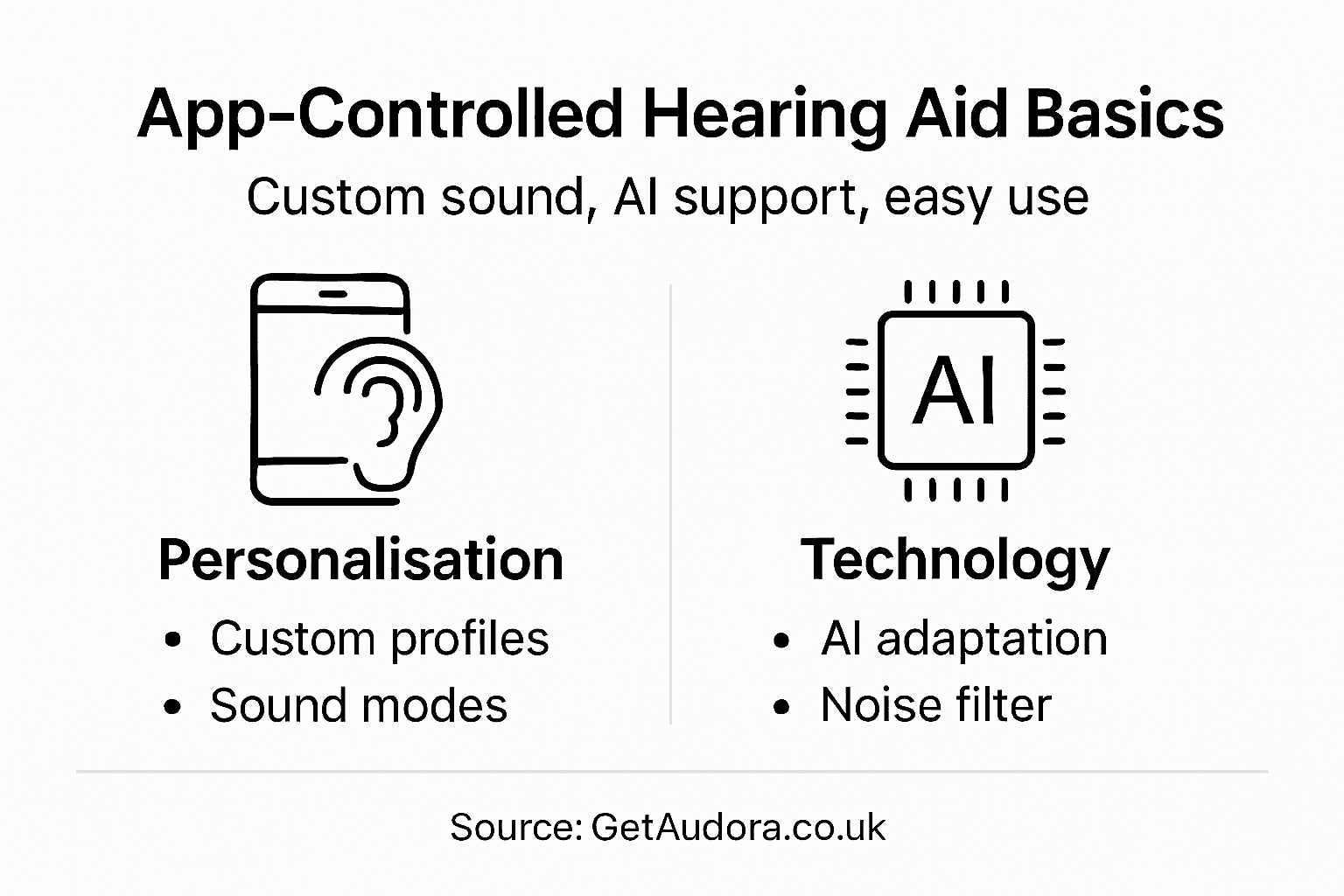
Artificial intelligence has transformed hearing aid technology, moving beyond simple sound amplification to create intelligent, adaptive listening experiences. Modern AI-driven hearing devices can now understand and respond to complex auditory environments with unprecedented sophistication, offering users a truly personalised hearing solution.
Advanced AI enables intelligent sound processing through sophisticated machine learning algorithms that go far beyond traditional hearing aid capabilities. These intelligent systems can dynamically analyse and adjust sound in real-time, creating a nuanced listening experience that adapts to individual user needs and environmental challenges.
The key AI-powered personalisation features include:
- Adaptive noise reduction
- Speech enhancement in challenging environments
- Automatic sound profile learning
- Contextual sound environment recognition
- Individual hearing preference memory
Deep learning algorithms improve hearing aid performance by providing contextual sound adaptation that mimics natural hearing processes. This means users experience more natural sound reproduction, with devices that can selectively filter background noise, enhance speech clarity, and even integrate visual cues like lip-reading to improve overall comprehension.
Pro tip: Regularly update your hearing aid’s smartphone app to ensure you benefit from the latest AI-driven personalisation features and improvements.
Cost Savings Versus Traditional Options
Navigating the financial landscape of hearing aids requires a nuanced understanding of the evolving technology and its long-term economic implications. While advanced app-controlled hearing aids may initially appear more expensive, a comprehensive analysis reveals potential significant cost savings compared to traditional hearing assistance solutions.
Smart hearing aid technologies offer complex cost considerations, challenging the conventional perception of pricing. The integration of rechargeable batteries, AI-driven personalisation, and extended device longevity can substantially reduce overall expenses typically associated with hearing healthcare.
Key cost comparison factors include:
- Reduced maintenance requirements
- Longer device lifespan
- Fewer professional consultation fees
- Lower battery replacement costs
- Built-in diagnostic and adjustment capabilities
Emerging hearing technologies demonstrate economic potential by minimising long-term expenses through advanced features. Users can expect improved hearing performance coupled with more efficient, cost-effective solutions that adapt to individual needs without recurring professional intervention.
Pro tip: Calculate your total hearing aid ownership costs over five years, considering device price, maintenance, batteries, and professional adjustments to make a truly informed financial decision.
User Safety, Data Privacy, and NHS Bypassing
Navigating the complex landscape of hearing aid technology requires a careful balance between innovative solutions and robust user protections. App-controlled hearing aids present a transformative approach to hearing healthcare, offering individuals greater autonomy while simultaneously raising critical considerations around safety, data privacy, and healthcare accessibility.
Remote hearing aid delivery presents unique privacy challenges, particularly when circumventing traditional NHS pathways. Users must understand the potential risks and safeguards associated with digital hearing healthcare, ensuring their personal health information remains secure while benefiting from cutting-edge technological solutions.
Key safety and privacy considerations include:
- Encryption of personal health data
- Secure smartphone app connections
- Clear user consent protocols
- Transparent data usage policies
- Regular security software updates
- Independent clinical validation
By choosing app-controlled hearing aids, users can effectively bypass lengthy NHS waiting lists while maintaining rigorous standards of personal data protection. This approach empowers individuals to take proactive control of their hearing health, accessing advanced technological solutions without compromising their privacy or clinical standards.
To clarify essential considerations for choosing app-controlled hearing aids, here is a quick reference of safety and privacy safeguards:
| Safeguard | Purpose | User Benefit |
|---|---|---|
| Data encryption | Protects health information | Minimises privacy risks |
| Consent protocols | Ensures informed user choice | Transparency in data usage |
| Clinical validation | Confirms efficacy and safety | Reliable healthcare outcome |
| Security updates | Prevents digital vulnerabilities | Keeps device secure |
Pro tip: Always review the privacy policy and data handling procedures before connecting any medical device to your smartphone, ensuring comprehensive understanding of how your personal information will be managed.
Experience Seamless Hearing Control in Your Daily Life
Living with hearing loss can feel frustrating when traditional aids lack flexibility and instant adaptability. This article highlights the challenge of managing sound environments and personalising hearing aid settings without delay. With the rise of app-controlled hearing aids, you can now enjoy real-time adjustments, AI-driven personalisation, and smartphone integration that put the power in your hands. Imagine controlling your hearing device effortlessly from your mobile phone while maintaining privacy and safety, bypassing long NHS waiting times.
Discover how Audora’s collection of advanced hearing aids offers user-friendly designs featuring rechargeable batteries, discreet fits, and full smartphone connectivity.

Take charge of your hearing health today with our cost-effective, UKCA-certified digital hearing aids at GetAudora.co.uk. Enhance your listening experience by exploring our Accessories – Audora to complement your device. Act now during National Hearing Week to access exclusive discounts and enjoy hearing freedom without compromise.
Frequently Asked Questions
What are app-controlled hearing aids?
App-controlled hearing aids are modern devices that connect to smartphones, allowing users to adjust settings, personalise sound profiles, and monitor device performance directly from their mobile phones.
How do smartphone apps enhance the functionality of hearing aids?
Smartphone apps enable real-time adjustments to hearing aid settings, such as volume and sound profiles, and offer features like audio streaming, remote consultations, and hearing health tracking, significantly enhancing user experience.
What are the key benefits of using AI in app-controlled hearing aids?
AI technology in app-controlled hearing aids provides adaptive noise reduction, speech enhancement, and automatic adjustments to sound profiles, creating a personalised listening experience that adapts to various environments and user preferences.
How can I determine which type of app-controlled hearing aid is best for me?
Consulting with an audiologist can help you assess your specific hearing needs and lifestyle preferences, enabling you to choose the most suitable type of app-controlled hearing aid, whether it’s Behind-the-Ear, In-the-Ear, or Receiver-in-Canal models.
Recommended
- 7 Essential Smartphone Hearing Aid Features Explained – Audora
- 7 Practical Examples of Hearing Enhancement Technology – Audora
- How to Adjust Hearing Aid Settings for Optimal Clarity – Audora
- What Is A Bluetooth Hearing Aid? Everyday Benefits Explained – Audora
- Voice Therapy: Restoring and Enhancing Vocal Health - TMRG Solutions
- How To Clean Your Ears – Without Doing Any Damage - Home Remedies