

More than eight million British adults live with hearing loss, yet soaring prices and endless clinic appointments can leave many feeling overlooked. Traditional solutions often require significant investment and time while affordable, discreet technology is now changing the way British people manage their hearing. This guide helps you quickly compare direct-to-consumer hearing aid options and highlights safer, convenient choices designed for everyday comfort and value.
Table of Contents
- 1. Compare Traditional and Direct-to-Consumer Hearing Aids
- 2. Choose UKCA-Certified Devices for Safety and Value
- 3. Opt for Rechargeable Hearing Aids to Avoid Battery Costs
- 4. Benefit from Smartphone-Controlled Hearing Technology
- 5. Select Invisible In-Ear Designs for Discreet Use
- 6. Check for Transparent Pricing and No Hidden Fees
- 7. Use National Hearing Week Discounts and Special Offers
Quick Overview
| Key Message | Explanation |
|---|---|
| 1. Choose Direct-to-Consumer for Cost Savings | Direct-to-consumer hearing aids can be 50-70% cheaper than traditional options, while providing good accessibility and convenience. |
| 2. Prioritise UKCA-Certified Devices | UKCA certification ensures the safety and reliability of hearing aids, protecting your health and investment. |
| 3. Opt for Rechargeable Hearing Aids | Rechargeable hearing aids save £200+ annually by eliminating the need for disposable batteries, while being eco-friendly and convenient. |
| 4. Look for Smartphone Control Features | Smartphone-controlled hearing aids offer flexibility and allow users to easily adjust settings and track hearing health directly from their device. |
| 5. Request Transparent Pricing | Always obtain a detailed price breakdown to avoid hidden fees and understand total costs before purchasing hearing aids. |
1. Compare Traditional and Direct-to-Consumer Hearing Aids
Traditional hearing aids and direct-to-consumer solutions represent two distinctly different approaches to addressing hearing loss for UK adults over 50. While NHS-provided hearing aids have long been the standard, emerging technologies are transforming how people access and experience hearing assistance.
Traditional hearing aids typically involve multiple clinical appointments, professional assessments, and prescription-based fittings. These devices are usually dispensed through audiology clinics, with costs ranging from £500 to £3,000 per ear. In contrast, direct-to-consumer hearing aids offer a more streamlined, affordable alternative that bypasses lengthy clinical processes.
Research from the University of Manchester reveals crucial insights into these alternative devices. Their comprehensive study compared 28 direct-to-consumer hearing devices against popular NHS hearing aids, examining technical performance, aesthetic appeal, and gain-frequency matching.
Key differences emerge in several critical areas:
Technical Performance
- Traditional NHS hearing aids: Professionally calibrated, precise frequency response
- Direct-to-consumer devices: Variable performance, with higher-priced models showing improved technical capabilities
Cost Considerations
- Traditional hearing aids: £500-£3,000 per ear
- Direct-to-consumer options: Often 50-70% less expensive
Accessibility
- Traditional route: Multiple clinic appointments, waiting lists
- Direct-to-consumer: Online selection, home delivery, self-fitting options
While direct-to-consumer hearing aids offer promising alternatives, consumers must carefully evaluate device specifications. Not all models match the sophisticated electroacoustic properties of NHS-provided devices.
Pro tip: Before purchasing a direct-to-consumer hearing aid, request a comprehensive product specification sheet and compare its technical parameters against clinical hearing assessment recommendations.
2. Choose UKCA-Certified Devices for Safety and Value
Navigating the world of hearing aids requires understanding safety standards that protect your health and investment. UKCA certification has become a critical benchmark for medical devices in the United Kingdom, ensuring consumers receive high quality hearing technology that meets rigorous safety requirements.
The UKCA marking process represents a post-Brexit conformity assessment for medical devices, confirming that hearing aids have undergone comprehensive safety evaluations. This certification replaces the previous European CE marking and provides UK consumers with an additional layer of protection and quality assurance.
What UKCA Certification Means for You
Safety Verification: Manufacturers must demonstrate their devices meet stringent UK safety standards
- Electrical safety testing
- Performance reliability checks
- Quality management system compliance
Key Benefits of UKCA-Certified Hearing Aids
- Guaranteed safety standards
- Transparent manufacturing processes
- Legal compliance within the UK marketplace
- Enhanced consumer protection
When shopping for hearing aids, look for clear UKCA markings on product packaging or documentation. This symbol indicates the device has been independently assessed and meets all necessary UK regulatory requirements.
Pro tip: Always request the full technical specification and UKCA certification documentation when purchasing a hearing aid to ensure you are getting a device that meets the highest safety standards.
3. Opt for Rechargeable Hearing Aids to Avoid Battery Costs
For UK adults over 50, rechargeable hearing aids represent a smart financial strategy that eliminates the ongoing expense of disposable batteries. Modern hearing technology has transformed these devices from frequent battery consumers into efficient, long lasting solutions.
The NHS hearing aid guidelines highlight the growing popularity of rechargeable hearing aids, which offer significant economic advantages. Lithium-ion powered devices now provide full day performance on a single charge, dramatically reducing your long term hearing healthcare expenses.
Cost Comparison: Disposable vs Rechargeable Batteries
Disposable Battery Costs:
- Typical hearing aid batteries cost £5-£10 per pack
- Average user replaces batteries every 5-7 days
- Annual battery expense: Approximately £150-£250
Rechargeable Battery Benefits:
- One time charging station investment
- Batteries last entire device lifespan
- Estimated savings: Over £200 annually
- Environmentally friendly alternative
Additional Advantages
- Convenient overnight charging
- No sudden battery failures
- Reduced environmental waste
- Simplified maintenance routine
Pro tip: Always purchase hearing aids with lithium-ion batteries and verify the estimated daily battery life before making your final selection.
4. Benefit from Smartphone-Controlled Hearing Technology
Smartphone-controlled hearing technology represents a revolutionary leap forward for adults seeking personalised and discreet hearing solutions. These advanced devices transform your smartphone into a powerful hearing aid control centre, offering unprecedented flexibility and convenience.
According to NHS hearing technology guidelines, modern hearing aids now integrate seamlessly with digital platforms, enabling users to customise their hearing experience directly from their mobile device.
Key Smartphone Control Features
- Real time volume adjustments
- Sound environment personalisation
- Discrete hearing aid management
- Direct audio streaming capabilities
- Hearing performance tracking
Practical Benefits Customisation: Adjust hearing settings instantly in different environments Convenience: Control hearing aid functions without drawing attention Accessibility: Manage hearing health through familiar smartphone interface
Technical Capabilities
- Bluetooth connectivity
- Dedicated hearing aid smartphone apps
- Remote audiologist consultations
- Automatic sound profile switching
- Battery status monitoring
Privacy and Independence Smartphone controlled hearing technology empowers users to manage their hearing experience independently, reducing reliance on clinical interventions and providing greater personal control.
Pro tip: Choose hearing aids with user friendly smartphone apps and ensure compatibility with your existing mobile device before purchasing.
5. Select Invisible In-Ear Designs for Discreet Use
Discretion matters when addressing hearing loss, especially for adults over 50 who want effective support without drawing unnecessary attention. Invisible in-ear hearing aids represent a game changing solution for those prioritising personal confidence and subtle hearing enhancement.
According to NHS hearing aid guidelines, invisible hearing devices sit deep within the ear canal, offering exceptional discretion and comfort for individuals with mild to moderate hearing challenges.
Key Advantages of Invisible In-Ear Designs
- Completely hidden from external view
- Custom fitted to individual ear canal
- Advanced technology in compact form
- Minimal visual impact
- Reduced social stigma
Technical Specifications Size: Extremely compact Placement: Deep inside ear canal Suitability: Mild to moderate hearing loss Customisation: Personalised ear impressions
Performance Considerations
- Suitable for most daily communication environments
- Comparable sound quality to larger devices
- Reduced wind interference
- Comfortable long term wear
Aesthetic and Psychological Benefits Invisible hearing aids eliminate concerns about appearance, helping users feel more confident and encouraging consistent device usage without self consciousness.
Pro tip: Request a professional ear canal impression to ensure optimal fit and maximum discretion when selecting an invisible hearing aid design.
6. Check for Transparent Pricing and No Hidden Fees
Navigating hearing aid purchases requires more than just selecting the right technology. Understanding the complete pricing structure can save you hundreds of pounds and prevent unexpected financial surprises.
What Transparent Pricing Means
- Full upfront cost disclosure
- No surprise additional charges
- Clear breakdown of device features
- Inclusive warranty information
- Predictable long term expenses
Common Hidden Fee Categories
- Initial consultation charges
- Fitting and adjustment costs
- Maintenance and servicing fees
- Battery replacement expenses
- Software update charges
Smart Purchasing Strategies Verification Steps:
- Request comprehensive written quote
- Ask about all potential additional costs
- Understand warranty coverage details
- Compare total lifetime device expenses
- Confirm return and exchange policies
Cost Comparison Approach
- Base device price
- Installation fees
- Annual maintenance costs
- Battery or charging expenses
- Potential upgrade or replacement charges
Consumer Protection Tactics Always request a detailed price breakdown before committing to a purchase. Legitimate hearing aid providers will welcome transparency and provide clear documentation of all associated costs.
Pro tip: Request a written price guarantee that includes all potential fees to protect yourself from unexpected future expenses.
7. Use National Hearing Week Discounts and Special Offers
National Hearing Week presents an incredible opportunity for UK adults to access premium hearing solutions at significantly reduced prices. This annual event offers consumers a strategic window to invest in high quality hearing technology without straining their budget.
Strategic Savings Opportunities
- Manufacturer promotional discounts
- Exclusive hearing aid package deals
- Complimentary hearing assessments
- Extended warranty offers
- Bundled accessory packages
Types of Potential Discounts Price Reductions:
- 15-30% off standard device pricing
- Reduced consultation fees
- Complimentary follow up appointments
- Flexible payment plans
Timing Considerations
- Typically occurs annually in June
- Limited time offers
- Advanced registration recommended
- Online and in person promotions
Maximising Your Savings
- Research participating providers
- Compare multiple promotional offers
- Understand exact discount terms
- Check device compatibility
- Review warranty inclusions
Consumer Protection Strategies Always read the fine print and understand the complete terms of any promotional offer. Legitimate discounts should provide clear value without compromising device quality or support services.
Pro tip: Sign up for email newsletters from hearing aid providers to receive early notification of National Hearing Week promotions and exclusive discount opportunities.
Below is a comprehensive table summarising the strategies, comparisons, and considerations for selecting effective hearing aids discussed throughout the article.
| Aspect | Details | Considerations |
|---|---|---|
| Traditional Hearing Aids | Provided through NHS or clinics, requiring professional assessments and fittings. Range £500–£3,000 per ear. | Higher accuracy but involves clinical appointments and potential waiting times. |
| Direct-to-Consumer Aids | Accessible via online purchase offering self-fitting options, generally costing less (50–70% reduction). | Affordable and quicker access, but varying levels of performance by price. |
| UKCA Certification | Ensures compliance with UK safety standards, replacing the previous CE marking. | Verifies device safety and technical quality, critical for consumer trust. |
| Rechargeable Batteries | Utilises lithium-ion batteries, eliminating ongoing costs of disposable options (£150–£250 annually). | Environmentally friendly and cost-saving while offering reliable daily power. |
| Smartphone Control | Integrates with mobile devices for customisation, including volume and sound profile management. | Enhances convenience, discretion, and independence in hearing aid operations. |
| Invisible Design | Designed to fit inside the ear canal, completely hidden from view. | Offers discretion for users, enhancing personal confidence and consistent usage. |
| Transparent Pricing | Clear cost breakdown including device, servicing, and warranty expenses. | Avoids hidden fees, ensuring predictability throughout device lifetime. |
| National Hearing Week | Annual promotional event offering discounts, free assessments, and other cost-effective opportunities. | Plan purchases strategically during June to maximise savings. |
Discover Affordable and Advanced Hearing Solutions at Audora
If you are seeking cost-effective hearing aids without compromising quality or convenience, GetAudora.co.uk offers a perfect match. This platform directly addresses common challenges for UK adults over 50 such as high prices, complicated clinic visits, and lengthy NHS waiting times by providing UKCA-certified, rechargeable, and smartphone-compatible hearing devices that you can order online with confidence.
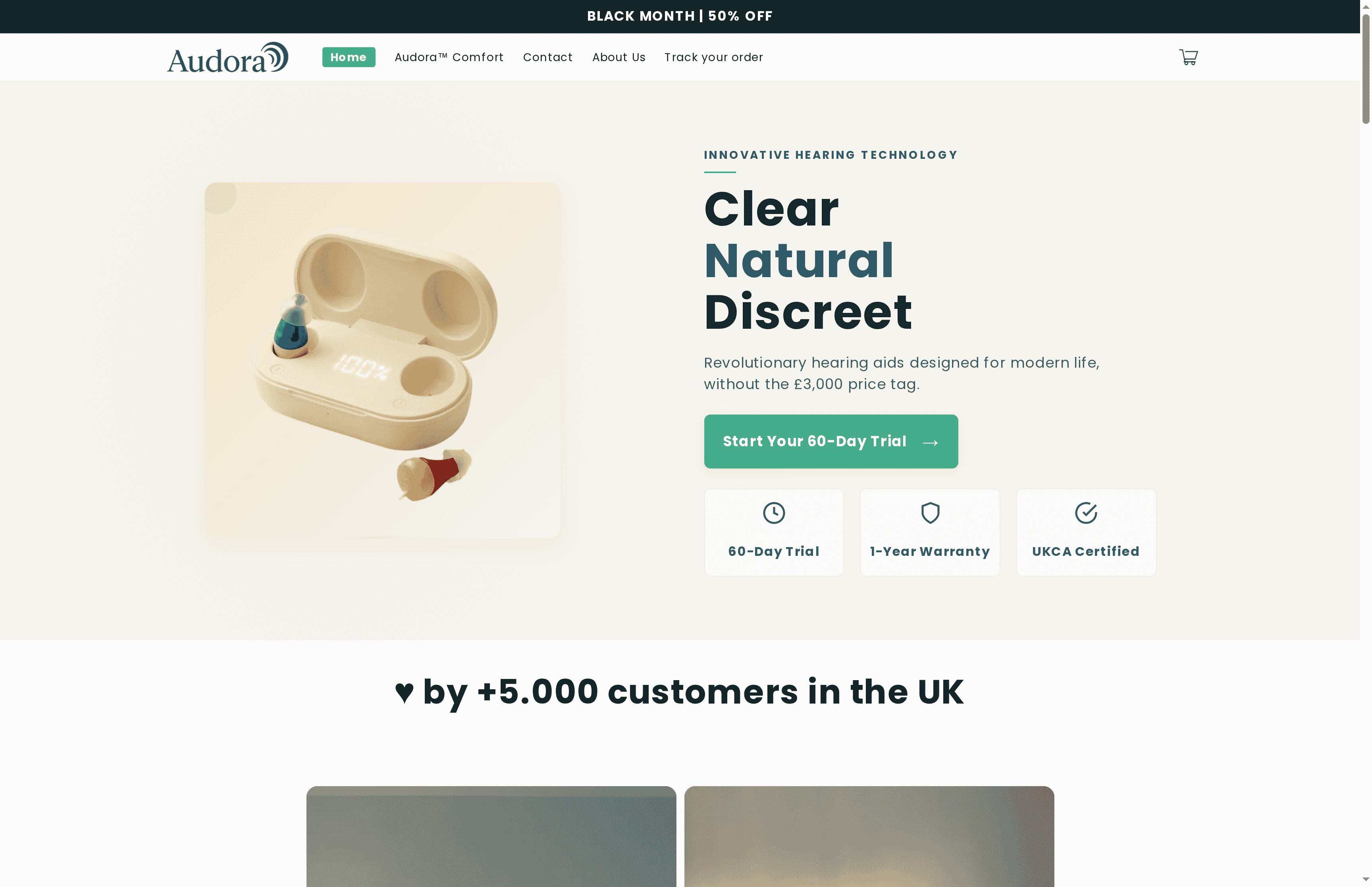
Take control of your hearing health today by exploring the full range of innovative hearing aids on our Home page – Audora. Benefit from transparent pricing, invisible in-ear designs, and exclusive discounts especially during National Hearing Week. Visit https://getaudora.co.uk now and experience hearing technology tailored for your lifestyle with none of the usual hassle.
Frequently Asked Questions
What are the main differences between traditional and direct-to-consumer hearing aids?
Traditional hearing aids typically require clinical appointments and can be quite expensive, while direct-to-consumer hearing aids offer a more accessible and affordable option. To decide which is best for you, evaluate device specifications and consider trying a direct-to-consumer model that fits your needs.
How can I ensure the safety of my hearing aid purchase?
Look for UKCA certification when shopping for hearing aids, as this indicates compliance with rigorous safety standards. Always request the full technical specification and certification documentation to confirm that the device meets necessary quality assurances.
What are the cost benefits of choosing rechargeable hearing aids?
Rechargeable hearing aids offer significant savings by eliminating the need for disposable batteries, which can cost up to £250 annually. Opt for rechargeable models to save on long-term battery expenses and enjoy the convenience of overnight charging.
How can smartphone-controlled hearing aids enhance my experience?
Smartphone-controlled hearing aids allow for real-time volume adjustments and environmental sound customisation, providing greater convenience and personalisation. Seek models that integrate well with your smartphone for seamless operation.
What should I be aware of regarding hearing aid pricing?
Always ask for transparent pricing that includes all associated costs, such as installation, maintenance, and potential upgrade fees. Request a written price guarantee to protect yourself from unexpected future expenses.
How can I take advantage of National Hearing Week discounts?
During National Hearing Week, look for promotional discounts and special offers on hearing aids and services. Sign up for newsletters from hearing providers to receive early notifications about available savings and ensure you don’t miss out on limited-time deals.